Initiation
Definition
Initiation (from Latin initiare, "to begin," related to initium, "a beginning" or "entering into") denotes the formal crossing of a threshold from one mode of being into another. In the context of the ancient mystery traditions, initiation is not merely a social ceremony but an ontological event: the candidate is understood to undergo a genuine transformation of self, not simply a change of status. The Greek vocabulary is revealing: the root myein (to close, to shut) gives us mystes (initiate) and mysteria (the mysteries themselves), suggesting that what is undergone cannot be adequately communicated to the uninitiated; the experience is sealed within the person.
The structure of initiation follows a tripartite pattern analyzed by Arnold van Gennep (Rites of Passage, 1909) and further developed by Victor Turner: separation from the ordinary world, a liminal or threshold phase of intense testing and transformation, and reincorporation into the community in a new status. In the ancient mystery cults, this structure was elaborated into complex multi-day ceremonial sequences. The candidate was stripped of ordinary identity, confronted with sacred enactments of death and rebirth, and returned to the world bearing a new relationship to mortality, the divine, and fellow initiates.
Mircea Eliade's analysis (Rites and Symbols of Initiation) emphasizes the recurring pattern of symbolic death and rebirth: the initiand does not merely learn new information but is understood to die as a profane being and be reborn as something more. Used carefully, Eliade gives the project its clearest comparative morphology of initiation. Used carelessly, he can flatten historically different rites into a single timeless structure. The project treats his pattern as a high-value scaffold, not as a substitute for historically specific explanation. Ancient sources still matter because the actual shape of Eleusis, Isis, shamanic ordeal, or Orphic discipline is never exhausted by the abstract pattern alone.
What distinguishes initiatic knowledge from ordinary education is its mode of transmission and reception. Discursive teaching (mathesis) conveys propositions that the mind can assess independently. Initiation conveys a transformation that the whole person must undergo. The content cannot be separated from the process of its reception; to understand what the initiates knew, one would need to have gone through what they went through. This is the fundamental claim that the Mystery Schools project takes seriously and examines rigorously.
Tradition by Tradition
Ancient Greek / Eleusinian
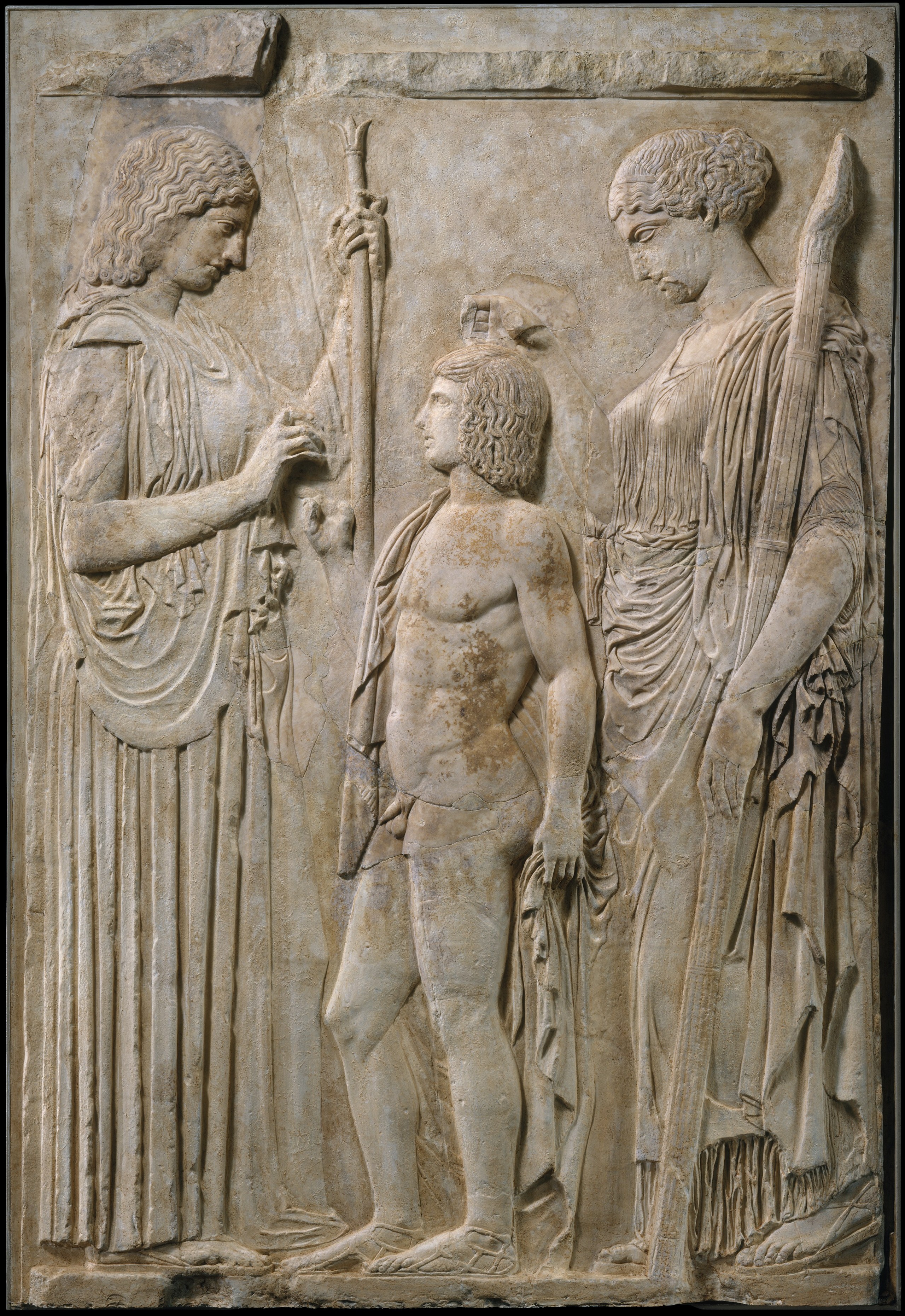
At Eleusis, initiation proceeded through several grades over multiple years. The preliminary Lesser Mysteries (Myesis) at Agrae in early spring prepared candidates for the Greater Mysteries held at Eleusis in autumn. The nine-day festival culminated in the telesterion, the great Hall of Initiation capable of holding thousands. Inside, the initiates experienced dromena (things enacted), deiknumena (things shown), and legomena (things said). The content remains unknown (protected by the ancient vow of secrecy and never committed to writing) but ancient testimony is uniform: those who underwent the Mysteries lost their fear of death. Sophocles: "Thrice blessed are those mortals who see these rites before departing for Hades; for them alone is there life."
Egyptian
The Egyptian traditions understood initiation as an enactment of the Osirian mystery: dismemberment, death, and resurrection. The Temple of Edfu bears the inscription: "Do not reveal in any way the Rites you see in the Temples, in the most absolute Mystery." Apuleius's Metamorphoses (2nd century CE) provides the only sustained ancient description of an initiatory experience, recounting the initiation of Lucius into the Mysteries of Isis: "I approached the boundary of death... I was borne through all the elements and returned."
Hermetic / Neoplatonic
For the Hermetic tradition, initiation is understood as the awakening of the divine spark (nous) within the human being. The Hermetic tractates describe a process of stripping away the influences of the planetary spheres as the soul ascends, each layer corresponding to a kind of dying. Neoplatonic initiation, especially as theorized by Iamblichus, supplements intellectual ascent with theurgic ritual; the gods themselves must cooperate in the soul's elevation.
Shamanic
Mircea Eliade's cross-cultural study of shamanism identifies an identical pattern across Siberian, Native American, and Australian traditions: ritual dismemberment and death, encounter with spirits in an underworld, and reconstruction of the shaman with enhanced powers. Eliade sees this as an archaic stratum underlying the later, more institutionalized mystery religions.
Project Role
Initiation is the load-bearing concept for the entire Mystery Schools project. It is not one concept among others but the container within which all others operate. The project's central argument, that the West has impoverished itself by losing genuine initiatory traditions, depends on making clear what initiation actually is: not information transfer, not credentialing, but ontological transformation.
The project uses Eliade here as the indispensable mapper of recurrent form, while refusing to let recurrent form become the whole explanation. Initiation includes katabasis (CON-0002), but is not reducible to descent; it may culminate in epopteia (CON-0003), but is not reducible to visionary climax. The concept must remain broad enough to cover the whole initiatory arc without collapsing its internal stages into one another.
Initiation critically as well: it examines the sociological dimensions (initiation as social bonding, as elite gatekeeping), the psychological dimensions (initiation as reorganization of the psyche), and the metaphysical dimensions (initiation as genuine contact with divine reality). The project holds all three levels open rather than reducing to any one.
Distinctions
Initiation vs. Education: Education (in the modern sense) imparts information that the student can evaluate through reason. Initiation works on the whole person through experience, symbol, and enacted myth. The content is not separable from the process.
Initiation vs. Conversion: Conversion in religious contexts typically involves adopting a new set of beliefs. Initiation does not primarily involve new beliefs but a new mode of being and seeing. The initiate does not simply believe differently about death; they have passed through a symbolic death.
Initiation vs. Ordination: Priestly ordination confers a social and sacramental role within an institution. Initiation in the mystery sense may or may not coincide with ordination; it is primarily an inner transformation, not a conferral of ecclesiastical function.
Degrees of Initiation: Ancient sources attest multiple grades (as at Eleusis: myesis, telete, epopteia). Not all initiates reached the highest grade. The graded structure reflects the understanding that the sacred cannot be absorbed all at once.
Primary Sources
- Walter Burkert, Ancient Mystery Cults: The authoritative modern scholarly treatment, analyzing the social, ritual, and psychological dimensions of initiation across the Greek mystery traditions.
- Mircea Eliade, Rites and Symbols of Initiation: Cross-cultural analysis of initiatory death-and-rebirth patterns, connecting shamanic, tribal, and mystery-cult forms.
- René Guénon, Perspectives on Initiation: A Traditionalist reading arguing that genuine initiation requires an unbroken chain of transmission (the "initiatic chain"); Guénon distinguishes sharply between genuine initiation and its modern pseudo-forms.
- Apuleius, The Golden Ass (Metamorphoses): The only detailed ancient first-person account of a mystery initiation (into the Mysteries of Isis), written as literary fiction with unmistakable autobiographical content.
- Homeric Hymn to Demeter: The foundational mythological text for understanding the Eleusinian Mysteries, narrating Persephone's descent and return and Demeter's institution of the rites.
The Seven Movements
The project's foundational synthesis identifies seven movements within the Eleusinian initiatory sequence, each corresponding to a discernible phase of the ritual structure: (1) Dissolution of the profane self, (2) The descent, (3) The search, (4) The encounter with death, (5) The turning point (coincidentia oppositorum), (6) The epopteia (the supreme vision), (7) The return. These seven movements provide the structural template for the Mystery Schools track's first series. See CON-0087 (Fermentation Pattern) and CON-0088 (Technology of Consciousness Transition) for the paper's claims about what the Mysteries functioned as and how the initiatory process maps onto biological fermentation.
The Mesopotamian Precedent
The initiatory descent structure predates Eleusis by at least a millennium. Inanna's Descent (c. 1900 BCE, TIM-0041) describes the goddess stripped at seven gates, killed, and resurrected. The Epic of Gilgamesh (c. 2100-1200 BCE, TIM-0042) is the oldest literary katabasis. If initiation is a human universal rather than a Greek invention, Sumer is the evidence.
Initiation's Shadow: Euripides and the Cracked Container
Euripides's early plays (c. 438-428 BCE) document what happens when the initiatory container fails. Alcestis enacts a complete descent-and-return: the wife dies, Heracles wrestles Death, the wife returns. The initiatory structure is intact. But the person who emerges is veiled and silent, and the husband who arranged the substitution has learned that treating the boundary between life and death as a negotiable transaction does not work. The form of initiation operates; its guarantee of restored meaning does not. Medea presents an initiate (a priestess of Hecate, trained in the pharmaka) whose initiatory knowledge has been severed from its ritual context. Displaced, betrayed, stripped of every bond that might contain her power, Medea becomes the pharmakon uncontained: transformation without direction. The children die because there is no structure left to hold what she carries. Hippolytus shows the cost of partial initiation: devotion to one god (Artemis) at the expense of another (Aphrodite) produces a purity that is its own pathology. The mystery traditions insisted that the initiate face the divine whole. Hippolytus refuses, and the god he denied destroys him.
These plays register an early tremor in the Greek mind's relationship to the initiatory structure. The gods are still present. The ritual pattern still operates. But the consciousness that could undergo initiation and trust the outcome has begun to crack. Euripides does not argue against initiation. He shows what it looks like when the architecture that supported it starts to fail.
The Battlefield as Temenos: Initiation in the Bhagavad Gita
The Bhagavad Gita reframes initiation as occurring on the battlefield rather than in the temple. Arjuna's crisis at Kurukshetra, the warrior who drops his bow when he sees he must fight his own kin, is itself the initiatory threshold, the moment when ordinary understanding collapses and a higher teaching becomes possible. Krishna does not remove Arjuna from the battle to initiate him. The battle is the temenos.
The cosmic vision of Chapter 11 is the Indian epopteia. When Krishna reveals his universal form, Arjuna sees all of reality contained in a single divine body: creation and destruction simultaneous, all beings entering the mouths of the god like rivers pouring into the ocean. "I am time, the destroyer of all," Krishna says. The vision is annihilating, not consoling. Like the Eleusinian experience, it dissolves the boundary between life and death, but the setting is radically different: no temple, no Hierophant, no ritual container. The container is the relationship between teacher and student, between the divine and the human. Krishna's three yogas (karma, jnana, bhakti) correspond to dimensions the Western traditions integrate without naming separately: ordeal (action), vision (knowledge), surrender (devotion). The Gita makes explicit what the Mysteries performed implicitly.
Eliade's Structural Morphology (Rites and Symbols of Initiation, LIB-0293)
Eliade's Rites and Symbols gives the project its most comprehensive cross-cultural morphology of initiation. He identifies three fundamental types: puberty rites (compulsory, collective, marking the transition to adulthood), admission to secret societies (voluntary, selective, conferring specialized knowledge), and shamanic/mystical vocation (individual, often involuntary, involving crisis and transformation). All three share the same structural core: separation from the profane world, liminal ordeal (typically involving symbolic death: ritual wounding, burial, exposure, or dismemberment), and reintegration in a new status. The Eleusinian Mysteries combine elements of all three types: they are voluntary (like secret society initiation), mass-participation (like puberty rites), and aimed at individual transformation (like shamanic vocation). Eliade's morphology is the project's primary structural tool, the grid against which specific initiatory traditions are mapped; but it is not the project's final word. The morphology reveals structure; it cannot explain why the same structure produces different experiences in different historical consciousnesses, which is the question that Barfield and Gebser address.
Agent Research Notes
[AGENT: perplexity | DATE: 2026-03-20] Key scholarly debates: (1) How much did the Eleusinian experience rely on a psychoactive kykeon (the entheogen hypothesis, advanced by Wasson, Hofmann, and Ruck in The Road to Eleusis)? The project should acknowledge this debate without taking a strong position. (2) The question of whether initiatory patterns are universal (Eliade's structuralist position) or culturally specific (the critique of Eliade by Jonathan Z. Smith and others). (3) The relationship between initiation and what Barfield calls "original participation": was pre-initiatory consciousness more participatory, and did initiation formalize or deepen that participation?
[AGENT: claude-code | DATE: 2026-03-23] Added sections on the seven movements and the Mesopotamian precedent, drawn from the foundational synthesis paper. Cross-referenced CON-0087, CON-0088, TIM-0041, TIM-0042.
[AGENT: cursor | DATE: 2026-03-25] Tightened the Eliade framing so initiation remains a comparative morphology rather than a total explanation, and clarified that katabasis and epopteia are stages or modalities within initiation rather than synonyms for the whole.