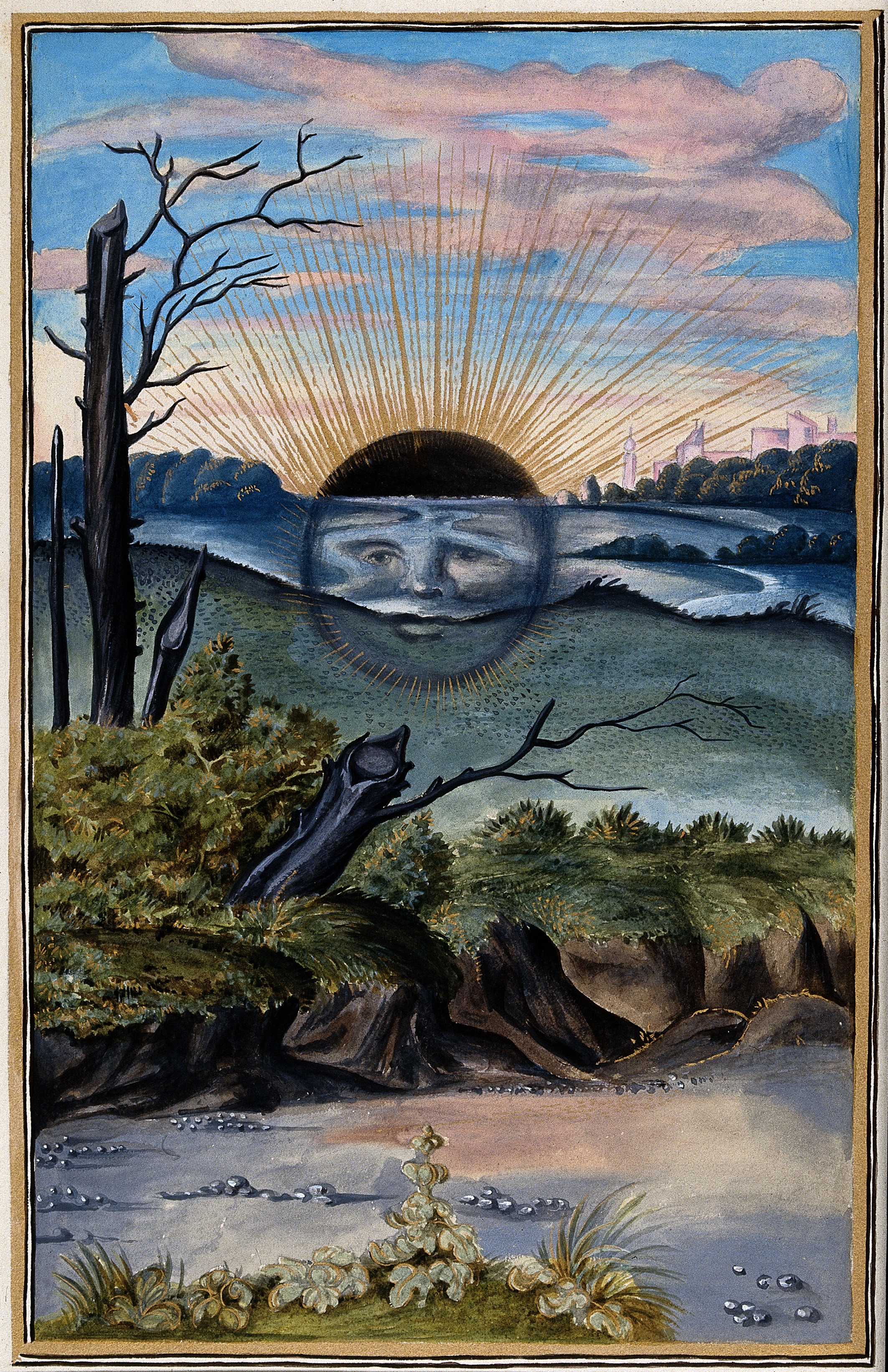
Fermentation as Initiatory Pattern
Definition
Fermentation is a biological process in which a living agent (yeast, bacteria, fungus) enters a substrate (grain, grape juice, milk), consumes its sugars, and transforms it into something qualitatively different. The original substance dies as what it was and becomes something new. Bread rises. Wine develops alcohol and complexity. The fermenting agent is invisible, mysterious, and for most of human history unnamed. In early modern England, the wild yeast caught in a bowl of flour and water was called godisgood.
The project identifies this process as the structural analogue of initiation at the cellular level. Stirb und werde, die and become, is Goethe's formula for the mystery. Fermentation is stirb und werde enacted in matter.
The Pattern Across Scales
Biological: Ergot (Claviceps purpurea) penetrates cereal grain at the moment of flowering, replaces the seed's substance with its own tissue, and produces the alkaloids that, properly prepared, dissolve the boundaries of human consciousness. The grain nourishes the body. The ergot-transformed grain nourishes something in the mind.
Ritual: The initiate enters the Telesterion (the substrate enters the vessel). Ordinary consciousness is dissolved (the sugars are consumed). A transformative agent works upon the dissolved consciousness — the kykeon, the ritual, the darkness, the myth. The initiate emerges qualitatively different (the bread rises, the wine matures).
Sacramental: Bread is grain that has been fermented. Wine is grape juice that has been fermented. Both substances central to the Eucharist have undergone transformation by a living agent. Both have "died" as their original substance and "become" something new. The parallel between the Eleusinian kykeon and the Eucharistic bread and wine is not metaphorical. It is the same process at a different scale.
The Grain as Urphaenomen
The fermentation pattern resolves the apparent triviality of the grain revelation. An ear of wheat displayed in silence after hours of darkness, dissolution, and terror is not a symbol pointing elsewhere. It is the Urphaenomen — Goethe's term for the archetypal phenomenon in which the universal law is directly visible. The grain that dies in the earth and rises as new life is the initiate's own experience, crystallized in a single object. The grain is a mirror. The initiate sees themselves.
The Pharmakon Dimension
The fermentation pattern includes its own shadow. Ergot, the ferment that opened the Eleusinian threshold, is also the ferment that produces St. Anthony's fire: gangrenous poisoning, mass hallucination without meaning. The ferment is a pharmakon (CON-0014): poison and medicine in the same vessel. Everything depends on the conditions of administration — the knowledge of the Hierophant, the preparation of the initiate, the architecture of the encounter.