Katabasis
Definition
Katabasis (Greek: κατάβασις) means literally "a going down," from kata (down) and bainein (to go). As a technical term in ancient literature and religious practice, it denotes the descent into the underworld (Hades, the realm of the dead) undertaken by a living person. The complementary term is anabasis, the ascent or return. Together they form the structural arc of the most fundamental initiatory pattern in Western religious history: one goes down, undergoes transformation in the depths, and returns changed.
The mythological record of the katabasis is extensive. Odysseus descends to consult the shades of the dead (Odyssey XI, technically a nekuia, a summoning of spirits, though often grouped with katabasis proper). Orpheus descends to Hades to retrieve Eurydice, and his near-success becomes the paradigm of the soul's capacity to move divine powers through music and love. Heracles descends as part of his Twelve Labors to capture Cerberus. Psyche descends to Persephone on Aphrodite's command and must resist the temptation to linger in the underworld's beauty. In each case, the descent is not accidental but purposive: something essential must be retrieved, confronted, or witnessed that can only be found in the depths.
Scholars distinguish katabasis proper (a journey downward through a physical or mythological underworld) from the nekuia (a summoning of the dead at a threshold, without full descent) and from nekyomanteia (necromantic consultation). In practice these merge, and the broader category of "descent narratives" includes all three. The key structural elements identified by scholars are: a living protagonist, a downward journey to a realm of death, the aid of a guide or protective symbol, a confrontation with powers in the underworld, and a return to the upper world bearing some boon: knowledge, liberation, a retrieved soul, or a transformed self.
Tradition by Tradition
Ancient Greek / Eleusinian
The myth at the heart of the Eleusinian Mysteries is the katabasis of Persephone: abducted by Hades, she descends involuntarily to the underworld, and her ascent (anodos) marks the renewal of life on earth. Demeter's search (the zētēsis) and the eventual reunion are the central dramatic events re-enacted in the Mysteries. The initiates are understood not merely to witness this myth but to participate in it: they enact their own symbolic descent and return, and thereby acquire the assurance of "better hopes" in death. Cicero wrote: "We have learned from the Mysteries also how to die with better hope."
The philosopher Plato, himself almost certainly an initiate, uses the language of katabasis throughout his dialogues. The allegory of the Cave in the Republic is a katabasis: the prisoner descends into shadows and must be dragged upward, but then must return to the cave to teach others. The descent in Plato is never merely negative; it is the necessary precondition for the ascent and the condition of genuine teaching.
Orphic
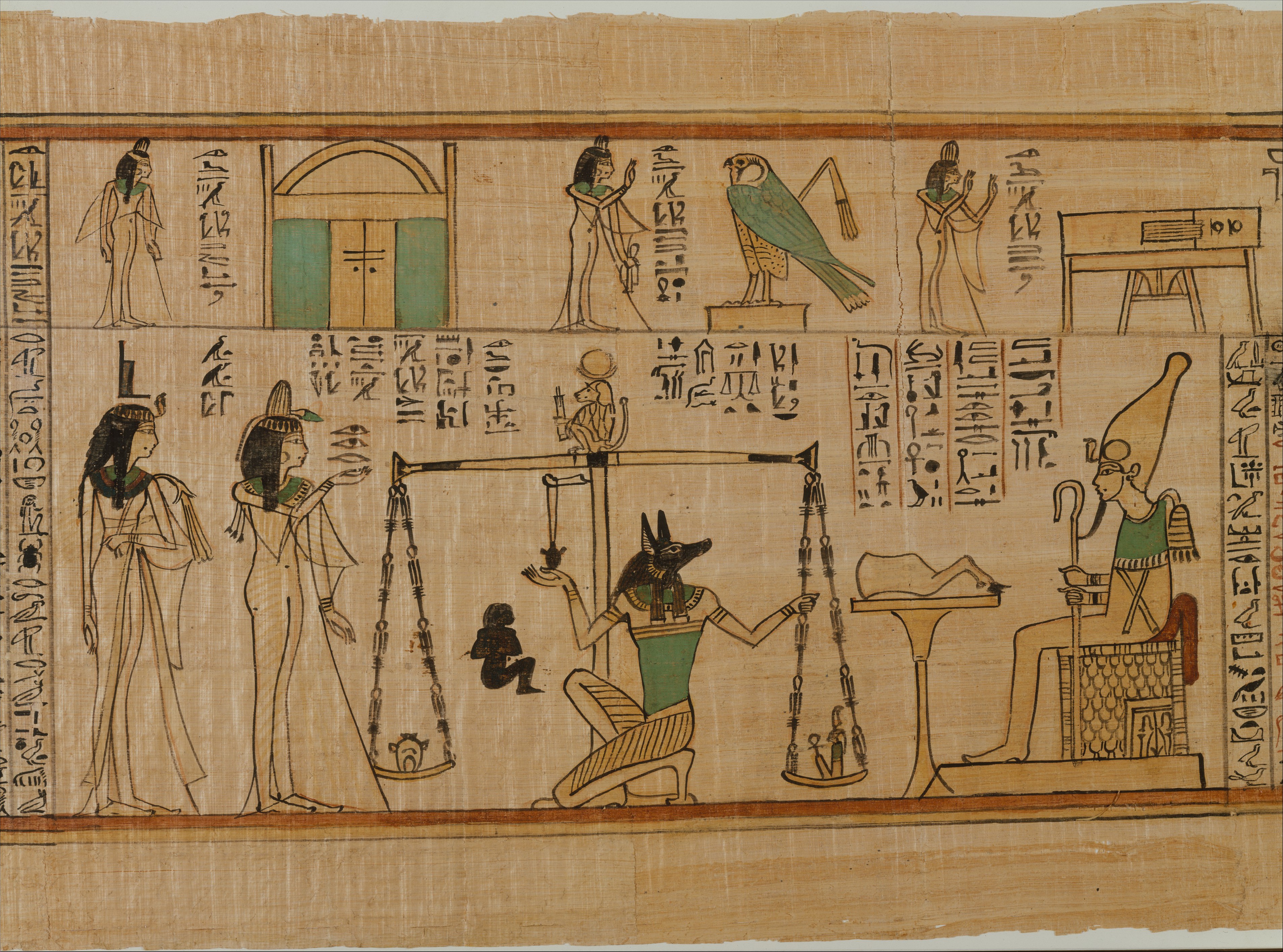
The Orphic tradition treats katabasis with particular philosophical seriousness. The Orphic Gold Tablets (4th–1st centuries BCE, found in tombs across the Greek world) are initiatory instructions for the journey of the dead soul through the underworld: essentially a map for navigating the katabasis after death. They instruct the soul to avoid the spring of forgetfulness (Lethe) and drink instead from the spring of Memory (Mnemosyne), to declare its divine origin, and to navigate the judgment. The Orphic katabasis is thus a rehearsal: the initiate, by understanding the journey of the soul through initiation in life, is prepared for the journey of the soul after death.
Shamanic
Mircea Eliade's comparative analysis of shamanism (Shamanism: Archaic Techniques of Ecstasy) identifies the shamanic journey to the lower world as the most archaic form of katabasis. The shaman undergoes ritual death (often involving dismemberment visions), descends through a world-axis to the lower realms, interacts with spirits and ancestral powers, and returns with healing knowledge or a retrieved soul. Eliade sees the Greek mythological katabasis as the "literary" and "theological" elaboration of what is originally a shamanic structure. This hypothesis is best treated as heuristic rather than proven genealogy: it illuminates a recurrent structure of descent, but does not by itself establish direct continuity from Siberian shamanism to Greece.
Hermetic / Neoplatonic
In the Neoplatonic schema, the soul's descent into matter is itself a katabasis: the original fall into embodiment. Plotinus (Enneads IV.8) analyzes the soul's descent as a kind of daring (tolma), a venture away from the One that is both a fall and an expression of the soul's nature. The theurgic tradition of Iamblichus, responding to Plotinus, insists that since the soul has fully descended into matter, the path of return requires working through matter rather than bypassing it, a kind of deliberate re-engagement with the katabasis as the condition of anagoge (ascent).
Medieval Christian
Dante's Divine Comedy is the supreme literary katabasis of the Western tradition. Structured as a descent through Hell (Inferno), ascent through Purgatory, and final vision in Paradise, it consciously echoes Virgil's Aeneid (Book VI), itself modeled on Homer. Dante's journey is explicitly initiatic: guided first by Virgil (reason/poetry) then by Beatrice (divine love), he must see all of Hell before he can see Heaven. The medieval visionary literature of the Divina Commedia draws on both classical katabasis traditions and Christian eschatology, synthesizing the two into a unified initiatory narrative.
Project Role
Katabasis is the conceptual counter-argument to any easy spirituality. The Mystery Schools project is explicitly critical of what might be called "ascent-only" spirituality: traditions or presentations that promise light, growth, and illumination without requiring the confrontation with darkness, loss, and dissolution. The katabasis motif insists that descent is not an obstacle to initiation but one of its constitutive movements. That distinction matters. Initiation can include ordeal, secrecy, teaching, reintegration, and vision; katabasis names the descent phase within that larger arc. The project uses katabasis to argue against the trivialization of mystery traditions by New Age or superficially positive spirituality: genuine transformation requires genuine death.
The concept also anchors the engagement with tragedy, loss, and suffering as constitutive rather than incidental to the religious life. Several episodes will examine specific katabases (Orpheus, Psyche, Christ's harrowing of Hell, the shamanic journey) as case studies in the transformative logic of descent.
Distinctions
Katabasis vs. Nekuia: In Homer, the nekuia is strictly a summoning of ghosts at a pit; Odysseus does not cross into Hades but calls spirits to the threshold. Katabasis proper involves full entry into the underworld. Later usage blurs this distinction.
Katabasis vs. The Dark Night of the Soul: John of the Cross's Dark Night of the Soul (16th century) is a Christian mystical descent, analogous to katabasis but framed as the progressive stripping away of spiritual consolations rather than a journey to an underworld. The project reads these as cognate patterns across different cultural vocabularies.
Mythological vs. Ritual Katabasis: The mythological katabasis (Orpheus, Heracles, Aeneas) provides the story. The ritual katabasis (Eleusinian initiation) provides the participatory structure. The project argues that the ritual is not simply a re-enactment of the myth but a genuine enactment of the same transformative logic.
Primary Sources
- Homer, Homeric Hymn to Demeter: The foundational text for the Eleusinian katabasis narrative: Persephone's descent and return.
- Plato, Republic (Book VII, the Cave allegory): Philosophical transformation of katabasis into epistemological and political argument; the descent and return as the philosopher's vocation.
- Virgil, Aeneid (Book VI): The great Latin katabasis, drawing on Orphic and Eleusinian sources; Aeneas's descent guided by the Sibyl becomes the template for Dante.
- Mircea Eliade, A History of Religious Ideas, Vol. 1: Scholarly analysis situating Eleusinian and Orphic katabasis in broader comparative religious context.
- Walter Burkert, Ancient Mystery Cults: On the structural role of katabasis in Greek mystery initiations.
Eliade: Katabasis as Initiatory Universal (LIB-0293)
Eliade's Rites and Symbols of Initiation treats katabasis as the most widespread structural element in initiatory practice. The shamanic journey to the lower world, the Australian Aboriginal's descent into a pit during bush initiation, the Eleusinian procession into the darkened Telesterion, all share the same morphological core: the living person enters the realm of the dead and returns changed. Eliade argues that this universality is not coincidental but structural: initiatory death (symbolized by descent) is the prerequisite for initiatory rebirth. His comparative method reveals katabasis as the gravitational center of initiatory experience across cultures, the movement without which initiation has no transformative content. The project draws on this structural insight while noting that Eliade's universalism cannot account for the historically specific content of any given descent: what Odysseus learns from Teiresias is not what the shaman learns from the ancestor spirits, and the difference matters.
Dante: The Architectured Descent (Inferno, LIB-0136)
Dante's Inferno is the Western tradition's most elaborated literary katabasis, and the essay "The Architecture of Descent" (ESS-0007) reads it as a conscious synthesis of every prior descent narrative. Virgil guides Dante through Hell's concentric circles as the Sibyl guides Aeneas through the underworld. The literary genealogy is explicit. But Dante transforms the pagan katabasis in two ways. First, he moralizes the geography: each circle of Hell corresponds to a specific sin, making the descent a progressive encounter with the consequences of disordered will. Second, he positions the nadir as a turning point: at the center of Hell, climbing over Satan's frozen body, the direction reverses. Down becomes up. The descent through Inferno is structurally necessary for the ascent through Purgatorio and Paradiso. Dante does not merely descend and return; he descends through the lowest point, and the passage through the center is itself the transformation. The coincidentia oppositorum at the nadir (where descent becomes ascent, where the pilgrim must climb down Satan's body and suddenly find himself climbing up) is the katabatic moment that the project reads as the structural signature of initiatory transformation.
Aristophanes: The Comic Katabasis (Frogs, LIB-0138)
Aristophanes's Frogs (405 BCE) is the only surviving ancient text that stages a complete katabasis as comedy. Dionysus, god of theater, descends to Hades to fetch a dead tragedian; he prefers Euripides, but ends up choosing Aeschylus. The play proves that katabasis is not confined to tragic or solemn registers. Dionysus descends wearing a lion skin over his saffron robe, is terrified by the monsters he meets, and rows badly across the infernal lake while frogs croak at him. The descent is real. Dionysus crosses the boundary of death, encounters Heracles (who made the same journey), navigates the underworld's geography, and returns with a boon for the living city. The comedy does not diminish the katabatic structure; it reveals that the initiatory descent can accommodate laughter. The chorus of Eleusinian initiates singing in the underworld meadows confirms that Aristophanes's audience understood the katabasis as simultaneously comic and sacred. The Mysteries and the theater were twin Dionysian institutions, and both included descent.
Homer: Odysseus at the Boundary (Odyssey XI, LIB-0183)
The Odyssey's nekuia (Book XI) is technically a summoning of ghosts rather than a full katabasis; Odysseus does not enter Hades but calls the dead to a trench of blood at the world's edge. The distinction matters and does not matter. Odysseus follows Circe's instructions: he sails to the boundary of the living world, digs a pit, pours libations of milk, honey, wine, and water, slaughters a ram and a black ewe, and the dead come to drink the blood and speak. The shades he meets (his mother Anticleia, the prophet Teiresias, Achilles, Agamemnon, Ajax) each deliver knowledge unavailable to the living. Teiresias gives Odysseus the route home. Anticleia reveals the suffering at Ithaca. Achilles delivers the line that reverses every heroic assumption: "I would rather be a serf to a landless man than king of all the dead." This is not katabasis as initiatory ordeal but katabasis as consultation: the hero goes to the boundary of death to acquire knowledge that only the dead possess. The structural parallel to the Mysteries is precise (the initiate goes down to learn what the uninitiated cannot know) but the Homeric version preserves a rawness and a grief that the institutionalized katabasis of Eleusis may have formalized away.
Virgil: The Golden Bough and the Programmatic Descent (Aeneid VI, LIB-0222)
Book VI of the Aeneid is the katabasis that bridges Homer and Dante. Guided by the Sibyl of Cumae, Aeneas descends to the underworld through the cave at Avernus, carrying the golden bough that Proserpina requires as a passport. The descent has a specific purpose: Aeneas must reach his dead father Anchises in Elysium and learn Rome's future. Virgil constructs the underworld with philosophical precision: the rivers of forgetfulness (Lethe), the fields of mourning, the separate regions for warriors, suicides, and the blessed. Anchises reveals the doctrine of metempsychosis (the transmigration of souls) and shows Aeneas the parade of future Roman heroes waiting to be born. The katabasis is programmatic: descent authorizes empire. The knowledge Aeneas gains in the underworld, Rome's destiny, is the boon that the hero carries back to the living world. Virgil transforms the personal katabasis of Odysseus (who sought a way home) into a political katabasis (Aeneas seeks the authorization of history itself). The golden bough, which the Sibyl says can only be plucked by one whom fate has chosen, imports into the katabatic structure a doctrine of election: not everyone can descend and return. The mystery traditions made the same claim.
Agent Research Notes
[AGENT: perplexity | DATE: 2026-03-20] The Orphic Gold Tablets are increasingly important in scholarship (Alberto Bernabé's editions, Fritz Graf and Sarah Iles Johnston's translations). These are direct, unmediated ancient evidence of the ritual use of katabasis as initiatory preparation for death. The project should engage with these texts directly as primary sources. Also note: Peter Kingsley's controversial but important work (In the Dark Places of Wisdom, Reality) argues that katabasis as a contemplative practice was central to early Greek philosophy in ways that mainstream scholarship has suppressed. Reality is in the library as LIB-0334.
[AGENT: cursor | DATE: 2026-03-25] Clarified that Eliade's shamanic reading of katabasis is structurally illuminating but not a proven historical genealogy, and tightened the distinction between katabasis as a phase of initiation and initiation as the larger process.