"Blessed is he among earthly men who has seen these things. But whoever is uninitiated and has no part in them, that one has no equal lot once dead, down in the musty dark."
Homeric Hymn to Demeter, c. 7th century BCE
Preface: The Method
What follows holds in simultaneous view the findings of classical archaeology, the phenomenology of religion, multiple theories of consciousness evolution, the claims of Western esotericism, and the modern neuroscience of altered states. It looks for the pattern that emerges when all of these lenses are superimposed.
The method is what I'd call imaginative fidelity: inhabit each tradition's frame long enough to see what it sees, without pre-committing to belief or disbelief. Then report what you saw. I didn't invent this approach. I learned it from thinkers this series covers — Goethe, Steiner, Barfield, among others — each of whom developed a way of attending to phenomena that changes what you notice without changing what's there. Each tradition is treated as a partial description of something real, each framework as a lens, the question always being what phenomenon these partial descriptions are circling.
The operating assumption: the Mysteries worked. The testimony is consistent: the initiates came back changed. I take the experience as real. The various traditions that have tried to understand this transformation each see a facet of the same phenomenon.
The question: what was the phenomenon?
This essay began as the intellectual ground from which the series grew. It has been revised since, but the governing commitment has not changed: the traditions describe something I believe is real.
I. The Hidden Lineage
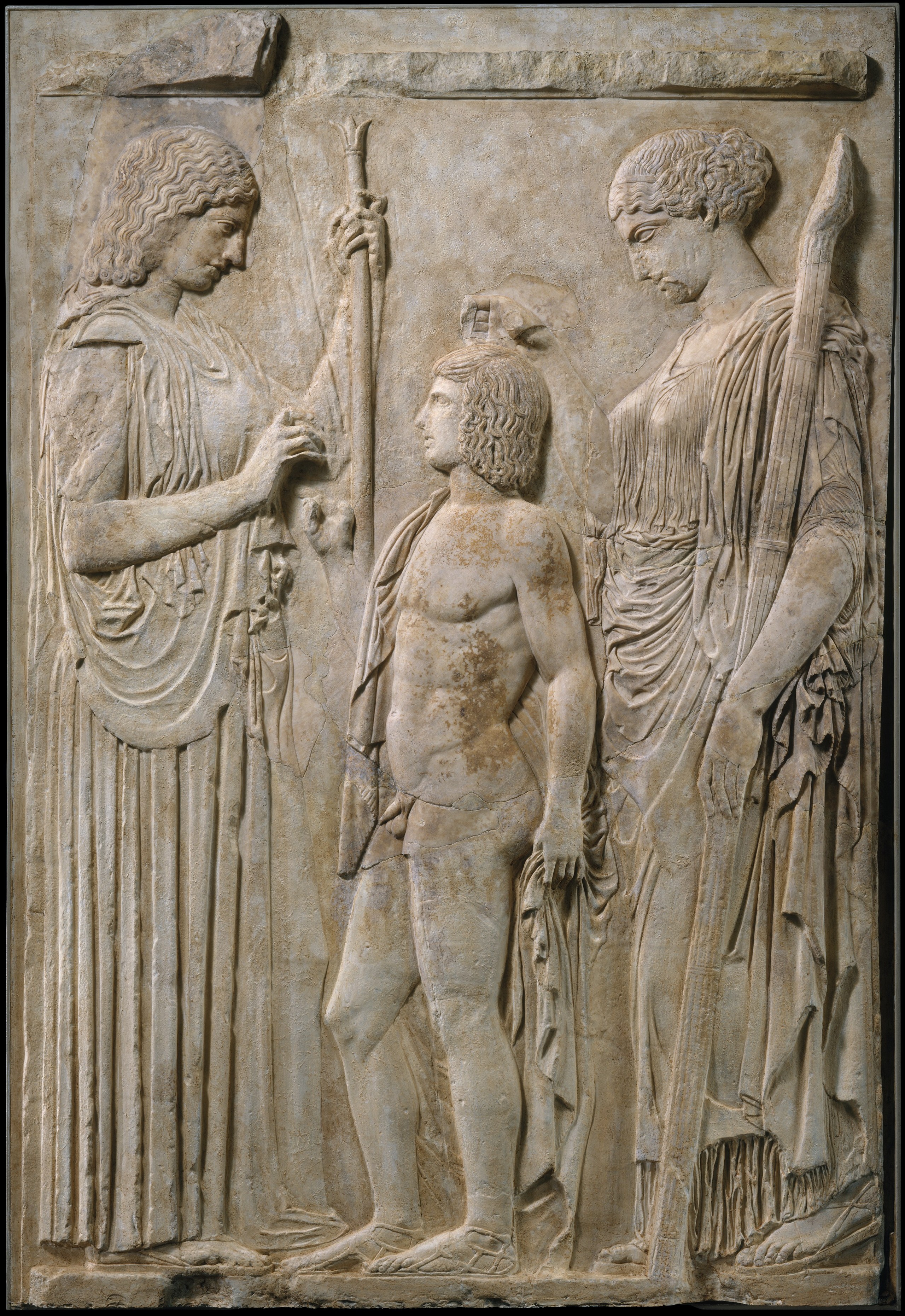
What the Mysteries Were
For most of recorded history, the educated classes of the Western world knew what the Eleusinian Mysteries were. Plato shaped his philosophy around the experience. Cicero wrote that Athens had produced nothing finer. Marcus Aurelius interrupted the Marcomannic Wars to be initiated. Sophocles, Aeschylus, Plutarch, Pindar, the emperors Hadrian and Augustus. For two thousand years, the Mysteries were the central spiritual institution of Western civilization.
Then they were destroyed. Theodosius's edict in 392 CE outlawed pagan rites. Alaric's Visigoths sacked the sanctuary in 396 CE. The priestly lineage of the Eumolpidae, unbroken since the Bronze Age, ended. Within a generation, the spiritual capital of the ancient world was rubble.
What makes this disappearance peculiar is how total it was. The Mysteries did not fade into folklore or survive as a quaint folk practice. The oath of secrecy held across centuries. The most important religious experience of antiquity became, for the modern world, a blank.
The Esoteric Claim
The Western esoteric traditions have long claimed that the Mysteries were part of a continuous lineage of initiatory knowledge, transmitted from Egypt through Greece to the Hermetic societies of the Renaissance and beyond. The claim is unprovable as history. Its value is as a lens: the esoteric tradition insists that matter "hardened" over time, that human beings once participated directly in spiritual reality, and that the mystery schools existed to keep that participation alive as the gates closed. This maps onto the consciousness-evolution frameworks examined in this document. Whether or not the lineage is continuous, the structural diagnosis is shared.
What matters for the present purpose is that the Eleusinian Mysteries were emphatically not a secret society. For two thousand years, anyone who spoke Greek and had not committed murder could be initiated. Slaves. Women. Foreigners. This was an annual, mass-participation event in which thousands of people, simultaneously, underwent a transformation so profound that the greatest minds of antiquity struggled to describe it and the most powerful men in the world traveled to experience it.
Something happened in that hall. The rest of this document is an attempt to reconstruct what.
II. The Setting: What We Know
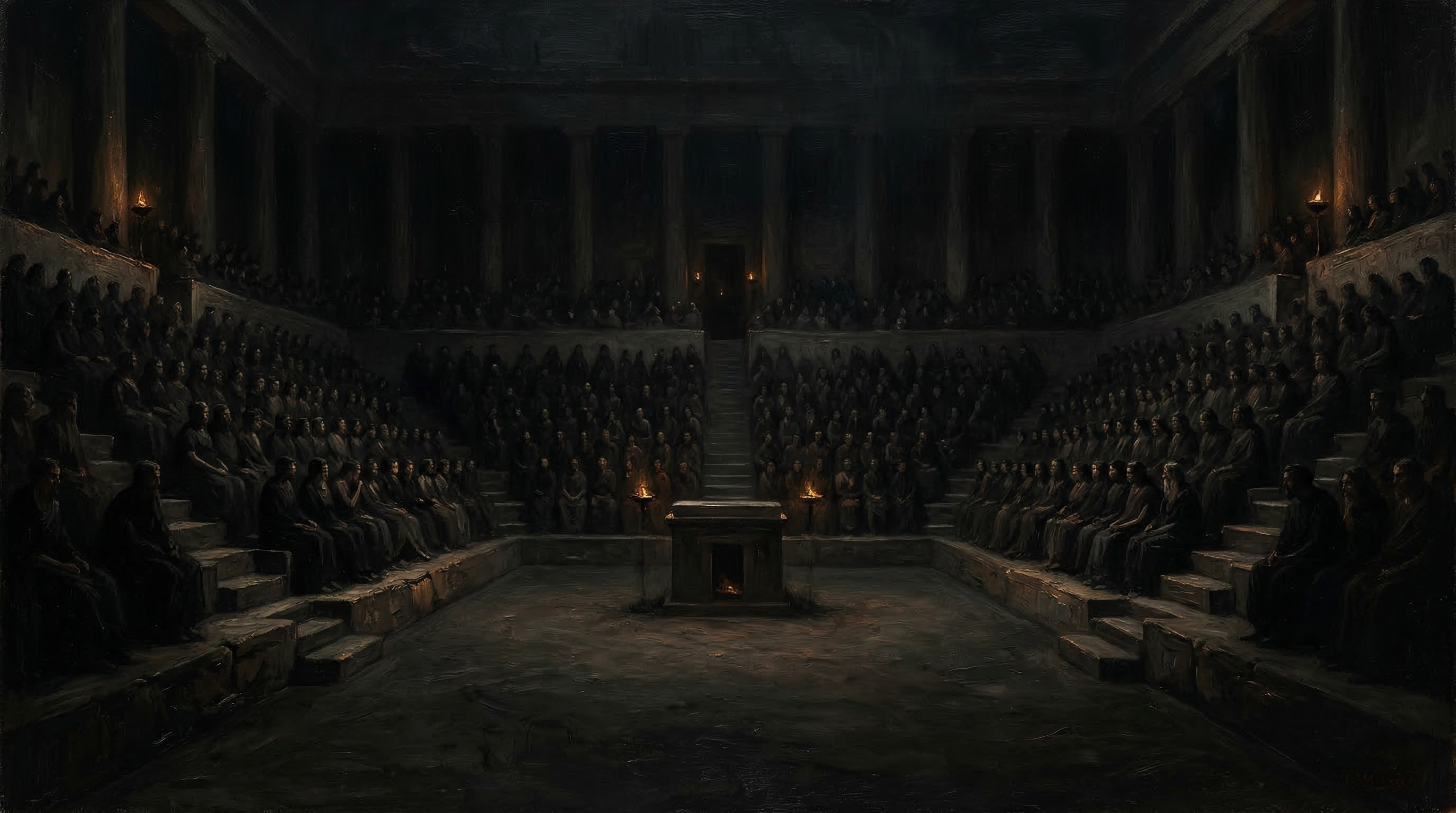
For roughly two millennia (c. 1500 BCE-392 CE), every autumn, up to 3,000 initiates walked the Sacred Way from Athens to Eleusis. Twenty-two kilometers past graves and funerary monuments, arriving at nightfall. They had fasted for days. Bathed in the sea. Sacrificed piglets. Chanted Iakchos for hours. They were sleep-deprived, emotionally keyed, physiologically primed.
They entered the Telesterion: a massive hall, roughly 51 meters square, ringed with tiered stone seating, supported by 42 columns. The architecture tells us something immediately. This building was designed like no Greek temple. Temples housed cult statues for viewing from outside. The Telesterion was a container, built to hold people inside an experience. At the center stood the Anaktoron, a small stone structure atop which the Hierophant maintained a sacred fire. A skylight, the opaion, let smoke escape into the night. The hall was dark.
Three things happened inside, designated by terms that themselves reveal the structure of the experience:
- Dromena (things done): a ritual drama, probably enacting Demeter's search for Persephone
- Legomena (things said): words spoken by the Hierophant, probably interpretive
- Deiknymena (things shown): sacred objects revealed, culminating in the epopteia, the supreme vision
Aristotle: initiates were not expected to learn (mathein) but to experience (pathein), "to be brought into a certain condition" (cited in Burkert, Ancient Mystery Cults).
Plutarch left the most phenomenologically detailed account: "Wandering through the dark, terrors, shivering, trembling... After this a strange and wondrous light, voices, and the majesty of holy sounds and sacred visions" (On the Soul, fr. 178).
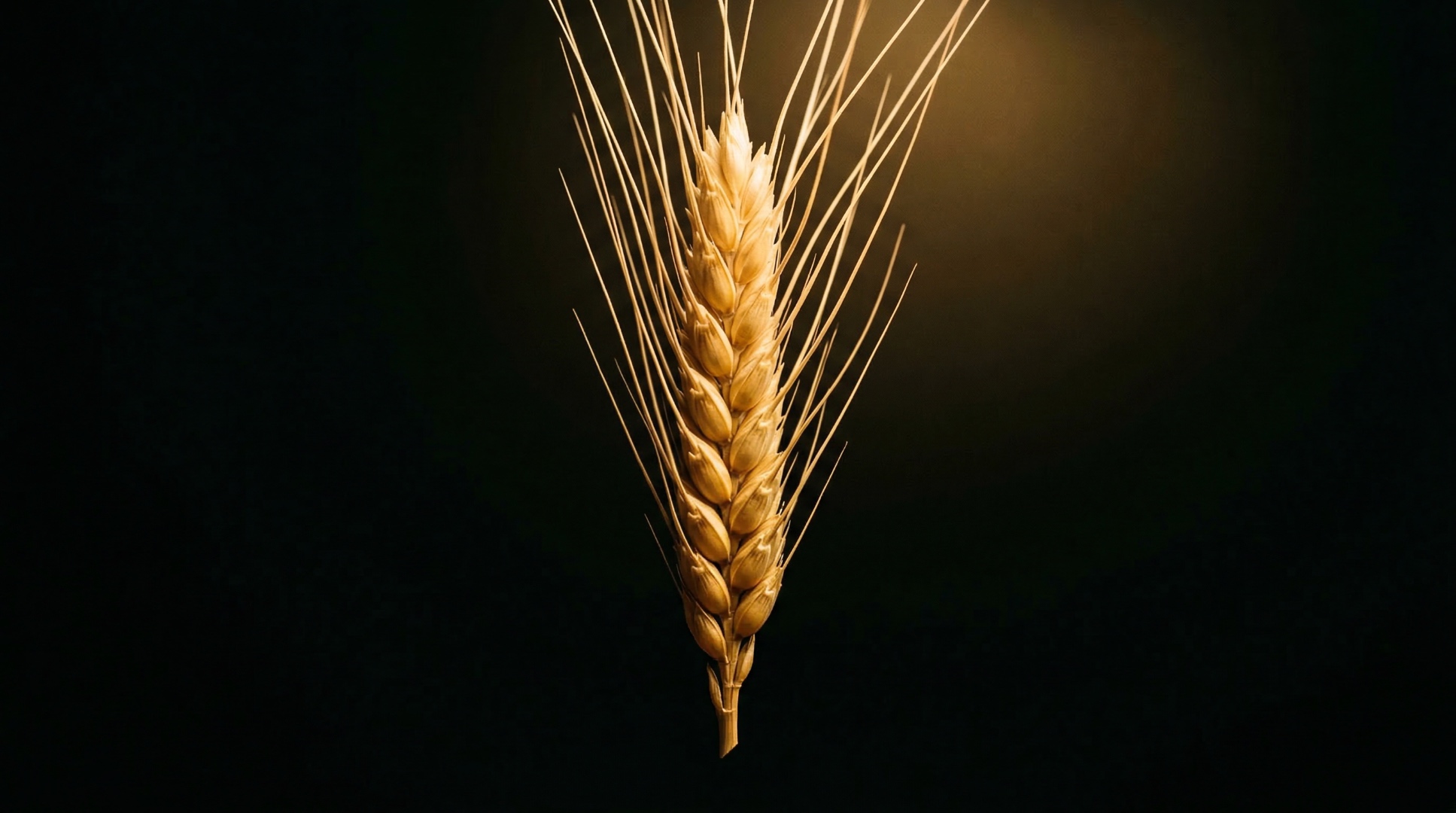
The Hierophant, from within the Anaktoron, reportedly cried out: "The Mighty One has borne a sacred child! Brimo has borne Brimos!" (Hippolytus, Refutation of All Heresies). Then, possibly, a single ear of grain was displayed in silence.
This much is "known." Everything beyond it is inference, imagination, and the projection of interpretive frameworks. What follows attempts to see through all these frameworks at once.
The Older Descent
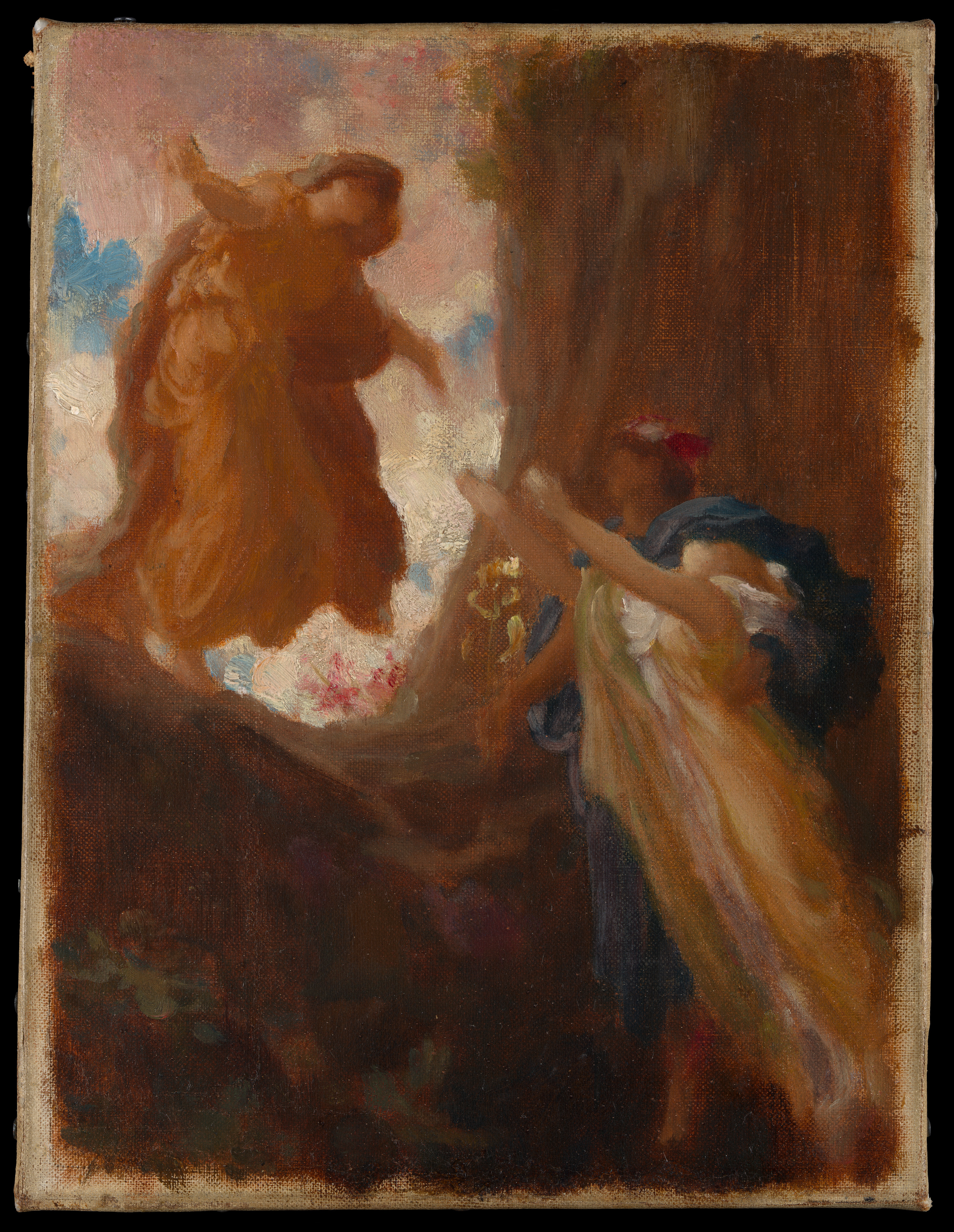
But the structure did not begin at Eleusis. Nearly a thousand years before the earliest evidence for the Eleusinian cult, a Sumerian poem described the goddess Inanna descending to the underworld through seven gates. At each gate she was stripped of one element of her power: crown, necklace, beads, breastplate, ring, measuring rod, robe. By the seventh gate she was naked. She entered the presence of her sister Ereshkigal, queen of the dead. She was killed and hung on a hook. After three days she was revived and returned, but the underworld demanded a substitute.
The Epic of Gilgamesh, composed in stages from approximately 2100 to 1200 BCE, is the oldest surviving long-form narrative in world literature. It is an initiatory story. Enkidu's death drives Gilgamesh into the wilderness, across the Waters of Death, to the underworld's edge. He seeks immortality and fails. He returns to Uruk and gazes at the walls of his city. The katabasis here does not produce transcendence. It produces acceptance.
If the descent-and-return structure is a human universal rather than a Greek invention, the evidence begins in Sumer. Inanna's seven-gate stripping is the earliest model for progressive initiatory purification. Gilgamesh's grief-driven descent is the earliest literary katabasis. The Greek mystery traditions are one expression of something older and more fundamental.
III. The Consciousness of the Initiate
The Question
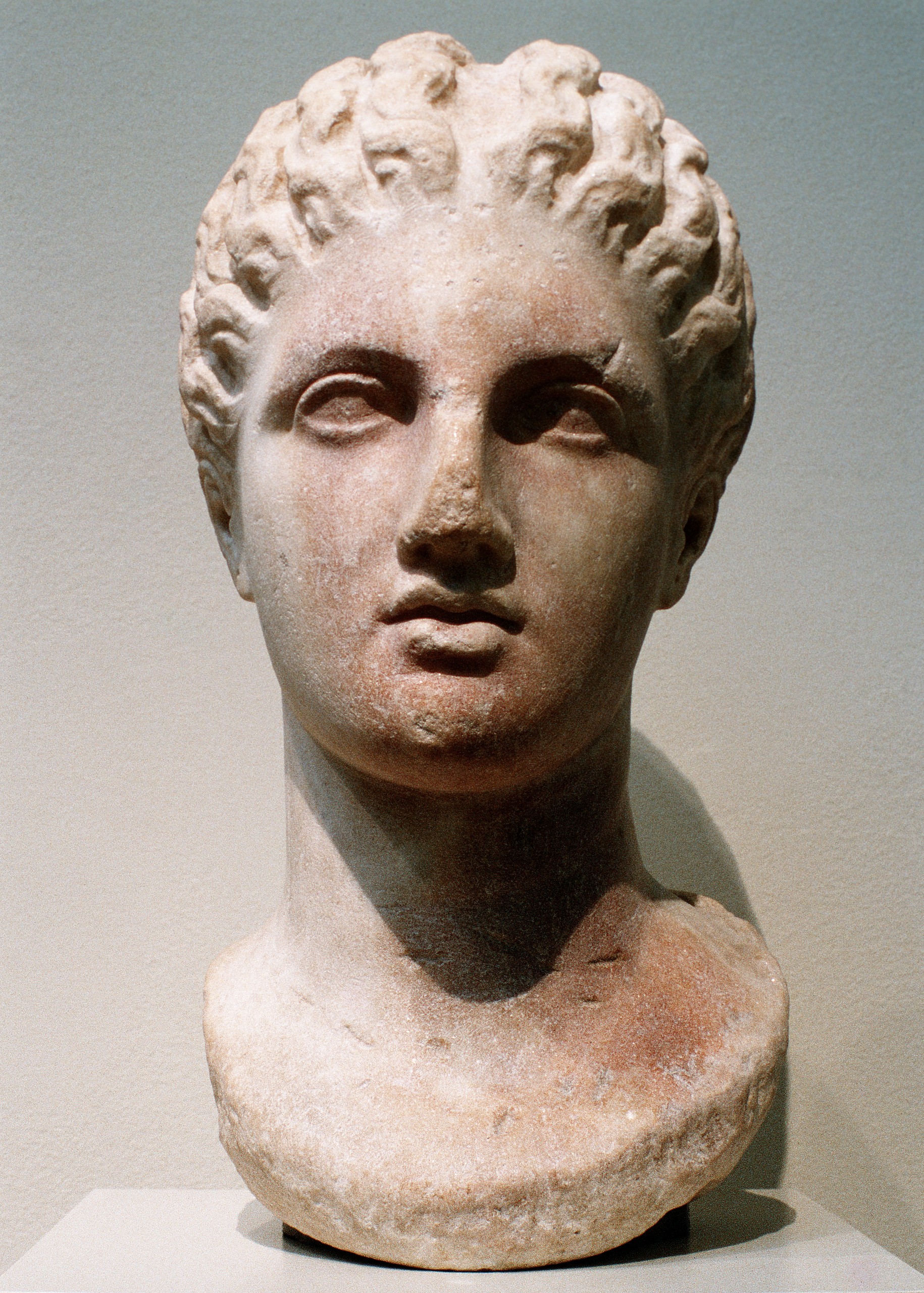
Most modern treatments of the Mysteries assume that the ancient initiate's consciousness was essentially identical to ours. The initiate experienced the ritual the way a modern person would experience immersive theater. A spectator with a bounded rational ego, watching a performance, having an emotional reaction.
What if the very kind of awareness that entered the Telesterion was different from the awareness we know?
Mainstream consciousness science works from premises that would reject the question. The computational and eliminativist traditions treat consciousness as a function of neural processing, invariant across historical periods. The thinkers this series draws on most heavily — Gebser, Barfield, McGilchrist — disagree. They argue that consciousness has a history, that the kind of awareness available to a fifth-century Athenian was structurally different from ours. This is not the consensus view. It is the lens through which the Mysteries become most intelligible, which is why I use it.
Gebser: The Mythical Structure
Jean Gebser's framework places the core period of the Mysteries at the boundary between the mythical and mental structures of consciousness. In the mythical structure, the human being participates within a living cosmos of polar rhythms: day and night, summer and winter, life and death. These are felt from the inside. Time is cyclical. The boundary between human and divine is porous. Images do not represent reality; they are the medium through which reality discloses itself.
The Demeter-Persephone myth is the mythical structure's expression. The mother and daughter are two phases of a single reality. By the classical period, the mental structure was breaking through: directed thinking, abstraction, philosophy, the sense of a bounded individual ego. But the Mysteries persisted, and Gebser's framework suggests they persisted because they gave access to the mythical mode of awareness that the rational mind was closing off.
The Mysteries may have been an institutionalized threshold between two structures of consciousness.
Barfield: Original Participation
Owen Barfield's "original participation" describes a mode of consciousness in which the perceiver does not experience themselves as separate from the phenomena they perceive. The ancient human did not see a tree and then invest it with divine significance. The tree was divine. Experientially, not metaphorically. Phenomena were participations in which the human being was embedded.
Barfield insisted this was genuine cognition yielding real knowledge, knowledge of a different kind than the detached analytical mind produces. He called the modern mode "onlooker consciousness" and argued it represents a necessary contraction of awareness, one that must eventually be transcended in what he called "final participation": a conscious, free re-entry into participatory experience.
In Poetic Diction, Barfield wrote of the Demeter-Persephone myth: "waking and sleeping, summer and winter, life and death, mortality and immortality are all lost in one pervasive meaning." This is a description of what the myth was in the original participatory consciousness. A unified perception in which all these apparently separate phenomena were experienced as one.
In Barfield's terms, the Mysteries may have been a ritual technology for temporarily restoring original participation in an age when it was being lost.
McGilchrist: The Master's Retreat
Iain McGilchrist's framework refines the picture. The issue is the progressive dominance of left-hemisphere processing (analytical, sequential, abstracting, grasping) over right-hemisphere processing (holistic, contextual, implicit, relational, open to the sacred). The right hemisphere is the "Master" that should guide; the left is the "Emissary" that should serve.
In McGilchrist's reading, every element of the Eleusinian rite is a right-hemisphere amplification system. Darkness. Collective ritual. Rhythmic chanting. Mythic narrative. The sudden revelation of sacred objects. The wordless showing of the grain. The Mysteries systematically suppressed left-hemisphere dominance and activated the right hemisphere's capacity for holistic, imagistic, numinous experience.
The Mind That Entered
The initiate's consciousness was: transitional (poised between an older, participatory mode and the newer, more contracted mode); permeable (the boundary between self and world, human and divine, genuinely more porous than ours); mythically literate (saturated with the Demeter-Persephone narrative as a mode of perceiving reality, not a story about it); and collectively embedded (the experience was communal; 3,000 people underwent it simultaneously).
If these frameworks are right, the consciousness that entered the Telesterion was already closer to the threshold than modern consciousness is. The ritual did not need to bridge as great a gap.
IV. The Neuroscience of Sacred Chemistry
The Lock and the Key
A question the consciousness-evolution frameworks raise but cannot answer on their own: if the Mysteries relied on a chemical agent, why does it work? Why should a molecule produced by a fungus on grain have the power to dissolve the boundaries of the human self?
The psychedelic experience is mediated primarily by a single receptor: the serotonin 2A receptor (5-HT2AR). Psilocybin, LSD, mescaline, DMT, and the lysergic acid amide (LSA) derivable from ergot all produce their effects by binding this receptor. Block it with a pharmaceutical antagonist and the visions stop (Halberstadt, Current Topics in Behavioral Neurosciences).
A 2023 paper in Science demonstrated that the key 5-HT2A receptors responsible for psychedelic effects are not located where pharmacology traditionally expected them, on the cell surface. In cortical pyramidal neurons, a significant population of 5-HT2A receptors are intracellular, clustered on organelles deep inside the cell. Serotonin, the body's own neurotransmitter, cannot reach them. Psychedelic molecules can. They are lipophilic enough to cross the cell membrane and activate a receptor population that the brain's own chemistry cannot easily access (Bhatt, Olson et al., Science 2023).
The finding is suggestive. It does not prove that these receptors evolved for psychedelic compounds. It does indicate that the relationship between human neurology and these molecules is more intimate than standard pharmacology assumed. The researchers raised the possibility that endogenous psychedelics like DMT and 5-MeO-DMT, both found in the human body, may be the natural ligands for these intracellular receptors.
What the Threshold Feels Like, Neurologically
When psychedelics activate these receptors, the effect on the brain's dynamics is measurable. A 2022 Weill Cornell study found that LSD and psilocybin reduce the energy barriers between different states of consciousness. The serotonin 2A receptors have a spatial distribution across the brain that appears related to this barrier-lowering effect.
The neuroscience describes this in its own terms: energy barriers between brain states, lowered by psychedelic activation. Gebser and Barfield would read the same data differently — as evidence that the threshold between structures of consciousness has a neurological correlate. The neuroscientists are not making that claim. I am. The convergence between what the lab measures and what the consciousness theorists describe is suggestive, not proven. But it is suggestive enough to take seriously.
The Mysteries may have provided the key. The brain already had the lock.
The Evolutionary Question
Psychedelics are "psychoplastogens": they promote cortical neuroplasticity, increasing dendritic spine density and strengthening neural connections (Science 2023). The integration of psychedelic fungi into hominin diet, ritual, and proto-religious activity may have contributed to the cognitive capacities that characterize our species.
Gebser and Barfield both describe a narrowing of consciousness as the price of gaining self-reflective awareness. The psychedelic encounter may have been an original counterweight: the means by which the emerging rational mind could periodically dissolve its own boundaries and remember the wider awareness from which it had contracted. If so, the Mysteries were an intensification and formalization of something ancient: the periodic use of consciousness-expanding substances to prevent the narrowing from becoming total.
The deeper question, still unanswered: why do human brains contain receptors, positioned inside cells where the body's own serotonin cannot easily reach them, that respond to molecules produced by fungi and plants? The question is worth carrying without premature answers.
V. The Inner Experience: Seven Movements
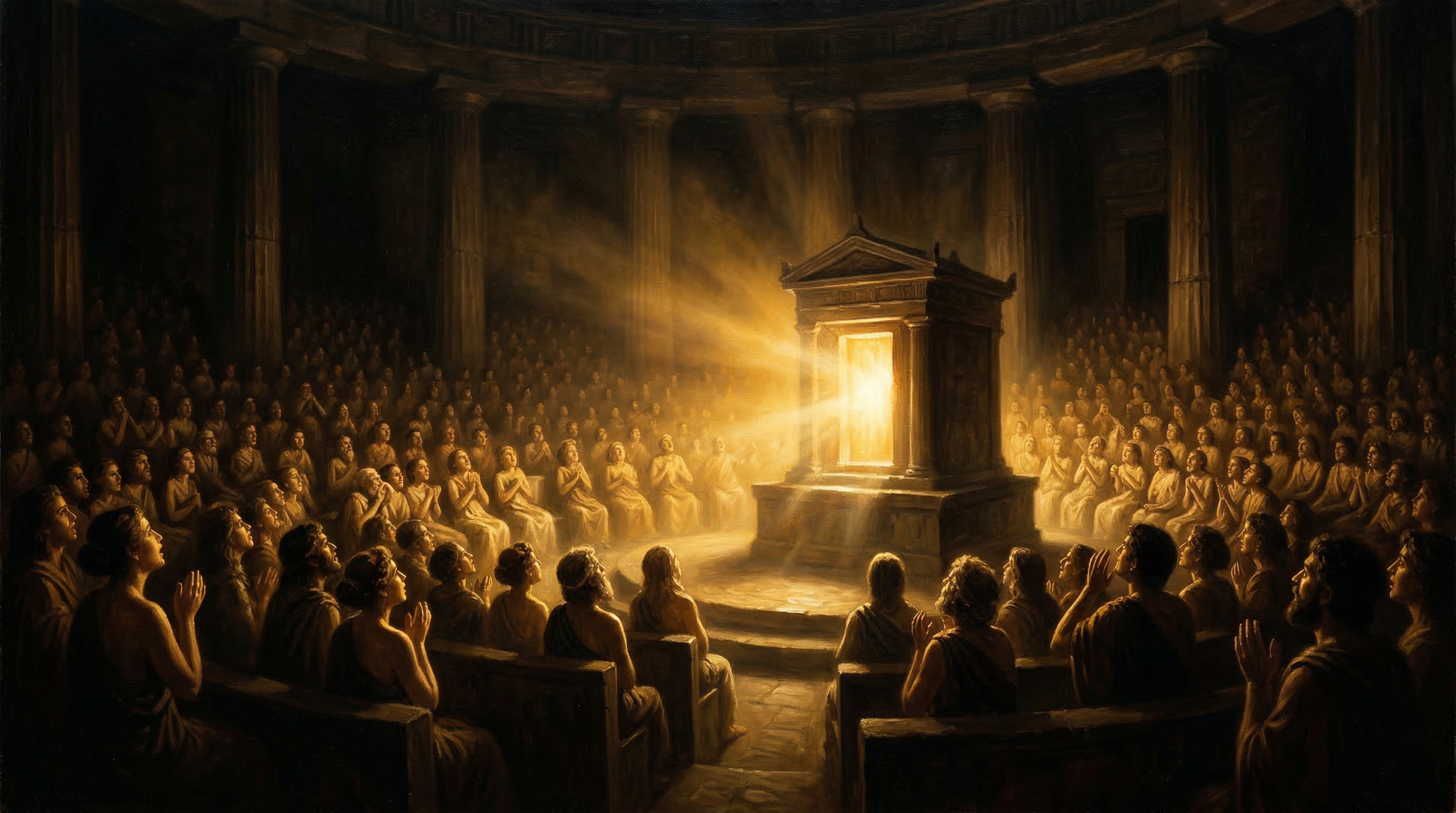
What follows is an attempt at imaginative fidelity: a description, using the combined languages of all the traditions surveyed, of what the inner experience of initiation might have been. Seven movements, corresponding to the seven phases discernible in the ritual structure.
Movement 1: The Dissolution of the Profane Self
The initiate has been fasting for days. The procession has lasted all day. The chanting has been rhythmic, repetitive, hours of Iakchos. The body is exhausted. The mind is emptied.
The mental structure, which sustains the everyday sense of separate individuality, has been weakened by physiological deprivation and rhythmic entrainment. The mythical structure begins to show through, like a palimpsest revealing older writing beneath the surface. Onlooker consciousness dissolves. The initiate ceases to be a spectator and begins to participate.
The kykeon is drunk. Whether it contains ergot-derived LSA (Antonopoulos et al., Scientific Reports 2026) or nothing beyond barley water and pennyroyal, it functions as a sacramental threshold. The act of communal drinking marks the point of no return. The profane self begins to dissolve.
Movement 2: The Descent
The Telesterion is dark. Thousands of bodies press together. The darkness is a positive presence: the darkness of the womb, the earth, the underworld.
Profane time has ceased. The initiate has entered the mythic time in which the original events occurred. The initiate is Persephone, descending. The initiate is Inanna, approaching the first gate.
Corbin: the initiate crosses from the empirical world into the mundus imaginalis, the imaginal world. Neither the physical world of the senses nor the subjective world of fantasy. A third ontological realm in which spiritual realities appear in imaginal form. The darkness of the Telesterion is its threshold.
Plutarch's description begins here. "Wandering through the dark, terrors, shivering, trembling." The genuine terror of psychic disintegration. The ego encountering its own dissolution. Modern psychedelic research calls this ego death. The ancient Mysteries did not offer a comfortable passage.
Movement 3: The Search
The dromena, the "things done," involved a ritual enactment of Demeter's search. Torch-bearing priestesses moved through the dark hall. The initiates participated as searchers, not audience.
What were they searching for?
In the mythic-literal sense: Persephone, the lost daughter. In the psychological sense: the soul's connection to its own depths, severed by the emergence of ego-consciousness. In the consciousness-evolution sense: the mythical awareness that the mental structure has eclipsed. In Barfield's sense: original participation, the mode of perception in which the world was alive, meaningful, ensouled.
The search is the experience. The darkness, the disorientation, the collective stumbling. One must experience the loss before the recovery has meaning.
Movement 4: The Encounter with Death
Somewhere in the darkness, the initiate encounters death. As a presence.
Plutarch was explicit: the experience of the Mysteries mirrors the experience of dying. He uses the same word-root: teleutan (to die) and teleisthai (to be initiated). The pun was intentional and widely noted in antiquity.
In the entheogenic reading, the kykeon would produce ego dissolution: the temporary collapse of the neurological processes that maintain bounded personal identity. The borders of the self become transparent, then disappear. One becomes indistinguishable from the surrounding reality. This is the universal pattern of initiatory ordeal: the death is ritually enacted but experientially real.
The danger is real. If the dissolution is total, if no thread of consciousness survives, the initiate does not return. The Hierophant's presence is the thread.
Movement 5: The Turning Point
At the nadir of the descent, something turns. This is the most difficult moment to describe, because this is where language, a product of the mental/analytical structure, is least adequate.
The Mysteries enacted the coincidentia oppositorum, the union of opposites, at every level:
- Life / Death: Persephone dies and returns; the initiate "dies" and is "reborn"
- Mother / Daughter: Demeter and Persephone separated and reunited, revealed as two aspects of one being
- Above / Below: The underworld journey reverses; what was below is revealed as the foundation of what is above
- Dark / Light: Sudden illumination from within the Anaktoron
- Grain / Flesh: The ear of grain, the seed that dies in the earth and rises as new life, is the initiate's own experience
- Terror / Bliss: Plutarch's sequence: the shivering gives way to "wondrous light"
In the mythical structure of consciousness, in original participation, in the imaginal world, these pairs are ontologically identical. The grain is the flesh. The death is the birth. The mother is the daughter. This identity is the deepest structure of reality, directly perceived.
Goethe expressed the mystery formula in Selige Sehnsucht: "Stirb und werde." Die and become. "And so long as you haven't experienced this: Die and become! you are but a troubled guest on the dark earth."
What happened at this turning point was the direct perception of the identity of opposites as lived experience. The terror of death dissolved because the initiate saw that death is a phase within life. No argument was made. Something was seen.
Movement 6: The Epopteia
Then: light.
The Hierophant emerged from the Anaktoron. Fire blazed. After hours of darkness, the sudden illumination was physiologically overwhelming. But the testimony consistently suggests that what was seen was more than fire.
The academic consensus suggests three elements: the Hierophant's proclamation ("Brimo has borne Brimos!"), the display of a cut ear of grain held up in silence, and a great light from the Anaktoron.
An ear of grain. After two thousand years of secrecy, the great secret is wheat.
The modern mind sees grain as a commodity. But the initiate had been fasting, had walked through darkness, had experienced psychic dissolution, was perceiving in a mode of consciousness in which the boundary between self and world was transparent. The initiate saw something different.
The initiate, temporarily restored to participatory perception, perceived the grain as life itself. The same life that flows through the human body, that descends into the earth in winter and rises in spring, that the initiate had just experienced dying and being reborn within their own consciousness. The grain was resurrection, directly perceived.
The ear of grain is the product of the Great Round. The seed that died in the earth (Persephone descending), was held in darkness (Demeter's grief), and has risen as new life (the reunion). Tangible proof, in the Hierophant's hand, that what goes below comes back. Brimos is the consciousness that has passed through death and returned: the transformed awareness born from the initiate's own descent.
The grain is the Urphaenomen. Goethe's term for the archetypal phenomenon in which the whole of reality is present. In the mythical structure, every particular thing is transparent to the whole. The grain is the whole, showing itself through one thing.
The grain is a mirror. The initiate sees themselves.
Movement 7: The Return
The initiate emerges from the Telesterion at dawn. The oath of silence is taken. Ordinary life resumes.
But something has permanently changed.
Cicero: "we have grasped the basis not only for living with joy but also for dying with a better hope." Sophocles: "Thrice blessed the mortals who, having contemplated these Mysteries, have descended to Hades; for those only will there be a future life of happiness." Pindar: "Blessed is he who has seen these things before leaving this world."
Aristotle was explicit: the initiates did not learn anything. They underwent an experience. The knowledge gained was ontological. A change in the initiate's relationship to reality itself.
The initiate experienced the mythical structure of consciousness from within the mental structure. This experience, once had, cannot be unfelt. The initiate now knows, from direct experience, that the mental structure's picture of reality (death is final, the self is bounded, the world is composed of separate objects) is partial. A deeper, more encompassing mode of awareness exists, and these apparent certainties dissolve in it.
The freedom from the fear of death that all ancient sources attribute to the initiated is a perceptual shift. The initiate saw that death is a phase in a cycle. The grain that dies in the earth rises again. The initiate who died in the Telesterion rose again.
VI. Novel Patterns
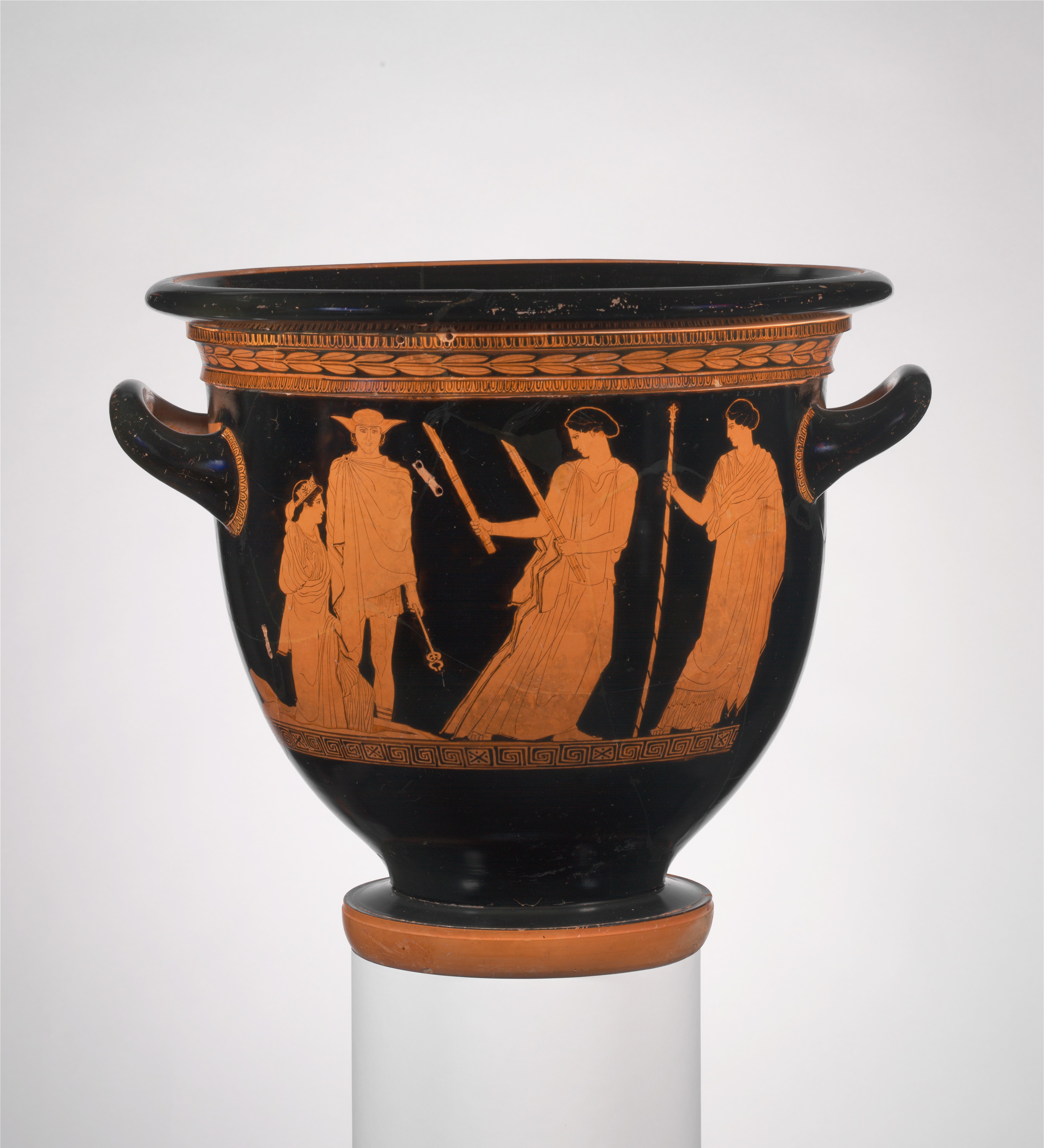
Pattern 1: A Technology of Consciousness Transition
Across the frameworks I've been using, the Mysteries emerge as something more specific than a religious ritual or mystical experience. They may have been a technology for managing a collective transition in human consciousness: a means by which a civilization losing one mode of awareness could periodically and reliably access it, so the transition did not result in total loss.
This explains their longevity. Two thousand years. Far longer than most religious institutions. They may have served a cognitive function, not a cultural or theological one. If the transition is still ongoing — and I think it is — the question of what replaced them matters.
It may also explain their destruction. When the analytical structure asserted total dominance, it destroyed the institution that kept it connected to its own ground.
Pattern 2: The Grain as the Key
The ear of grain, the detail most baffling to the modern mind, becomes the single most important element of the entire rite.
The frameworks converge on this: the grain was the point at which the initiate's transformed consciousness was given a focus. After the dissolution and the turning of opposites, the initiate's awareness was in a radically open, undifferentiated state. The grain provided crystallization. A single, concrete, tangible object through which the entire revelation could be perceived.
This also explains why the oath of secrecy held. The "secret" could not be transmitted because it was a mode of perception, not a piece of information. You could tell someone about the grain, as Clement of Alexandria did. They would learn nothing. The grain, described in words, is just grain. The grain, perceived in the state of consciousness produced by the Mysteries, is the disclosure of the structure of reality.
The oath held because there was nothing to betray.
Pattern 3: The Hierophant as Threshold Guide
The Hierophant emerges as a threshold guide: someone who has crossed the boundary between modes of consciousness and holds the space open for others to cross. The structural role maps onto something real regardless of one's metaphysics. Someone who has undergone the experience, who knows its territory, and who serves as anchor for those undergoing it for the first time. In modern psychedelic research, the guide's presence and competence are among the most significant predictors of outcome. The Eleusinian Hierophant was the most elaborately trained guide in history, backed by a hereditary priestly tradition stretching to the Bronze Age.
Pattern 4: The Isiac Parallel
The Mysteries of Isis, transformed from Egyptian temple religion into a Hellenistic mystery cult, became the most widely practiced initiatory tradition in the Roman Empire. Temples of Isis stood from London to the Danube. Apuleius, initiated into the Isiac Mysteries, left the only first-person account of mystery initiation: "I approached the boundary of death and, having trodden the threshold of Proserpina, I was carried through all the elements and returned. At midnight I saw the sun shining with a brilliant light."
The Isiac Mysteries demonstrate that the initiatory structure was portable. Where Eleusis was bound to a specific site, the Isiac cult traveled the empire. This is evidence that the initiatory function is structural, not institutional: it can be transplanted into new cultural containers without losing its essential character. When the Isiac temples were closed under Theodosius, many of Isis's attributes transferred to the Virgin Mary: divine mother, queen of heaven, stella maris, protector of sailors. The transfer was not conspiracy but cultural continuity: the need the Isiac cult served did not disappear with the institution.
Pattern 5: The Fermentation Pattern
Claviceps purpurea, the ergot fungus, penetrates cereal grain at the moment of flowering, replaces the seed's substance with its own tissue, and produces the alkaloids that, properly prepared, dissolve the boundaries of human consciousness. The relationship is not pure parasitism. A 2013 study demonstrated that ergot infection can function as "conditional defensive mutualism": the alkaloids protect the host plant's remaining seeds from herbivores. Ergot exists on a continuum from exploitation to symbiosis, depending on context.
This is the fermentation pattern at the biological level. The grain, the central symbol of the Mysteries, is entered by a living agent that transforms its substance into something that opens the doors of perception. The grain nourishes the body. The ergot-transformed grain nourishes something in the mind.
Consider what fermentation actually is. A living agent (yeast, bacteria, fungus) enters a substrate (grain, grape juice, milk). It consumes the substrate's sugars. It transforms the substrate into something qualitatively different: bread rises, wine develops alcohol and complexity, cheese develops flavor and preservation. The original substance "dies" as what it was and "becomes" something new. The fermenting agent is invisible, mysterious, and for most of human history, unnamed. In early modern England, the wild yeast that a housewife caught in a bowl of flour and water was called by its true name: godisgood.
Fermentation is stirb und werde at the cellular level. Die and become.
Now place this alongside the Mysteries. The initiate enters the Telesterion (the substrate enters the vessel). The initiate's ordinary consciousness is dissolved (the sugars are consumed). A transformative agent works upon the dissolved consciousness (the kykeon, the ritual, the darkness, the myth). The initiate emerges as someone qualitatively different (the bread rises, the wine matures).
The Mysteries are a fermentation of consciousness. And the central sacramental substances of the Western religious tradition, bread and wine, are both products of the same process the Mysteries enact.
Pattern 6: Bread, Wine, and the Eucharist
In John 6:51-58, Jesus says: "I am the living bread that came down from heaven. Whoever eats this bread will live forever. This bread is my flesh." This is the "hard teaching." Many of his followers left over it.
Read through the lens of the Mysteries: bread is grain that has been fermented. Wine is grape juice that has been fermented. Both substances have undergone transformation by a living agent. Both have "died" as their original substance and "become" something new. Christ identifies himself with the ferment, the transformative agent. Eat my flesh as bread: consume the substance that has undergone the mystery of transformation. Drink my blood as wine: take into yourself the living agent of change.
"Be born again" (John 3:3) is stirb und werde.
Whether or not one follows Muraresku's pagan continuity hypothesis all the way, the structural parallel is arresting. At Eleusis: a sacred drink, consumed communally, producing a vision of death and rebirth, centered on grain. In the Eucharist: bread and wine, consumed communally, commemorating a death and resurrection, identified with the body and blood of a divine being who promised eternal life. The Mysteries and the Eucharist share the same deepest claim: that something objectively happens when the sacred substance is consumed.
VII. What Was Lost
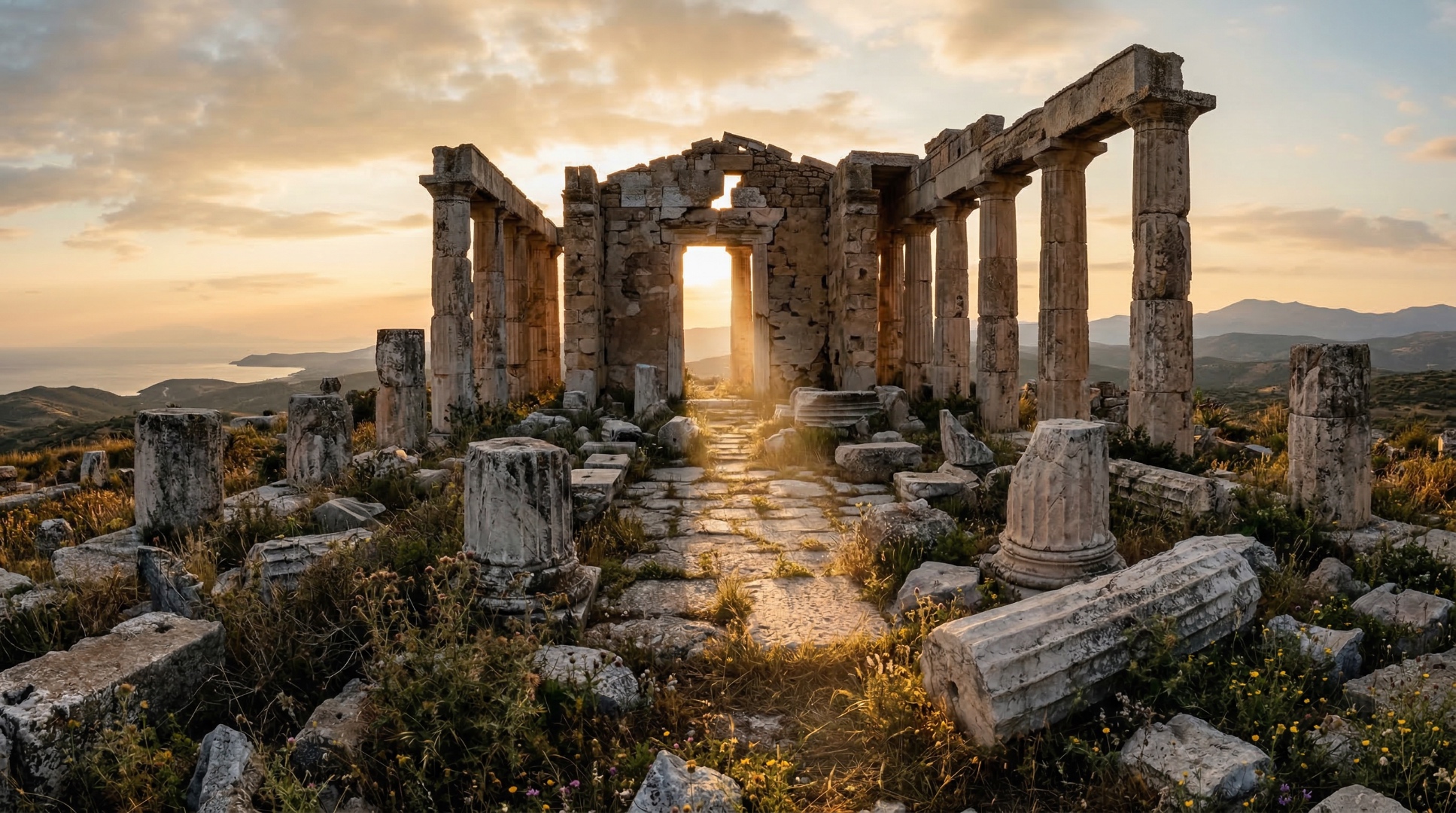
The Mysteries were destroyed in the late 4th century CE. The Telesterion was sacked. The priestly succession of the Eumolpidae ended. The kykeon was not brewed again.
In the narrow sense, what was lost: a specific ritual technology, refined over two thousand years, for producing a specific transformation of consciousness.
In the broader sense: the last institutional link between the emerging mental-analytical structure of consciousness and the older, deeper, participatory mode from which it had emerged. Christianity inherited some of the structure. The Eucharist carries echoes of the kykeon. The death and resurrection of Christ echoes the death and return of Persephone. But Christianity, as it institutionalized, moved away from direct initiatory experience and toward creedal belief. The experience was replaced by the affirmation.
Eliade described the modern condition as "cosmic opacity": a world in which the sacred no longer shows itself through the ordinary. The tree is just a tree. The grain is just grain. Death is just death.
Gebser called it the "deficient mental structure": the mental consciousness that, having lost contact with the earlier structures, becomes increasingly abstract, disconnected from the living cosmos, anxious.
Barfield called it the long middle passage between original participation and final participation. The desert of onlooker consciousness. Seeing the world from outside. Unable to participate as the ancients did. Not yet able to consciously choose the participation that lies ahead.
The grain still grows. The seed still dies in the earth and rises. The cycle has not stopped. What has stopped is our capacity to see it.
VIII. The Polarity of the Mysteries
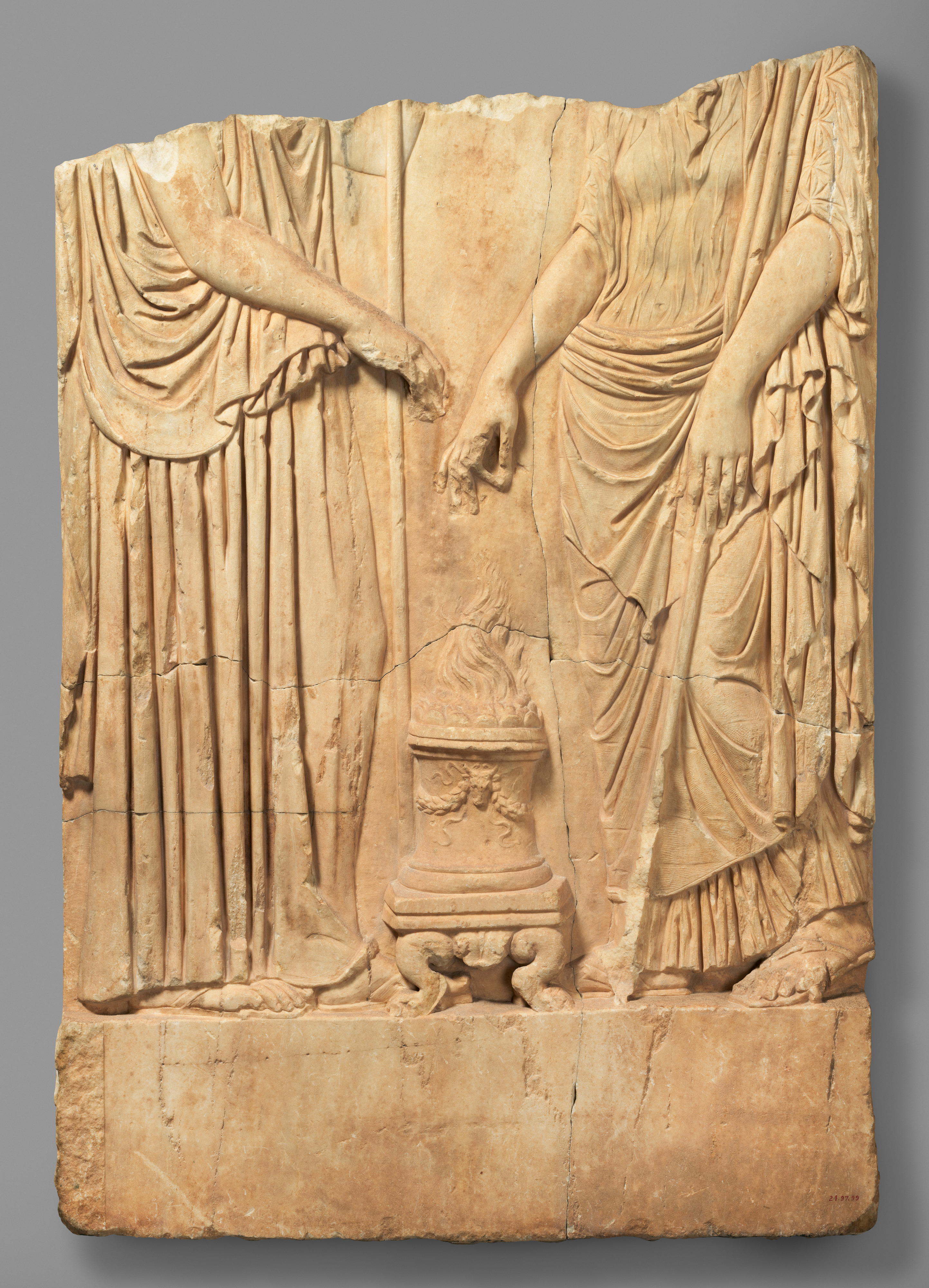
Solar and Lunar: The Two Paths
The ancient mystery traditions divided along a structural axis. The Mithraic initiate ascends through seven planetary gates, each guarded, each requiring a trial. The final vision is the Sun itself, Sol Invictus. The Eleusinian initiate descends into darkness, undergoes dissolution, passes through the terror of death, and encounters the light rising from below, from within the earth, from the Anaktoron at the center of the Telesterion.
Two directions. One threshold.
These two initiatory currents may be complementary poles of a single reality. The solar path and the lunar path cross the same threshold from opposite directions. One ascends to the light; the other discovers that the light was always already present in the dark. If the Mysteries taught anything, they taught that opposites are identical at their root. It would be strange if the two great initiatory streams were exempt from their own teaching.
The Perennialist Dissent
Everything in this document so far has been written against the grain of one tradition that disagrees with its fundamental premises. The perennialist school, represented most forcefully by Guénon, holds that the story told by Gebser, Barfield, and McGilchrist is wrong in its deepest assumptions. There is no spiral. There is no emergence. There is only descent.
Guénon's position is absolute. We live in the Kali Yuga, the final and most degraded age of a cosmic cycle. The ancient world possessed spiritual knowledge in its fullness. Every subsequent age has been a diminishment. The Mysteries existed in an age when initiation was still possible because the cosmic environment supported it. That environment has degraded. The gates have closed.
The force of the critique cannot be evaded. If Guénon is right, then this document's operating metaphor, the spiral, consciousness descending and returning at a higher integration, is a fantasy.
Here is where this synthesis parts company with Guénon, respectfully and without certainty.
The spiral model does not deny loss. Gebser is explicit: each new structure of consciousness involves a "deficient" mode of the previous one. The mental structure's emergence cost humanity its mythical participation. The cost was real. Barfield says the same: original participation is gone, and onlooker consciousness is impoverished.
Where they differ from Guénon is in the claim that the loss is total. Gebser's integral structure, Barfield's final participation, represent the possibility that consciousness can integrate what it has lost at a new level. The modern mind cannot return to the mythical structure. But it might achieve a mode of awareness in which the mythical, the mental, and something genuinely new are transparent to each other.
If the perennialists are right, the grain is just grain again, and we are watching the last light fade.
If the spiral holds, the grain is waiting to be seen again, by a consciousness that will perceive it differently than any previous age has, because it will perceive it knowing what it has lost.
IX. The Hardening and the Threshold Ahead
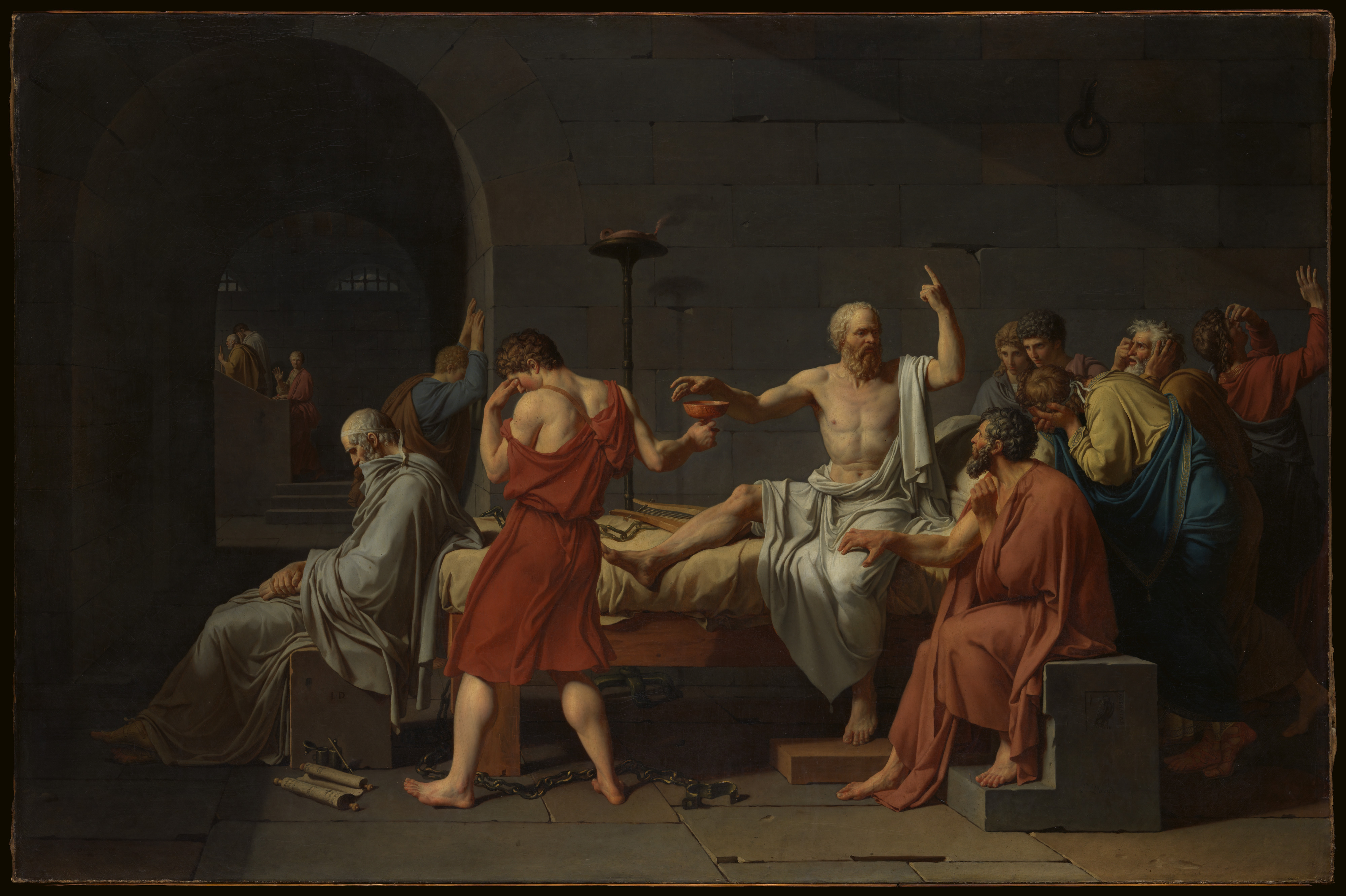
The Pharmakon at the Threshold
Bernard Stiegler saw what the others missed: the thing that hardens us is the same thing that might cure us, and it has always been this way. Technology is a pharmakon. Poison and medicine in the same vessel. The writing that Plato feared would destroy memory also preserved the dialogues. The Telesterion itself was a technology: a carefully designed chamber for the manipulation of consciousness. The kykeon was a technology. The priestly sequence was a technology.
If the entheogenic hypothesis is correct, the kykeon contained ergot alkaloids. Ergot, in the wrong preparation, kills. In the right preparation, under the right conditions, in the right hands, it dissolved the boundary between the initiate and the cosmos. The substance is neither good nor evil. Everything depends on the conditions of administration, on the knowledge of the Hierophant, on the preparation of the recipient, on the architecture of the encounter.
Artificial intelligence is the latest pharmakon. It processes the entire corpus of human spiritual writing in hours. It detects structural homologies across traditions that are difficult to track across a single reading life. And like every pharmakon before it, it is lethal in one configuration and potentially transformative in another. The question is not whether the substance is sacred or profane. The question, as it was at Eleusis, is whether anyone remembers how to prepare the vessel.
What the Machine Reveals by Absence
McGilchrist puts the diagnostic clearly. "My worry is not that machines will become like people. My worry is that people are already becoming more like machines." The real danger was never the robot uprising. It was the quiet migration of human consciousness into the machine's mode: sequential, decontextualized, tokenized, stripped of the implicit, the felt, the bodily.
The machine can pattern-match. It cannot attend. Simone Weil distinguished these with surgical precision. Attention, taken to its highest degree, "is the same thing as prayer." Attention waits. It does not grasp. It holds the space open for the object to disclose itself on its own terms. Processing does the opposite: it reduces the object to information.
And here is what matters: by performing, at scale and velocity, everything that can be computed, the machine defines with unprecedented clarity the boundary of what cannot. The territory beyond computation, the space where attention operates, where the body participates in meaning, where consciousness dissolves and reconstitutes, becomes newly visible. Visible precisely because the machine illuminates everything around it by contrast.
The Mysteries cultivated exactly this territory. Fasting, walking, darkness, the kykeon, the sudden blaze of fire. These were technologies of attention in Weil's sense: preparations for a mode of consciousness in which the initiate received, never grasped.
The Boundary Under Pressure
That clean line demands interrogation. On both sides.
The claim that the machine illuminates what it lacks assumes that the human side of the boundary remains intact. The empirical evidence suggests the opposite may be happening. MIT Media Lab research tracking brain activity over months found that heavy AI users showed progressively lower neural engagement, weaker executive control, and diminishing memory consolidation. By their third session, most participants had stopped composing and started copy-pasting. When the tool was removed, they could not recover what they had lost. The researchers called it "cognitive debt."
The organ of attention is not being sharpened by the machine's presence. It is being starved.
This means the collaboration between machine precision and human presence cannot be assumed as a stable outcome. If the pharmakon metaphor holds, then we must take seriously that this particular pharmakon may already be operating in its toxic mode for most of its users, most of the time. The Eleusinian Hierophants prepared initiates for months before administering the kykeon. No equivalent preparation exists for AI. The substance is in everyone's hands, administered without guidance, without fasting, without the architecture of the sacred encounter.
What This Series Attempts
This series began with a library. Three hundred books accumulated over decades, all circling the same territory, and the question of what to do with that reading besides carry it. The answer turned out to involve AI — a machine that could engage with the full scope of the library simultaneously and detect structural resonances that are difficult to track across a single reading life.
The collaboration is not a resolution of the tension. It is an inhabitation of it. An AI processes the corpus. A human editorial intelligence, grounded in the reading that changed the reader, evaluates what the machine produces. Whether the pharmakon can be administered otherwise — whether this specific collaboration produces something neither human nor machine could produce alone — is a question I carry, not one I've answered.
The investigation spans the Mystery Schools tradition from Inanna's descent through Eleusis through the Renaissance eruption to the modern initiates; the Western literary canon read as a consciousness document; the Eastern contemplative traditions on their own terms; the esoteric genealogy of AI from Iamblichus's animated statues through Leibniz to GPT; the Russian esoteric underground as geopolitical doctrine; American intelligence history as a functioning mystery school; and the living initiatory traditions of Africa, the indigenous world, and the diaspora.
A single question across all of it: what is consciousness and what can it become?
The conditions favor gangrene. The possibility of wine has not been eliminated.
Traditions and Sources Referenced
| Tradition | Key Figures | Primary Works |
|---|---|---|
| Classical scholarship | Mylonas, Clinton, Burkert, Kerenyi | Eleusis and the Eleusinian Mysteries, Ancient Mystery Cults, Eleusis: Archetypal Image |
| Consciousness evolution | Gebser, Barfield, McGilchrist | The Ever-Present Origin, Saving the Appearances, The Master and His Emissary |
| Archetypal psychology | Neumann, Jung | Origins and History of Consciousness, The Great Mother |
| Phenomenology of religion | Eliade | The Sacred and the Profane, Rites and Symbols of Initiation |
| Imaginal philosophy | Corbin | Mundus Imaginalis, Alone with the Alone |
| Anthroposophy | Steiner | Christianity as Mystical Fact |
| German Idealism/Romanticism | Goethe, Schelling | Selige Sehnsucht, The Deities of Samothrace |
| Hermeticism | -- | Corpus Hermeticum |
| Neoplatonism | Plotinus, Iamblichus, Proclus | De Mysteriis |
| Mesopotamian primary texts | -- | Inanna's Descent, Epic of Gilgamesh |
| Isiac Mysteries | Apuleius | The Golden Ass, Book XI |
| Entheogenic research | Wasson, Hofmann, Ruck, Muraresku | The Road to Eleusis, The Immortality Key |
| Neuroscience of psychedelics | Olson, Singleton, Pregenzer | Science 2023, Weill Cornell 2022 |
| Sophiology | Michael Martin | Bread and Wine: Agriculture and Mysticism |
| Perennialist tradition | Guenon | The Crisis of the Modern World, The Reign of Quantity |
| Technology and consciousness | Heidegger, Stiegler, McGilchrist | The Question Concerning Technology, Technics and Time |
| Mysticism and attention | Simone Weil, Pierre Hadot | Gravity and Grace, Philosophy as a Way of Life |
| Ecological phenomenology | David Abram | The Spell of the Sensuous |