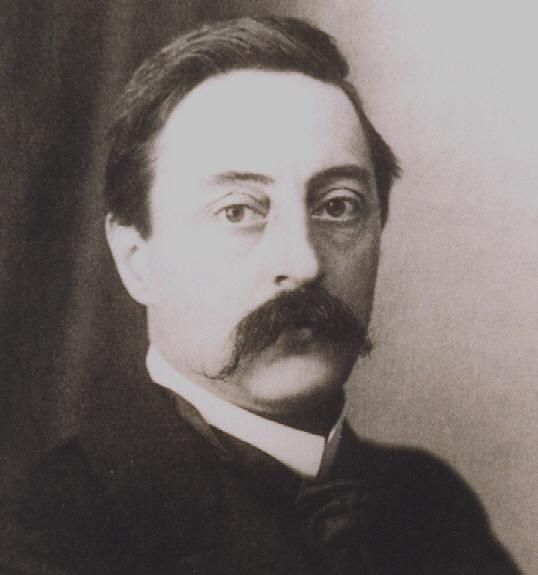
Arnold van Gennep
Dates: 1873–1957 Domain: Ethnography, Folklore, Ritual Theory
Biography
Arnold van Gennep was born in Ludwigsburg, Germany, in 1873, to a Dutch father and French mother, and spent most of his working life as an independent scholar at the margins of French academic life — which is to say he had more freedom and less institutional support than his work warranted. His formal academic career was brief and difficult; he was dismissed from his chair at Neuchâtel in 1912 after conflicts with colleagues, and spent decades thereafter producing an enormous multi-volume study of French folklore while earning a living through freelance writing and translating. This marginality has a certain irony: the work that proved foundational to two generations of anthropological ritual theory was produced by someone the French academy consistently declined to employ.
Les Rites de Passage (1909) draws on an ethnographic survey ranging from Australian Aboriginal initiation ceremonies through Polynesian puberty rites, West African secret society inductions, and European seasonal festivals. Van Gennep's observation, which was not obvious at the time, was that all rites marking a change of status or condition follow the same tripartite pattern regardless of their cultural context: séparation (separation from the previous state or group), marge (margin, threshold, the liminal period), and agrégation (aggregation, incorporation into the new state or group). He called these rites préliminaires, rites liminaires, and rites postliminaires, and observed that different transitions emphasize different phases: funerary rites emphasize separation, pregnancy rites emphasize the liminal margin, and wedding ceremonies typically emphasize aggregation.
The liminal phase was his genuinely original contribution. The word comes from the Latin limen, threshold, and Van Gennep used it precisely: the liminal period is when the transitioning person is literally between states, belonging fully to neither the condition they have left nor the one they have not yet entered. Initiands in many traditions are treated during this period as dead, as children, as animals — symbolically stripped of their previous social identity and not yet endowed with their new one. The symbolic repertoire of liminality — darkness, nudity, silence, reversal, physical trials, the abandonment of normal social markers — is consistent across cultures, and Van Gennep's schema explains why: these are not cultural choices but functional requirements of the process of identity transformation.
Van Gennep's contribution to the massive Manuel de Folklore Français Contemporain (nine volumes, 1937–1958) was completed partly after his death and demonstrates the range of his comparative method: the same three-phase structure operates in the seasonal cycle, in the agricultural calendar, and in the domestic transitions of everyday French rural life. He died in 1957, having outlived most of his contemporaries and having seen Victor Turner begin the theoretical elaboration of his framework that would bring it to widespread anthropological attention.
Key Works (in library)
| Work | Year | Relevance |
|---|---|---|
| The Rites of Passage | 1909 | Foundational statement of the separation-liminality-incorporation schema |
| Manuel de Folklore Français Contemporain | 1937–1958 | Extended application of comparative ritual method to French folk tradition |
Role in the Project
Van Gennep is the project's methodological foundation for cross-cultural initiatic comparison. The separation-liminality-incorporation schema appears in the project's analysis of every initiatic sequence — Eleusinian, Christian, Sufi, Native American, literary. What makes it analytically productive rather than merely descriptive is the liminal phase: the period when normal identity structures are dissolved. The project's central question is what happens in that period, what becomes possible in the gap between identities that was not possible before the gap opened. Van Gennep identified the structure; Turner elaborated it sociologically; the project presses it toward the question of consciousness.
The related_entries field deliberately includes Turner because the project invariably uses Van Gennep and Turner together — Van Gennep for the structure, Turner for the social dynamics of the liminal period (communitas, anti-structure). But Van Gennep's formulation is prior and more formal, and the formal precision is what the project needs most.
Key Ideas
- Separation-Liminality-Incorporation: The three-phase structure of all transition rites. Separation detaches the individual from their previous condition; liminality is the period of being between conditions; incorporation installs them in the new condition.
- The Liminal Phase: The threshold period when normal identity markers are stripped away — symbolic death, nudity, silence, ordeal, darkness. The transitioning person is neither what they were nor yet what they will be. This is the phase where transformation actually occurs.
- The Threshold as Sacred Space: Van Gennep's observation that doorways, border markers, and physical thresholds are treated as sacred because they are between defined spaces — the same logic as the liminal phase applied to physical space.
- Universality of Structure: The claim that the tripartite structure is cross-cultural and universal — not because all cultures borrowed it from a single source but because it reflects something about the conditions of genuine transformation.
Connections
- The project's other methodological figure: FIG-0069 Turner (elaborated the liminal phase into communitas theory; Van Gennep's debt is explicitly acknowledged)
- Structural framework used by: FIG-0001 Eliade (initiation patterns), FIG-0054 Campbell (hero's journey as secularized rite of passage)
- Applied to: CON-0001 Initiation (the concept entry that depends on Van Gennep's schema)
Agent Research Notes
[AGENT: perplexity | DATE: 2026-03-22] Les Rites de Passage was translated into English in 1960 by Monika Vizedom and Gabrielle Caffee (University of Chicago Press), over fifty years after its original publication. Van Gennep's marginalization in French academic life is documented in Nicole Belmont's Arnold van Gennep: The Creator of French Ethnography (1979; English translation University of Chicago Press, 1979). Turner's explicit acknowledgment of Van Gennep as his foundation is in The Ritual Process (1969), particularly Chapter 3.