c. 2100–1200 BCESumerian / Old Babylonian / Middle Babylonian
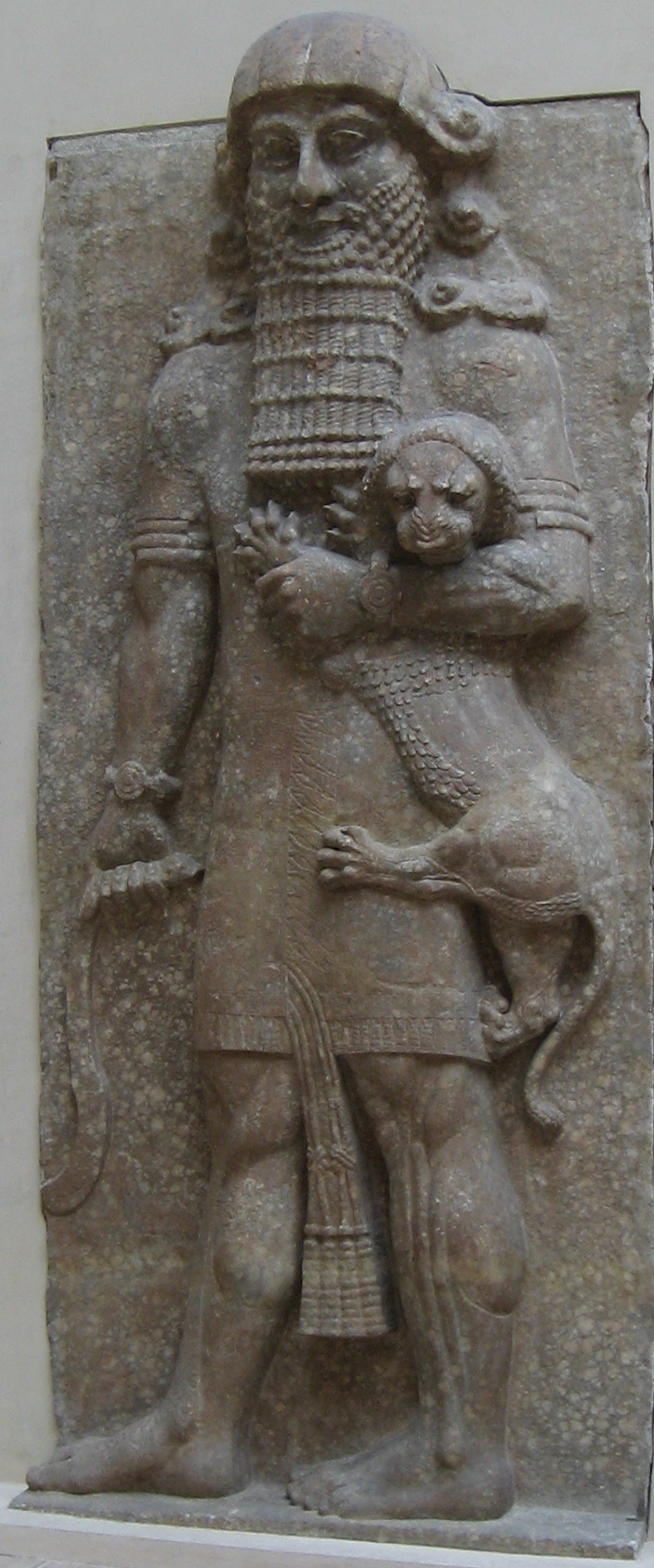
Composition of the Epic of Gilgamesh
The oldest surviving long-form narrative in world literature. Gilgamesh's journey from arrogance through grief to the underworld and back — seeking immortality after Enkidu's death — is the first literary katabasis and the first sustained meditation on mortality, consciousness, and the limits of human striving.
#gilgamesh#enkidu#katabasis#mortality#underworld
c. 1900 BCE (earliest tablets)Sumerian / Old Babylonian
Inanna's Descent to the Underworld
The oldest surviving literary descent narrative. Inanna's passage through the seven gates of the underworld, where she is stripped at each gate and arrives naked before the queen of the dead, establishes the katabasis structure a thousand years before Homer and fifteen hundred years before Eleusis.
#inanna#katabasis#sumerian#underworld#descent
c. 1500 BCEMycenaean / Late Bronze Age
Foundation of the Eleusinian Mysteries
The Eleusinian Mysteries are the longest-lived and most influential initiatory institution in Western history, providing a lived model of death-and-rebirth initiation that anchored Greek spiritual life for nearly two millennia.
#eleusinian-mysteries#demeter#persephone#initiation#mystery-religion
c. 530 BCEArchaic Greece
Pythagoras Founds the Community at Croton
Pythagoras establishes a philosophical-religious community at Croton in southern Italy, combining mathematical investigation with initiatory discipline, dietary rules, and the doctrine of metempsychosis. The Pythagorean school becomes the prototype for all subsequent Western initiatory brotherhoods.
#pythagoras#pythagorean#croton#mathematics#initiation
c. 450 BCEClassical Greece
Earliest Orphic Gold Tablets
The earliest surviving Orphic gold tablets — thin gold leaves inscribed with instructions for the soul's navigation of the afterlife — provide the first textual evidence of a Greek initiatory tradition centered on metempsychosis and the soul's liberation from the cycle of rebirth.
#orphism#gold-tablets#afterlife#metempsychosis#initiation
399 BCEClassical Greece
Death of Socrates
Plato's account of Socrates' death in the Phaedo transforms a judicial execution into a philosophical demonstration that philosophy is itself a preparation for death — and that death, rightly understood, is an initiation rather than an annihilation.
#socrates#plato#phaedo#philosophy#soul-immortality
c. 387 BCEClassical Greece
Plato Founds the Academy
Plato establishes the Academy in Athens, creating the institutional form through which Greek philosophy would be transmitted for nearly a millennium. The Academy's curriculum — mathematics, dialectic, and the vision of the Good — preserves the initiatory structure of the Pythagorean school in philosophical form.
#plato#academy#athens#philosophy#dialectic
323 BCEHellenistic
Death of Alexander and the Hellenistic Synthesis
Alexander's conquests create a vast cultural zone in which Greek, Egyptian, Persian, and Babylonian religious traditions intermingle. The resulting Hellenistic syncretism produces the Hermetic tradition, Greco-Egyptian mystery cults, and the conditions for the later emergence of Gnosticism and Neoplatonism.
#alexander#hellenistic#syncretism#hermeticism#egypt
c. 300 BCE–400 CEHellenistic / Roman Imperial
Spread of the Isiac Mysteries Through the Roman Empire
The cult of Isis, transformed from its Egyptian temple origins into a Hellenistic mystery religion, becomes the most widely practiced initiatory tradition in the Roman Empire. Temples of Isis stood from London to the Danube. The Isiac Mysteries offered personal salvation, a relationship with a compassionate divine mother, and the promise of blessed afterlife — features that made them Christianity's most direct competitor.
#isis#osiris#mystery-religion#roman-empire#hellenistic
48 BCE (first fire); multiple subsequent destructionsLate Hellenistic / Roman
Burning of the Library of Alexandria
The destruction of the Library of Alexandria — occurring in stages from Caesar's fire (48 BCE) through the Arab conquest (642 CE) — becomes the emblematic image of lost knowledge in the Western imagination. The Library symbolizes the project's governing question: what was lost when the ancient world's accumulated wisdom was destroyed?
#alexandria#library#destruction#lost-knowledge#egypt
c. 140–180 CERoman Imperial
Valentinus and the Gnostic Schools
Valentinus and his school develop the most philosophically sophisticated Gnostic system, combining Platonic metaphysics with Christian salvation narrative and initiatory practice. The Gnostic schools represent the most radical form of the claim that direct experiential knowledge (gnosis) supersedes faith and doctrine.
#gnosticism#valentinus#gnosis#heresy#christianity
c. 100–300 CERoman Imperial
Composition of the Corpus Hermeticum
The Hermetic dialogues attributed to Hermes Trismegistus are composed in Greco-Egyptian Alexandria, synthesizing Greek philosophy, Egyptian priestly wisdom, and Jewish cosmogony into a revelatory tradition centered on gnosis. These texts will shape the Renaissance when Ficino translates them in 1463.
#hermeticism#corpus-hermeticum#hermes-trismegistus#gnosis#alexandria
c. 270 CELate Antiquity
Death of Plotinus
Plotinus's death marks the culmination of the first great Neoplatonic synthesis — the most philosophically rigorous mysticism the Western world has produced — and sets the agenda for all subsequent Neoplatonic and esoteric thought.
#plotinus#neoplatonism#enneads#the-one#mysticism
c. 325 CELate Antiquity
Death of Iamblichus
Iamblichus's death marks the completion of the Neoplatonic synthesis that placed ritual practice (theurgy) at the center of the soul's return to the divine — a decisive shift that rooted philosophical mysticism in the body, in matter, and in traditional religious rites.
#iamblichus#theurgy#neoplatonism#de-mysteriis#ritual
391 CELate Roman
Destruction of the Serapeum at Alexandria
The Christian mob's destruction of the Serapeum — the temple of Serapis that housed a daughter library of the Great Library — marks the violent end of Greco-Egyptian pagan religion in its last major center. Together with Theodosius's edict the following year, it represents the definitive rupture between the ancient mystery tradition and institutional Christianity.
#serapeum#alexandria#destruction#christianity#paganism
392 CELate Antiquity
Theodosius I Bans Pagan Rites; Effective End of the Eleusinian Mysteries
The Theodosian edicts of 391–392 CE criminalized public pagan worship throughout the Roman Empire, closing the Eleusinian Mysteries after nearly two thousand years and marking the formal end of the ancient initiatory tradition in the West.
#theodosius#pagan-suppression#christianity#eleusinian-mysteries#end-of-antiquity
c. 500 CELate Antiquity / Early Byzantine
Writings of Pseudo-Dionysius the Areopagite
The Pseudo-Dionysian corpus performed the crucial operation of smuggling the entire Neoplatonic metaphysical tradition — including its apophatic mysticism, its hierarchical cosmology, and its theurgic understanding of liturgy — into the heart of Christian theology under the cover of apostolic authorship.
#pseudo-dionysius#apophatic-theology#neoplatonism#christian-mysticism#hierarchy
529 CELate Antiquity
Justinian Closes the Academy in Athens; End of Neoplatonic Schools
Justinian's suppression of the Neoplatonic school in Athens in 529 CE ended nearly a millennium of organized philosophical teaching in Greece and completed the institutional dismantling of the ancient philosophical-initiatory tradition in the West.
#justinian#academy-athens#neoplatonism#damascius#christianity