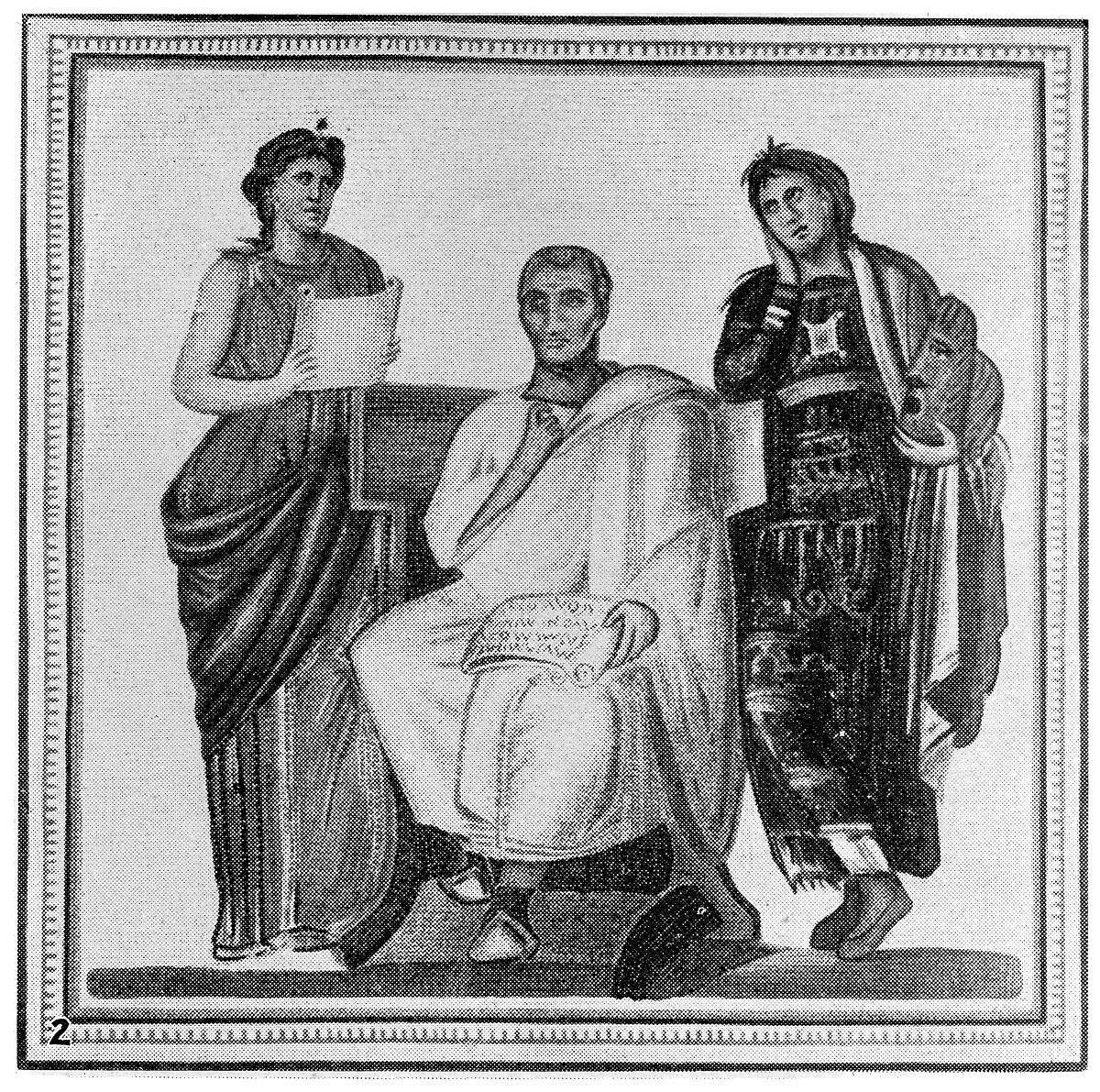
Virgil
Dates: 70–19 BCE Domain: Epic Poetry, Pastoral Poetry, Roman Religion
Biography
Publius Vergilius Maro was born in 70 BCE near Mantua in Cisalpine Gaul and died in 19 BCE at Brundisium (Brindisi), having just returned from a trip to Greece on which he had intended to spend three more years revising the Aeneid. He died asking that the poem be burned — it was unfinished, he insisted. Augustus overruled this wish and had the poem published posthumously. The Aeneid survived because an emperor decided it should, a biographical fact that is structurally appropriate for a poem about the founding of an empire under divine mandate.
His career followed the conventional progression: the pastoral Eclogues (published c. 37 BCE) established him as the leading poet of his generation; the agricultural Georgics (c. 29 BCE) deepened his range; and the Aeneid, commissioned after the Battle of Actium to narrate the Trojan origins of Rome and the Julian family, occupied the last eleven years of his life. The Eclogues contain the fourth poem's prophecy — "Now the last age of the Cumaean oracle begins... Now a new race descends from high heaven" — which was read by early Christians as a prophecy of Christ's birth, giving Virgil a medieval reputation as a pagan prophet and making him Dante's natural choice as guide.
Aeneid Book VI is the pivot of the entire poem. Aeneas, led by the Cumaean Sibyl, descends into the underworld through the cave at Avernus with a golden bough that gives him passage. He passes through Tartarus (the zone of punishment) and into Elysium (the zone of blessedness), where he finds his father Anchises, who has been waiting for him. Anchises shows him the river Lethe, where souls drink forgetfulness before their next incarnation, and points out the souls waiting to be reborn as Rome's future heroes — ending with the premature vision of young Marcellus, Augustus's nephew who had recently died. The katabasis is simultaneously cosmological revelation, ancestral reunion, and political prophecy.
Key Works (in library)
| Work | Year | Relevance |
|---|---|---|
| The Aeneid | 19 BCE (posthumous) | Roman katabasis in Book VI; the descent as cosmic mission-clarification |
| The Georgics | c. 29 BCE | Agricultural theology; Orpheus and Eurydice in Book IV |
| The Eclogues | c. 37 BCE | Pastoral vision including the fourth eclogue's messianic reading |
Role in the Project
Virgil's Aeneid Book VI is the Latin link in the chain Homer–Virgil–Dante that structures the Birth of Western Mind track's engagement with the katabasis tradition. Each link represents a transformation: Homer's katabasis is the hero seeking tactical information from the dead; Virgil's is the hero receiving cosmic and historical revelation; Dante's is the soul being educated through the full moral topology of the afterlife. The transformation from Homer to Virgil involves the shift from Greek individual heroism to Roman political theology — the descent is justified not by personal necessity but by cosmic mission.
The golden bough, the ramus aureus, is one of the tradition's great initiatory symbols: the object that gains passage, without which the descent cannot proceed. James George Frazer built his entire comparative mythology around it (The Golden Bough, 1890), arguing that it was a symbol of the sacred king's power derived from a specific tree cult. Frazer's anthropological framework is speculative, but his intuition that the golden bough marks a genuine initiatic tradition is the project's starting point for this entry.
Key Ideas
- The Golden Bough: The initiatory pass that grants access to the underworld — not a weapon or a gift but a symbol of knowledge and relationship with the divine that cannot be faked or stolen. Only those whom the gods have chosen can pluck it.
- Elysium and Lethe: Virgil's geography of the afterlife is not primarily punishment and reward but a complex picture of the soul's journey between incarnations, culminating in the vision of souls who will forget their previous existence in order to be reborn. The anamnesis that Plato describes as the soul's access to the Forms is what the Lethe destroys.
- The Mission-Vision: Anchises' demonstration to Aeneas of Rome's future is the katabasis's teleological purpose: the hero descends not for his own benefit but to receive the vision that will justify the costs of foundation.
- Virgil as Guide: Dante's choice of Virgil as guide makes explicit what the medieval tradition had recognized: Virgil knows the territory of the descent better than any other Latin author, and his poem had become the West's primary repository of underworld knowledge.
Connections
- The katabasis lineage: FIG-0068 Homer (Odyssey Book XI as the Greek precursor), FIG-0033 Dante (Commedia as Virgil's inheritor and critic)
- The golden bough: CON-0002 Katabasis (the golden bough as the initiatory pass concept)
- Orphic connection: FIG-0037 Orpheus (the Orpheus and Eurydice story in Georgics Book IV — Virgil's version is more explicitly about the failure to complete the katabasis)
Agent Research Notes
[AGENT: perplexity | DATE: 2026-03-22] Virgil died September 21, 19 BCE at Brundisium after contracting illness in Greece. The Aeneid's posthumous publication was overseen by his friends Varius Rufus and Plotius Tucca at Augustus's instruction. J.W. Mackail's Loeb edition remains useful; R.D. Williams' two-volume commentary (1972–1973) is the scholarly standard for Books VI. The connection between the Sibyl at Avernus and actual chthonic cult sites in the Campi Flegrei near Naples has been explored by Peter Kingsley in Ancient Philosophy, Mystery, and Magic (1995).