Anima/Animus
Definition
The anima (Latin: soul; used by Jung to designate the feminine soul-image in the male psyche) and animus (Latin: spirit/mind; used by Jung to designate the masculine spirit-image in the female psyche) constitute the contrasexual archetype — the inner Other, the figure through which the ego encounters what is most different from itself in the unconscious. The anima or animus is not merely a collection of personal memories about members of the opposite sex; it is an archetypal structure that organizes those personal experiences and gives them their peculiar numinosity. The woman one falls in love with at first sight is typically not seen clearly but rather projected with the full charge of one's anima — she carries, temporarily, the qualities of the inner figure.
The structural function of the anima/animus in the individuation process is specific: it serves as the bridge between the personal unconscious (containing the shadow) and the collective unconscious (containing the deeper archetypal layers). The shadow, as the first encounter in the descent, tends to present in the same sex as the ego — what is like me, only darker. The anima or animus presents as the genuinely Other — structurally, the bridge figure that can guide deeper into the unconscious than the shadow can reach. This is why the Great Guide in mythological and literary tradition consistently appears as a figure of the opposite sex from the protagonist: Beatrice guides Dante; the Goddess guides the Aeneas-figure through the underworld; Isis restores Osiris; the shekinah (the feminine divine presence) accompanies the male mystic into exile.
Jung identified four levels of anima development in men, moving from the purely biological-instinctual (Eve) through the Romantic-idealized (Helen) through the spiritual-devotional (Mary) to the wisdom figure (Sophia). These are not stages that replace each other but layers that can be simultaneously active, with the uppermost layer representing the anima's most developed manifestation. The animus in women Jung characterized in parallel terms, though his analysis of the animus is generally held, including by later analysts, to be less developed and more shaped by his cultural assumptions about gender.
Historical Development
The anima concept has philosophical precursors that Jung acknowledged. The Shekinah in Kabbalistic thought — the feminine divine presence that goes into exile with Israel and accompanies the Jewish people — is a collective anima figure. Gnosticism's Sophia — the divine wisdom who falls from the Pleroma and requires rescue by the Christ — is another. Dante's Beatrice as guide to the heavenly spheres is the literary instantiation of the anima as spiritual guide, read explicitly by Jung as anima psychology operating in literary form. The courtly love tradition — which Couliano analyzed as the esoteric use of eros as a vehicle of initiation — can be read as a cultural elaboration of the anima projection.
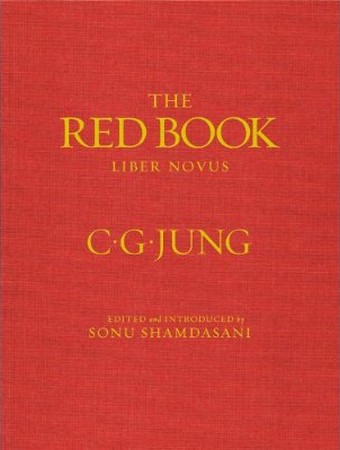
Jung developed the anima concept through clinical observation (men in analysis consistently produced images of women in dreams and fantasy, images that had a specific autonomous character different from external women) and through his own experience — his primary inner figure was a woman he called Philemon, who appeared in his active imagination during the Red Book period and who served as his guide through the unconscious territory he was mapping. The Red Book itself contains extensive anima figures and documents Jung's attempt to engage them without either identifying with them or dismissing them.
Emma Jung's essay "On the Nature of the Animus" (1931) and Marie-Louise von Franz's extensive work on the anima (The Feminine in Fairy Tales, Animus and Anima) represent the most sustained post-Jungian development of the concept. Von Franz's readings of fairy tales in particular illuminate the anima/animus in its developmental sequence — the progression from undifferentiated instinct to wisdom figure that the individuation process makes available.
The feminist critique of the anima/animus concept has been substantial. Critics argue that Jung's formulation reinforces gender stereotypes (associating femininity with relatedness and masculinity with logos) and that the very concept of a "contrasexual" archetype presupposes a binary gender structure that psychology should challenge rather than reinforce. The project acknowledges this critique as partly correct — Jung's specific cultural assumptions about gender do distort the concept in ways that limit its applicability — while preserving the structural observation that the psyche contains inner figures that carry qualities most different from the ego's habitual mode, and that those figures play a specific role in mediating the individuation journey.
Key Distinctions
Anima/Animus vs. Actual Women/Men: The most important practical distinction in clinical work. The anima is not any actual woman; it is an inner figure that has been projected onto actual women. The effect of the projection is to see the actual woman not clearly but through a charged distorting lens. Withdrawing the projection — recognizing that the intensity belongs to the inner figure rather than the outer person — is one of the most practically significant tasks of individuation work. The same applies to the animus in women's psychology.
Anima as Archetype vs. Anima as Personal Figure: The anima operates at both the personal and archetypal levels simultaneously. At the personal level, it is shaped by the individual's experience of women (particularly the mother, as the first significant female figure). At the archetypal level, it connects to the collective representations of the feminine in mythology, religion, and art — the Goddess, Sophia, the Muse, the Terrible Mother. Both levels are active; neither can be reduced to the other.
Anima in Men vs. Sophia in Gnosticism: The parallel is real and the project should hold it precisely. The Gnostic Sophia is a transpersonal, cosmological figure — the divine wisdom who fell from the Pleroma and requires redemption. The Jungian anima is a psychological structure — the carrier of qualities that the ego has relegated to the unconscious. Both appear as feminine figures mediating between the ordinary self and a deeper reality; the level of discourse (cosmological vs. psychological) differs in ways that matter for the comparison.
Project Role
Anima/animus gives the project its psychological account of the initiatory guide figure — the inner counterpart of the external guides (Virgil, Beatrice, the Hierophant, the psychopomp) that the mystery traditions depict. Where the external guide is a living or legendary person who has traveled the path before, the inner guide is a psychic structure that carries the ego toward what it cannot find through its own resources. The concept is indispensable for the engagement with courtly love (CON-0074), eros as initiation (CON-0075), and the Gnostic-Sophia tradition (CON-0042), all of which depict the anima/animus dynamic in different cultural vocabularies.
Primary Sources
- C.G. Jung, Two Essays on Analytical Psychology: Contains the primary theoretical presentations.
- C.G. Jung, "The Syzygy: Anima and Animus" in Aion: The most precise analytical treatment.
- Emma Jung, Animus and Anima (1957): The most important contribution from within the tradition by a woman analyst.
- Marie-Louise von Franz, The Feminine in Fairy Tales (1972): Extended readings of fairy tales as anima/animus psychology — the most accessible and richest application.
Agent Research Notes
[AGENT: perplexity | DATE: 2026-03-22] Demaris Wehr's Jung and Feminism: Liberating Archetypes (1987) is the most balanced feminist engagement with the anima/animus concept. The project should note that post-Jungian analysts have increasingly questioned the binary gender framing while preserving the structural insight about inner contrasexual figures as mediators in the individuation process. Andrew Samuels's work on gender in analytical psychology is relevant.