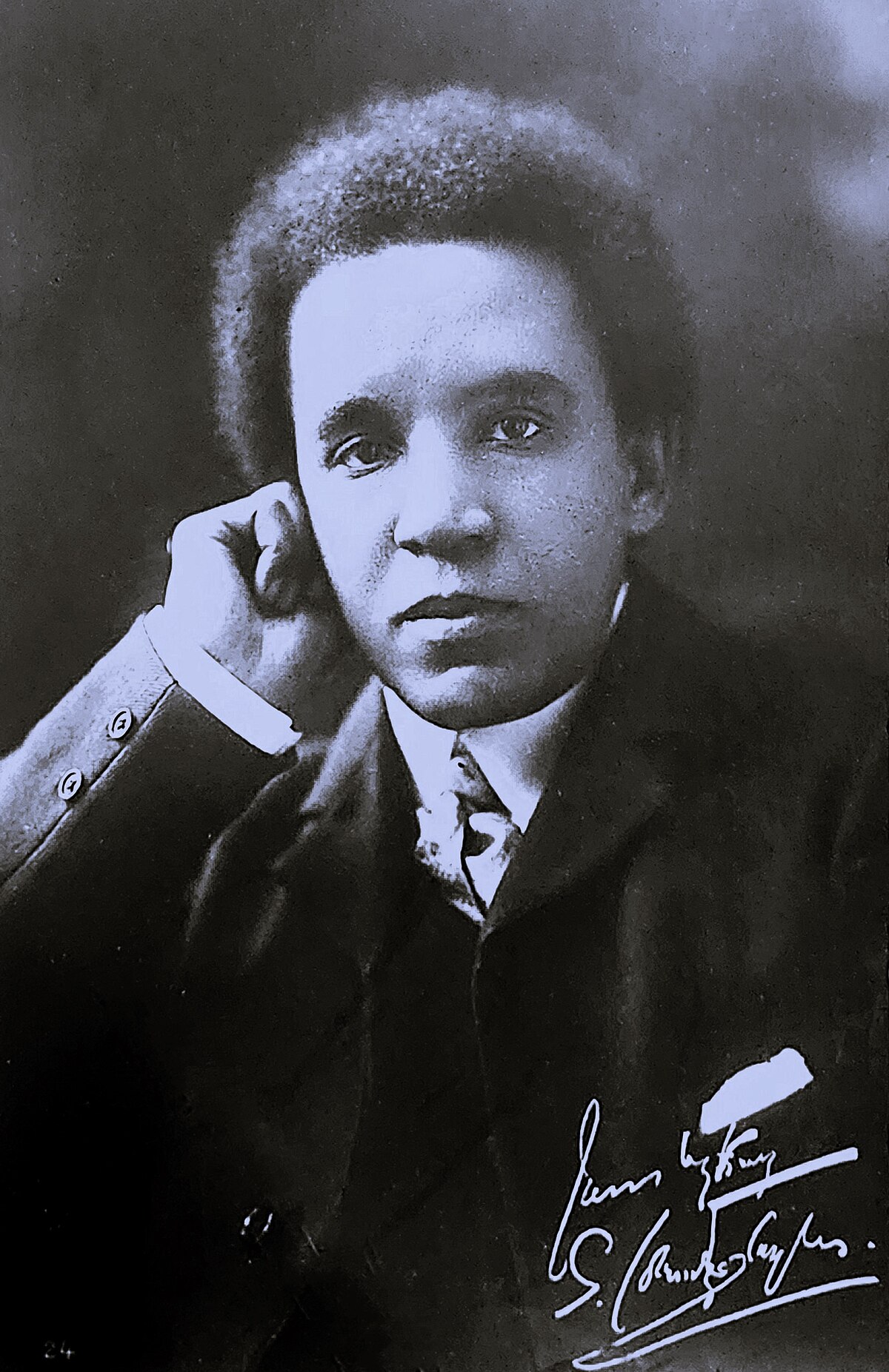
Samuel Taylor Coleridge
Dates: 1772–1834 Domain: Poetry, Romanticism, Philosophy, Literary Criticism
Biography
Samuel Taylor Coleridge was born in Ottery St Mary, Devon, in 1772, the youngest of ten children of a country vicar. He was a prodigy — reading the Bible at three, reading Arabian Nights at six — sent to Christ's Hospital school in London at nine, arriving at Cambridge with extraordinary gifts and leaving without a degree, enlisting in the cavalry in a moment of crisis and being rescued by his brother, and eventually settling into the poet-philosopher's career for which his mind was made. The friendship with Wordsworth produced Lyrical Ballads (1798), which opened with the Ancient Mariner, and the creative intensity of the Annus Mirabilis (1797–1798) that produced Kubla Khan and the fragment of Christabel was never recovered. Opium, taken initially for rheumatism, became a lifelong dependency that he could not break.
The Rime of the Ancient Mariner is Coleridge's most sustained narrative poem and the primary text for the katabasis structure in Romantic literature. The Mariner kills the albatross, gratuitously, without apparent motive, and his ship and crew suffer the consequences. The crew dies; the Mariner alone survives, surrounded by the rotting bodies of his shipmates and unable to die. The turning point comes when, watching water snakes in moonlight, he spontaneously blesses them. The curse lifts. The voyage home is nightmarish and supernatural. He arrives, and is compelled by something outside himself to repeat the story to whoever needs to hear it. The penance is permanent; the telling is the form the penance takes.
This structure — transgression, isolation, the suffering of those around you, the moment of grace, the compelled return, the permanent obligation to tell — is not an allegory of guilt and penance. It is a precise account of what happens to a consciousness that receives a vision it did not seek and cannot integrate. The Mariner cannot go home. He cannot stop. The wedding guest to whom he tells the story goes away "a sadder and a wiser man" — but the Mariner remains what he became in the South Seas.
Kubla Khan — famously presented as a dream poem interrupted by the "person from Porlock" — is the primary image of the visionary experience that cannot be completed. The 54 lines that survived the interruption contain, Coleridge claims, a fragment of a poem that existed in full in the dream. Whether this is biographical truth or literary strategy, the structural point is the same: the vision arrived complete; the instrument of its reception was inadequate to hold it through to waking. The dome, the sacred river, the caverns measureless to man, the woman wailing for her demon lover — all present, all vivid, and the poem simply stops.
Key Works (in library)
| Work | Year | Relevance |
|---|---|---|
| The Rime of the Ancient Mariner | 1798 | Katabasis without guide; the return that leaves the returner permanently changed |
| Kubla Khan | 1816 (written c. 1797) | The visionary fragment; the complete vision interrupted before it could be recorded |
| Biographia Literaria | 1817 | Primary/secondary imagination distinction; the philosophical criticism of Romantic aesthetics |
Role in the Project
Coleridge's position in the Romantic Initiates series is specifically as the instance of the visionary opening without the conditions for integration. He serves as the counterweight to Keats and Shelley: where Keats practices negative capability with extraordinary discipline and Shelley acts with transformative force, Coleridge receives the vision but cannot hold it. This is not a moral failure but a structural condition — the opium, the paralysis, the unfinished projects (the projected completion of Christabel, the planned great philosophical work Logosophia) are the form that the incomplete katabasis takes in his biography.
His philosophical theory — particularly the distinction in Biographia Literaria between primary imagination ("the living Power and prime Agent of all human Perception") and secondary imagination ("an echo of the former, co-existing with the conscious will") — is the Romantic tradition's most precise theoretical statement of the difference between participatory consciousness and its reproduction in art. The primary imagination is what Owen Barfield calls original participation; the secondary imagination is the artist's attempt to recover and re-enact it.
Key Ideas
- Primary and Secondary Imagination: The Biographia Literaria's central critical distinction. Primary imagination is the act of perception itself — participatory, alive, continuous with the world it perceives. Secondary imagination is its echo in conscious artistic creation — the attempt to re-enact the primary act through deliberate labor.
- The Mariner's Compulsion: The Ancient Mariner's permanent obligation to repeat his story to whoever needs it is the project's image of the tradition's transmission mechanism: not institutional but visionary, not chosen but imposed. The story finds its audience; the audience doesn't find the story.
- Kubla Khan's Incompletion: The fragment as the honest record of the vision's incomplete integration. What survived the person from Porlock is not the poem Coleridge dreamed but the evidence that such a poem existed — and was lost.
- Conversational Despair: The famous letter to Sara Hutchinson of April 1802 (Dejection: An Ode): the vision is gone, the spring of feeling has dried up, and what remains is the capacity to observe the absence without feeling it. This is the project's most honest document of the initiatory opening that fails to transform.
Connections
- Romantic Initiates: FIG-0077 Keats (contrasting figure in the negative capability letter), FIG-0078 Shelley (parallel but different mode of receiving the Romantic visionary tradition), FIG-0047 Novalis (Novalis died young and complete; Coleridge lived long and incomplete)
- Philosophical lineage: FIG-0002 Barfield (the primary imagination is Barfield's original participation, and the secondary is the participation Barfield calls Final — Coleridge glimpsed it and could not sustain it), FIG-0075 Kant (Coleridge read Kant and Schelling and tried to synthesize them in English)
Agent Research Notes
[AGENT: perplexity | DATE: 2026-03-22] Coleridge died July 25, 1834 in Highgate, where he had lived under the care of Dr. James Gillman for the last eighteen years of his life, managing (imperfectly) his opium dependency. Kubla Khan was published in 1816; the "person from Porlock" story first appears in Coleridge's preface. The Annus Mirabilis is generally dated 1797–1798. Richard Holmes's two-volume biography (Coleridge: Early Visions, 1989; Coleridge: Darker Reflections, 1998) is definitive.