I. The Man of Many Turns
The Odyssey begins not with its hero but with his absence. Odysseus has been gone twenty years. His son has never known him. His wife unweaves her work each night to forestall the suitors. His household is under siege. The poem opens with a question the gods themselves must answer: when does the man of many turns get to come home?
Homer composed the Odyssey (LIB-0183) in the eighth century BCE, within the same oral tradition that produced the Iliad. The Lattimore translation preserves the poem's long hexameter lines and its formal hospitality rituals. But the two poems could not be more different in structure. The Iliad is a war poem: linear, concentrated, enclosed within a few weeks at Troy. The Odyssey is a return poem: digressive, expansive, spanning ten years of wandering across the Mediterranean and beyond it, into territories that are not on any map.
The project reads the Odyssey as the oldest surviving initiation narrative in Western literature. The nostos (return) is the surface structure. The initiatory journey is the deep structure. Odysseus does not merely travel home. He is stripped and tested, brought to the threshold of death and given knowledge that only the dead possess, then returned to a world he must re-enter as a stranger. The poem's structure follows the initiatory pattern (CON-0001) with a fidelity that suggests the pattern was already active in Greek consciousness centuries before the mystery cults formalized it.
II. The Tests of the Non-Human
Between Troy and Ithaca, Odysseus encounters a series of beings and places that are emphatically not human. The Lotus-Eaters, who offer forgetfulness. The Cyclops Polyphemus, who recognizes no law of hospitality and eats his guests. Circe, who transforms men into animals (the same metamorphic logic as Apuleius's Golden Ass, twelve centuries later). The Sirens, whose song contains all knowledge and annihilates anyone who hears it without restraint. Calypso, who offers immortality on condition that Odysseus never leave.
Each encounter tests a different human capacity. The Lotus-Eaters test memory. The Cyclops tests cunning against brute force, while Circe and the Sirens both test whether you can survive contact with powers that would unmake you. Think of Odysseus bound to the mast: he hears the Sirens' song but cannot act on what it promises. Controlled exposure to dangerous knowledge. Calypso tests whether you will trade mortality for paradise. Odysseus refuses. He chooses Ithaca and his mortal wife over immortality on a goddess's island.
These are not adventures but initiatory stations. Odysseus leaves Troy as the cleverest of the Greeks. Each encounter strips something from that identity, and by the time he reaches the threshold of the underworld he has lost his ships and his companions. He has no name left. Only the stripping remains, and the stripping is the preparation.
III. The Nekuia
Book XI is the structural center of the Odyssey and the oldest surviving katabasis (CON-0002) in Western literature. Circe sends Odysseus to the edge of the world, to a land of permanent darkness at the edge of Ocean, to consult the dead prophet Tiresias. Odysseus digs a pit, pours libations of milk, honey, wine, and water, and slaughters a black ram and a black ewe. The blood fills the pit. The dead come.
Strictly, this is a nekuia (summoning of the dead at a boundary) rather than a katabasis proper (physical descent into the underworld). Odysseus does not enter Hades. He stands at the threshold and the dead come to him, drawn by the blood. The distinction matters technically but not structurally: the initiatory function is the same. Odysseus confronts the dead to obtain knowledge the living cannot provide.
Tiresias tells him what he must do to reach home. His mother tells him how the household suffers. Agamemnon warns him to trust no one. And Achilles, the great hero of the Iliad, speaks the most devastating line in Homer: he would rather be a living slave to a poor farmer than king of all the dead. The heroic value system that promised glory would compensate for death is repudiated by the greatest hero himself. He speaks from the other side, and what he says is: glory is not enough.
What Odysseus learns from the dead is not tactical information alone. It is the knowledge that only proximity to death confers: the living cannot give it. Tiresias knows the way home because he is dead and sees what the living cannot see. The nekuia is the Homeric version of what the Eleusinian Mysteries enacted ritually: the encounter with death that transforms the survivor's relationship to life. Odysseus enters the nekuia as a wanderer trying to get home. He leaves as a man who has stood at the boundary of death and received instruction from the other side.
IV. The Stranger in His Own House
Odysseus reaches Ithaca. Athena disguises him as an old beggar. He enters his own house and is not recognized. His dog Argos, lying on a dung heap, recognizes him and dies. His old nurse recognizes the scar on his thigh when she washes his feet. The suitors do not recognize him. Penelope does not recognize him, or pretends not to, testing him as he was tested on his journey.
The return is not a homecoming. It is a re-initiation. The man who left Ithaca twenty years ago no longer exists. The man who returns must prove himself by performing acts that only the true Odysseus could perform. He strings the great bow that no suitor could bend and shoots through twelve axe-heads. Then the slaughter of the suitors begins, ritual violence that purifies a contaminated household. The violence is ritual violence, a purification of the contaminated household that mirrors the purification the initiate undergoes before the sacred can be safely re-entered.
The recognition scene with Penelope is the poem's emotional and structural climax. She tests him with the secret of their bed, which Odysseus built around a living olive tree rooted in the earth. Only the two of them know this. When Odysseus describes the bed, Penelope's knees go loose, and she weeps and runs to him. The recognition is mutual. He has proved himself to her. She has proved herself to him (twenty years of faithfulness, the nightly unweaving, the refusal to yield to the suitors). The reunion is not a return to the status quo. It is the completion of two parallel initiatory journeys that converge in a single act of knowing.
V. Original Participation and the Structure That Preceded the Mysteries
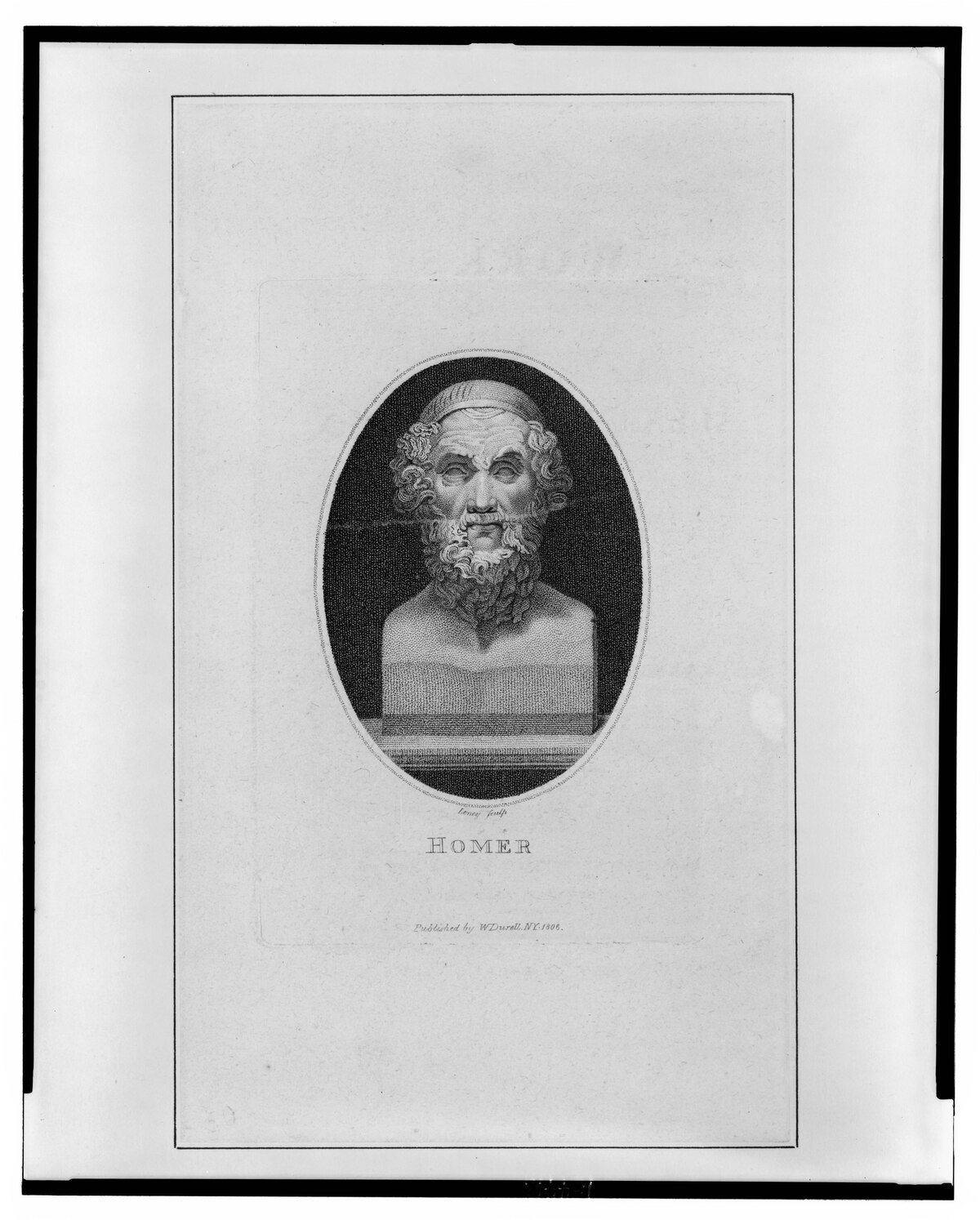
The Odyssey was composed and performed in a mode of consciousness that Barfield calls original participation (CON-0039): a pre-literate, pre-philosophical awareness that had not yet separated itself from the world it perceived. Homer's gods act directly on and through human beings. His similes draw the battlefield and the farmstead into a single field of meaning. His formulaic language, repeated across performances and generations, is not mechanical repetition but participatory knowing: the singer enters the tradition and the tradition speaks through the singer.
What does it mean that this consciousness, centuries before Eleusis formalized the ritual, produced a narrative whose deep structure is initiatory? The Odyssey's sequence of separation, ordeal, encounter with death, and transformed return matches the pattern the Mysteries will later enact. The implication is that the initiatory structure is not an invention of the mystery cults but something the archaic Greek mind already recognized as the shape of what it means to be human and survive. The Mysteries did not create the pattern. They ritualized what the oral tradition already knew.
This is what the Odyssey unlocks for the project. It pushes the initiatory structure back before philosophy, before the cults, before the Telesterion was built. Odysseus's journey is the evidence that the katabasis-anabasis pattern was operating in Greek consciousness at the earliest recorded moment, embedded in the very stories that a participated world told itself about what it meant to leave home, lose everything, stand at the threshold of death, and find your way back.