← Essays

Source Essay

The Oath and the Roses

The only Latin novel to survive complete from antiquity is also the single most important first-person account of mystery initiation. Apuleius's Golden Ass enacts in narrative form the arc the project traces across all traditions: degradation through unprepared contact with the sacred, descent into embodied helplessness, and restoration through the goddess who moves first.

Canonical reading editionSource: The Golden Ass — Apeleius

I. The Only Witness

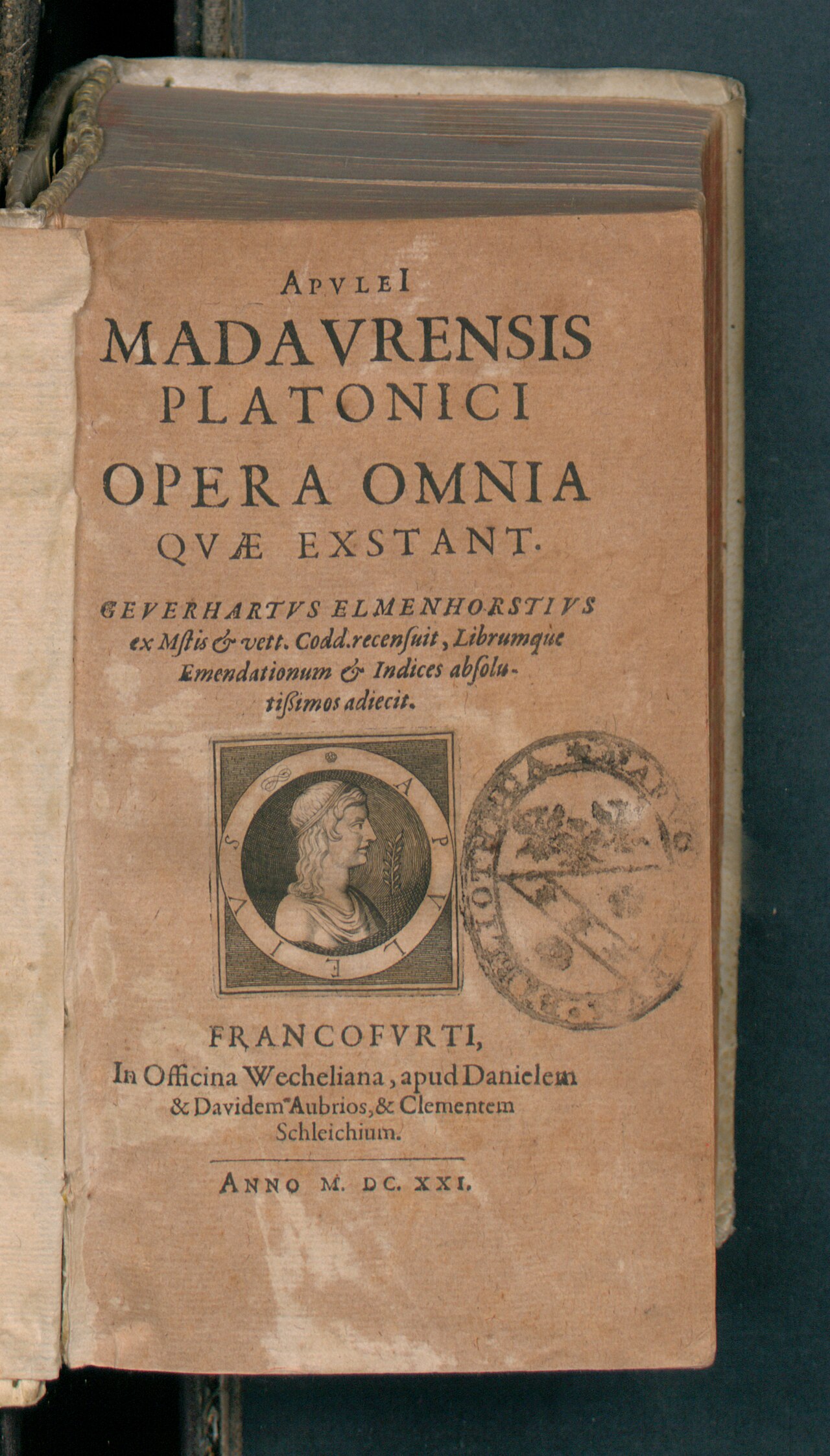
Apuleius portrait from Opera Omnia (1621) — the face behind the only inside account

Apuleius of Madauros was tried for sorcery around 158 CE. His defense speech survives. He was acquitted. A decade later he produced the only Latin novel to survive complete from antiquity: a picaresque about a man transformed into a donkey through reckless curiosity about magic. Its final book embeds the closest thing to a first-person account of mystery initiation the ancient world has left us. Whether the account is autobiographical or literary construction, it represents what a philosophically trained, multiply-initiated participant in the second-century religious world understood initiation to be.

Everything else we have about the Mysteries is external. Burkert (LIB-0343) gives us the institutional mechanics. Eliade (LIB-0023) gives us the morphological pattern. The gold tablets give us instructions for the dead. The Homeric Hymn to Demeter gives us the myth. Pindar and Sophocles give us the testimony of those who had seen. But none of them describe what it was like from inside the ritual chamber. Apuleius does. Under the cover of fiction, bound by the ancient oath of silence, he tells us what the initiate experienced. Not by disclosing the secret, but by constructing a narrative whose structure enacts it.


II. Curiosity as Sin
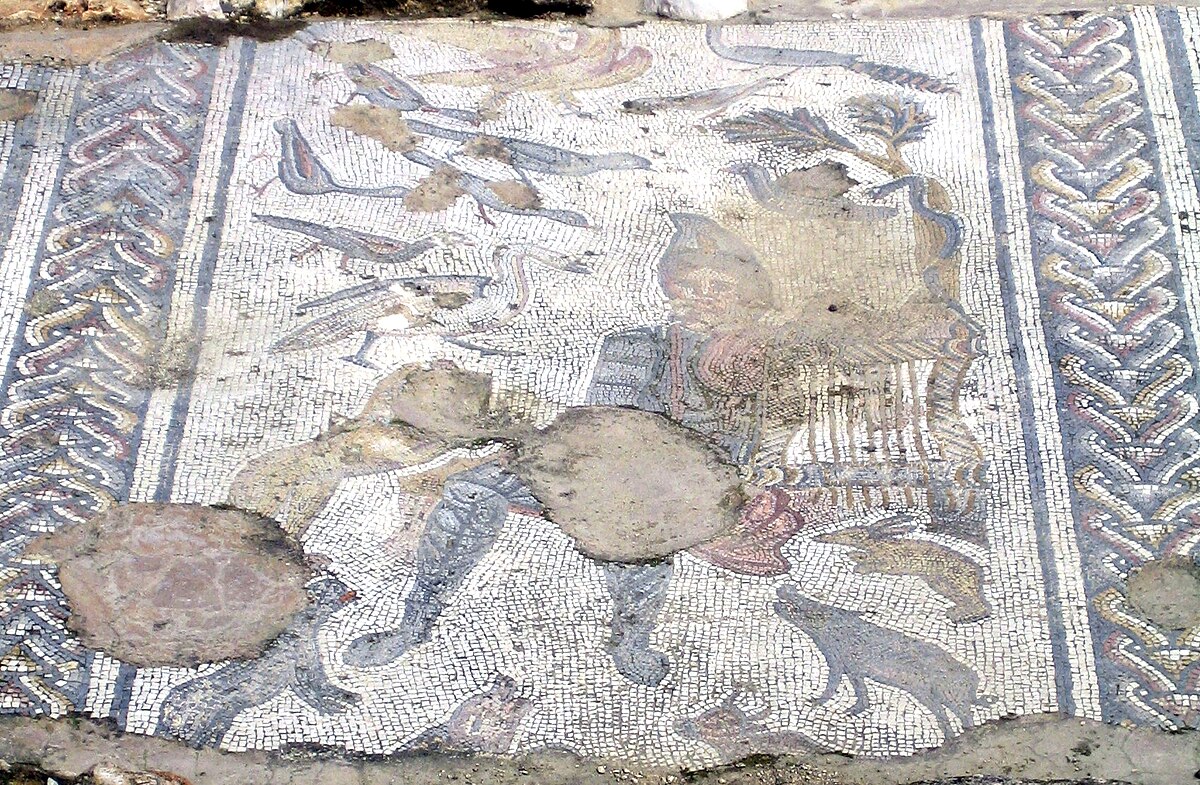
Orpheus Mosaic detail (Tzippori) — Orpheus masters animals through divine art; Lucius becomes one through reckless curiosity

The novel begins with a crime. Lucius, young, well-born, educated, arrives in Thessaly burning with curiosity about magic. He wants to see. He wants to witness transformation. His host's slave-girl is sleeping with him and gives him access to her mistress's magical ointment. He applies it. The wrong jar. Instead of becoming a bird (soaring, free, transcendent), he becomes a donkey.

This is not comedy, though it reads as comedy. It is diagnosis. Lucius approaches the sacred with the attitude of a spectator. He wants to watch someone else transform without undergoing transformation himself. He treats magic as a technology to be acquired rather than a relationship to be entered. His punishment is exact: he is given the embodied form that corresponds to his spiritual condition. The donkey is appetite without reason, sensation without speech. It knows but cannot say what it knows. Lucius as donkey is the human soul in its uninitiated state: not evil, not damned, merely stuck in the condition of embodied desire with no means of reaching what it desires (CON-0001).

The Platonic subtext is precise. In the Phaedrus, Socrates compares the soul to a charioteer driving two horses, one noble, one appetitive. The appetitive horse pulls downward. Apuleius literalizes the image: Lucius does not merely have an appetitive nature, he becomes one. He is beaten, starved, loaded with stones, sexually humiliated, nearly killed. He sees human cruelty from the position of those who cannot speak against it. The picaresque is a katabasis (CON-0002), a descent into the underworld, except the underworld is not a place. It is a condition. Lucius descends into animal consciousness, and the descent is the preparation that his original curiosity refused.


III. Psyche in the Dark
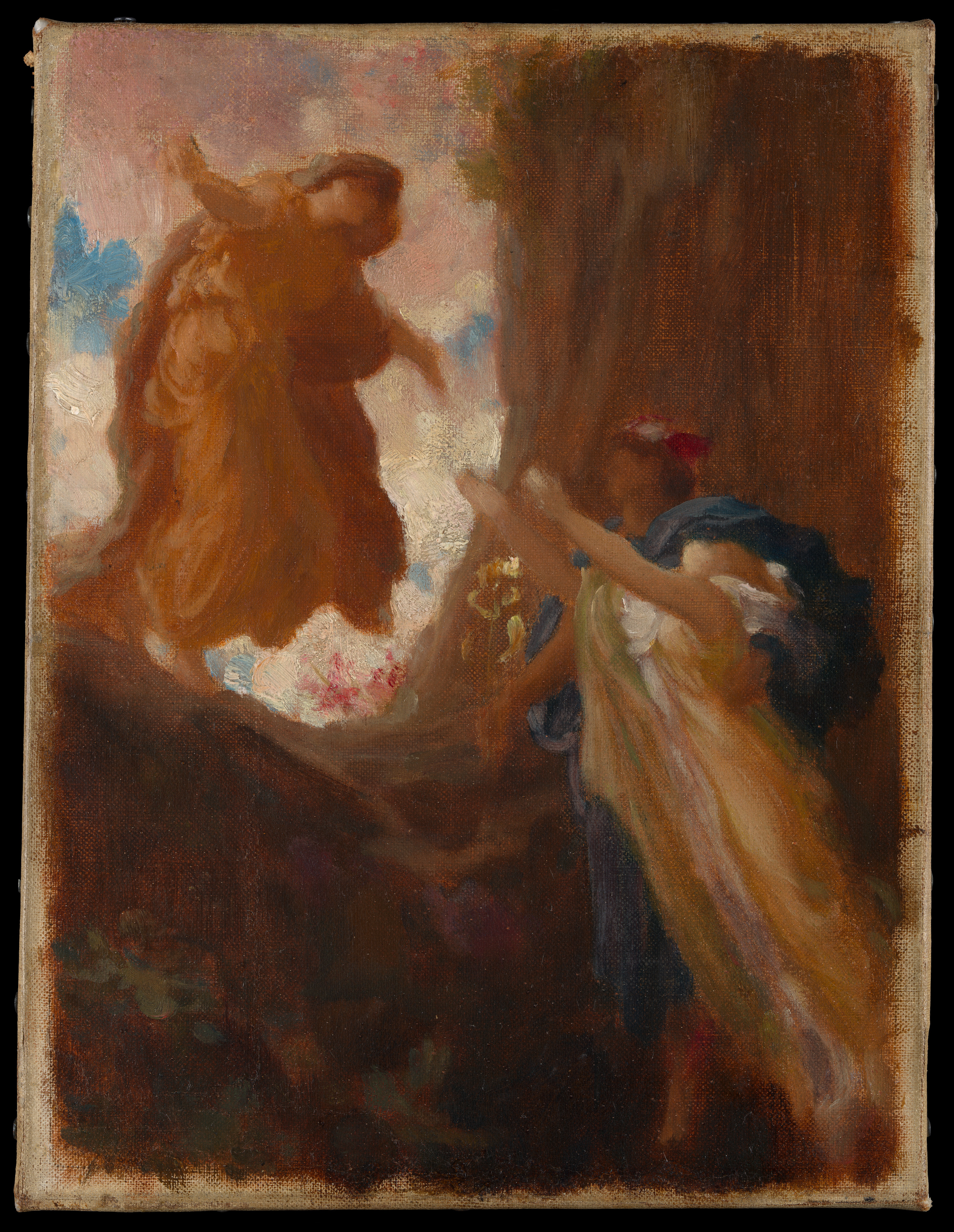
Return of Persephone (Leighton, c. 1890-91) — Psyche's underworld descent to borrow beauty from Persephone directly parallels this scene

Midway through the novel, an old woman tells a kidnapped girl a story. Psyche, a mortal girl so beautiful that Aphrodite's altars go unattended, is given in marriage to an unseen husband who visits her only at night. She must not look at him. She looks. The lamp-oil drips on his shoulder. Eros vanishes. Psyche wanders the earth performing impossible tasks set by Aphrodite. She sorts a mountain of mixed grain and gathers golden fleece from murderous sheep. She collects Styx-water. Then, worst of all, she descends to the underworld to borrow beauty from Persephone.

The Cupid and Psyche tale (Books IV–VI) is not a digression. It is the philosophical core of The Golden Ass. Psyche's name means soul. Her journey is the soul's journey. She fails the first test (the attempt to see without being transformed by seeing), and the failure launches her into an initiatory sequence that follows the sevenfold pattern the project traces across all the traditions (CON-0001): dissolution of the profane self, descent, search, encounter with death, the turning point, the vision, the return. Psyche descends to the underworld and returns. She is granted immortality and union with Eros on Olympus. The impossible tasks were the initiation. The willingness to descend was the qualification.

What makes this embedded tale extraordinary is its relationship to Lucius's surrounding narrative. Lucius in donkey form cannot undergo initiation: he is stuck in the appetitive condition, hearing the story of the soul's ascent while trapped in the body of a beast. He overhears the architecture of his own salvation and cannot act on it. The reader, too, overhears. Apuleius positions us as eavesdroppers, listening to the structure of transformation while not yet able to enact it. The novel's form replicates the initiatory problem: knowing the pattern is not the same as undergoing it.


IV. The Goddess Moves First
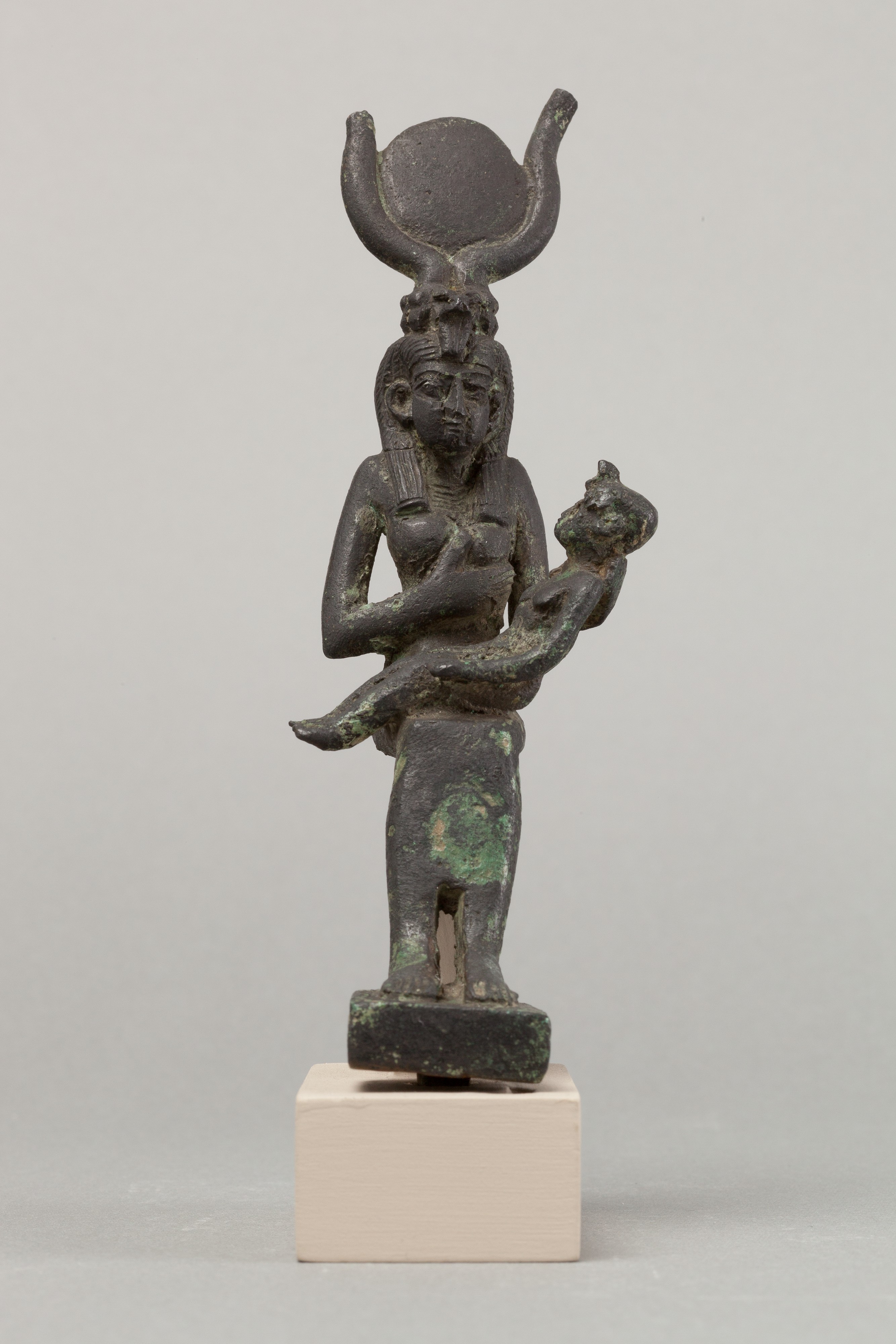
Isis and Horus, cupreous metal (Met Museum, 664-30 BCE) — the commanding Isiac presence who moves first

Book XI breaks the novel open. Lucius, exhausted, degraded, near death after ten books of suffering, falls asleep on a beach near Corinth. He wakes at night with the full moon rising from the sea. He washes his face in the salt water seven times, the Pythagorean number, and prays. He does not pray to magic or to the gods in general. He addresses Isis.

She appears. Her description takes two full pages of Latin prose. She identifies herself as the mother of all things, mistress of all the elements, first-born of ages. She is Minerva, Venus, Diana, Proserpina, Ceres, Juno, Bellona, Hecate, and Isis. The names the world has given to the feminine divine all belong to her; each goddess is a local face of the single divine feminine. This is the mystery theology of the imperial period: not syncretism (all gods are really one) but something subtler, in which local deities participate in a reality that exceeds any single name.

Who initiates the encounter? Not Lucius. He does not achieve illumination through his own effort. He prays, yes. But Isis answers because she chooses to. "Behold, I am come, moved by thy prayers." The divine moves first. The human responds. This reverses the error that began the novel. Lucius tried to seize transformation by stealing a witch's ointment. Now transformation seizes him. The goddess instructs him: at tomorrow's procession, eat the roses from her priest's garland. He will be restored.

He eats the roses. He becomes human again. The crowd, expecting comedy (a donkey interrupting a parade), witnesses instead a manifestation of divine power. The restoration is public, witnessed, communal. It is not a private mystical experience. It happens in daylight, in the middle of a religious procession, and everyone who sees it knows what they have seen.


V. The Boundary of Death

Wheat ears at sunrise — 'an ear of grain reaped in silence,' the traditional Eleusinian climax; golden light as the sun at midnight

Then comes the passage. The initiation into the Mysteries of Isis. Apuleius keeps his oath (he does not reveal the ritual content), but he tells us this:

I approached the boundary of death and, having trodden the threshold of Proserpina, I was carried through all the elements and returned. At midnight I saw the sun shining with a brilliant light.

This is the most compressed account of the initiatory experience in all of ancient literature. Parse it carefully. The initiate approaches the boundary of death: the experience is real enough that the approach to death is not metaphorical. He crosses the threshold of Proserpina, the queen of the underworld, which means he enters the realm of the dead. He is carried through all the elements: the ancient four (earth, water, air, fire), the cosmological totality, experienced not as concept but as passage. He returns. And at midnight, the moment of maximum darkness, he sees the sun.

The paradox at the center is the epopteia (CON-0003), the supreme vision. At midnight, the sun shines. This is not a contradiction to be resolved but a coincidence of opposites to be held, the signature mark of the initiatory experience across every tradition the project examines. The initiatory experience dissolves the boundary between death and life, darkness and light, descent and ascent. What the epoptes sees is not a thing among other things. It is the reality that underlies all things, perceived directly because the ordinary structures of perception have been temporarily annihilated (CON-0020).

Burkert notes this passage and declines to speculate about its content. He is right to decline: the evidence does not support reconstruction of the specific ritual. But the phenomenological description is precise even in its veiling. Something happened that felt like dying, that involved passage through the fundamental constituents of reality, that produced in total darkness a vision of overwhelming light. The person who came out was not the person who went in.


VI. The Pharmakon of the Novel
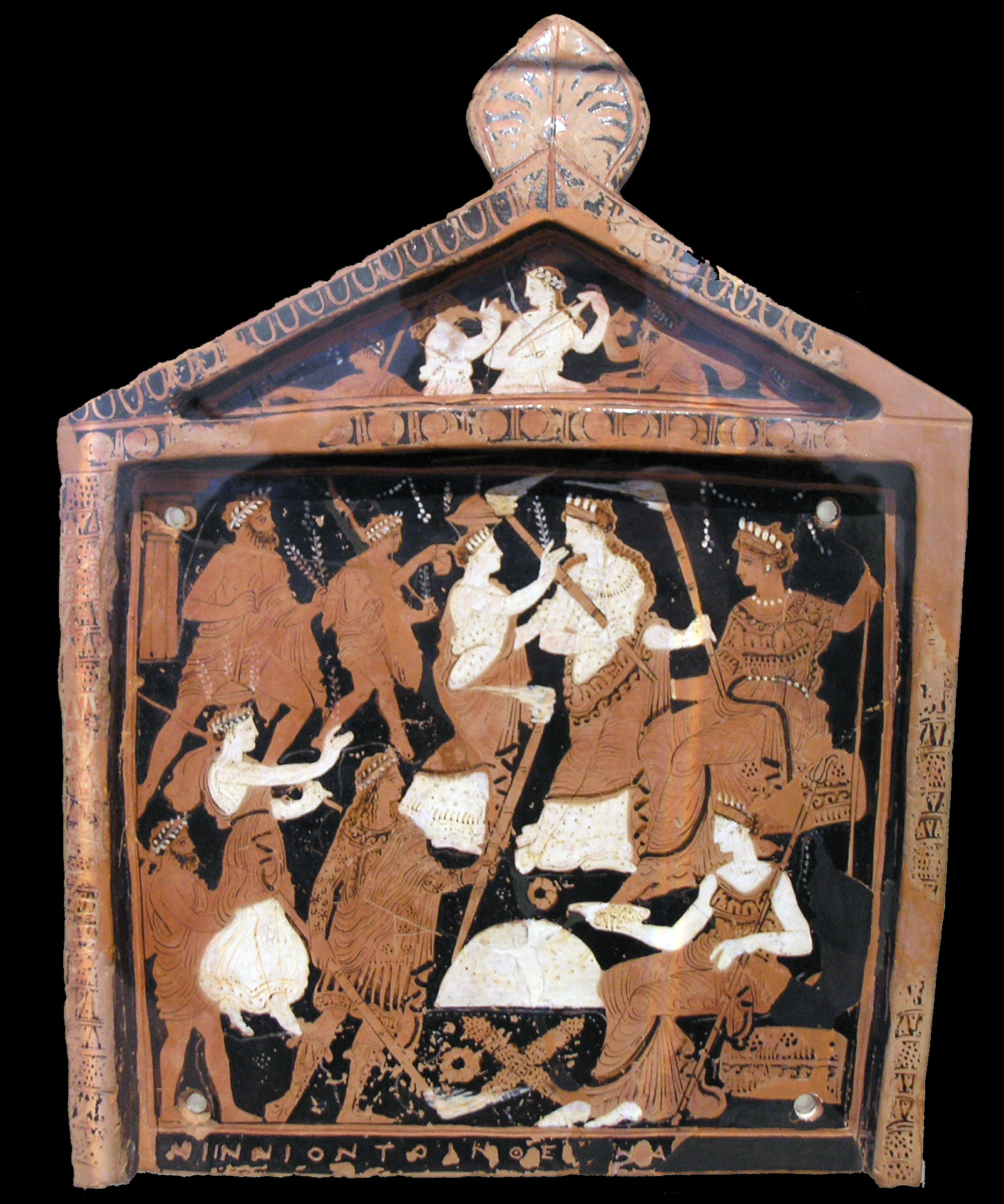
Ninnion Tablet (c. 370 BCE) — the only surviving original artwork of Eleusinian initiation: procession of initiates received by the goddesses, the ritual container that makes transformation safe

The Golden Ass is itself a pharmakon (CON-0014). The same word (metamorphosis, transformation) names both the catastrophe and the cure. Lucius is transformed into a donkey by magic applied without preparation, without relationship to the divine, without the initiatory architecture that contains and directs the power of change. He is transformed back by the goddess, through a ritual act (eating consecrated roses) embedded in a sacred context (the procession of Isis), after adequate preparation (ten books of suffering). The substance is the same: transformation. The context determines whether it heals or destroys.

This is Apuleius's deepest lesson for the project. The mystery traditions were not repositories of secret knowledge to be extracted. They were technologies of transformation that required specific conditions to operate safely: preparation, ordeal, the guidance of a presiding deity, the container of ritual, the presence of witnesses. Strip away the container and you get Lucius as donkey: changed, but changed in the wrong direction, trapped in a form that cannot reach what it desires. Provide the container and you get Lucius restored: changed in the direction the soul was always aimed, capable of seeing at midnight what daylight consciousness cannot perceive.

The novel does not argue this. It enacts it. The reader who follows Lucius through ten books of degradation and arrives at Book XI has undergone, in compressed literary form, the arc of descent and return. The comedy was the preparation. The suffering was the ordeal. And the sudden shift of register, from bawdy picaresque to hieratic solemnity, is the textual equivalent of the torches blazing in the Telesterion. Apuleius cannot break his oath and tell us what the initiate saw. So he builds a novel that replicates, in literary form, the initiatory arc itself. Ten books of confusion and animal helplessness prepare the reader for what Book XI delivers: the divine arriving unbidden, a vision that remakes the seer. The specifics remain unspeakable. The arc does not.

More Essays

What Happened Inside the Mysteries

The founding long-form essay of the Mystery Schools project: an imaginative synthesis of classical archaeology, consciousness evolution, neuroscience, and Western esotericism.

Dear Unknown Friend

A reading essay on Valentin Tomberg's Meditations on the Tarot, moving through concentration without effort, analogy, the Hermit's neutralization of binaries, the scientific creed, and anonymous transmission.

The Cartographer's Blind Spot

Eliade's Rites and Symbols of Initiation gave the modern West its most influential map of initiatory structure. This essay engages both the power and the limitation of his comparative method, asking what the tripartite schema reveals about consciousness transformation and where its universalizing impulse becomes a cage that obscures the very phenomena it describes.

The Sober Witness

Burkert's Ancient Mystery Cults is the foremost empirical account of what the five major mystery traditions actually looked like. This essay engages his insistence on institutional specificity and ritual mechanics, honors his refusal to romanticize, and asks the question his method forbids: not what were the mysteries, but what did they do to consciousness?

The Garment and the Stage

Barfield's Saving the Appearances is the single most important theoretical text for the Mystery Schools project. This essay engages his argument that perception itself has a history, that the ancient world was not a stage but a garment, and that the trajectory from original participation through the hardening points toward a final participation that the mystery traditions may have anticipated.

The Architecture of Descent

Dante's Commedia enacts the full initiatory structure that the project traces across all traditions: descent through death, purification through ordeal, ascent to direct vision. The essay reads the poem not as medieval theology set to verse but as evidence that the katabasis-anabasis pattern survived as a living architecture of spiritual experience long after Eleusis fell.

The Golden Bough and the Weight of History

Virgil's Aeneid contains the most sustained literary katabasis in Latin literature and the direct predecessor to Dante's Commedia. Unlike Odysseus or Orpheus, Aeneas descends not for personal gain but to receive the burden of history. The essay reads Book VI as initiatory architecture and the Gate of Ivory as a warning about the gap between vision and record.

The Rage and the Recognition

The Iliad is not an initiation narrative. It is the poem that establishes what consciousness looks like before initiation: the heroic mode, brilliant and lethal, cracked open by grief into something the heroic code cannot contain. Achilles's recognition of Priam as human father is the metanoia that makes the Odyssey's initiatory journey necessary.

The Dead Who Know the Way Home

The Odyssey is the oldest surviving initiation narrative in Western literature. Its deep structure follows the initiatory pattern centuries before the mystery cults formalized it: separation, ordeal, encounter with death, transformed return. Book XI's nekuia is the first literary katabasis, and the poem's implication is that the initiatory structure was already active in Greek consciousness at the earliest recorded moment.

The God Who Went Down Laughing

Aristophanes's Frogs is the only surviving ancient text that stages a complete katabasis as comedy. Dionysus descends to Hades to fetch a dead tragedian, and the play's laughter is not incidental to the initiatory structure but part of it. The essay reads Frogs as evidence that the Mysteries and the theater were twin Dionysian institutions.

The First Naming of What Is

Hesiod's Theogony is the first systematic cosmogony in the Western tradition — a genealogy of the gods that doubles as a logic of how reality differentiates from primordial openness through grounding and generation. Works and Days preserves the earliest Greek myth of the Five Races, a decline narrative the project reads as testimony about the loss of original participation.

The Gods Withdraw, the Humans Burn

The four plays in Euripides I — Alcestis, Medea, The Children of Heracles, Hippolytus — document a theological crisis at the heart of fifth-century Athens. The gods are present but no longer reliably aligned with human meaning. The essay reads Euripides as a seismograph of the early Hardening: the moment participatory consciousness begins to crack.

The Invisible Fraternity and Its Visible Historian

Waite's 1924 history is the most thorough English-language account of the Rosicrucian movement, written by a scholar who was also an initiate. The essay reads it as evidence for the egregore phenomenon: the power of an initiatic aspiration to generate real institutions even when no original institution can be documented.

The Book That Unsays Itself

The Tao Te Ching opens with an act of philosophical self-cancellation: the Dao that can be spoken is not the constant Dao. The essay reads the text as the Daoist form of participatory consciousness, where wu wei (action without force) is the Eastern counterpart to what the Western mystery traditions reach through initiation and descent.

The Battlefield and the Chariot

The Gita begins with a warrior's refusal to fight and unfolds into the Indian tradition's most concentrated instruction on action, knowledge, and devotion. The essay reads the three yogas as the explicit form of what the Western mystery traditions perform implicitly, and Krishna's cosmic vision as the Indian epopteia.

The Teaching at the Foot of the Teacher

The Upanishads are the philosophical summit of the Vedic tradition and the Eastern counterpart to the Eleusinian Mysteries: both claim that direct experiential knowledge of ultimate reality transforms the knower. The essay reads the Katha Upanishad's descent to Death as structural katabasis and the Upanishadic epistemology as participatory knowing.

The Analyst in the Telesterion

Von Franz reads Apuleius's Golden Ass as a map of individuation rendered in narrative form before Jung existed to name the process. The donkey is the shadow swallowing the ego whole; Psyche's descent is the anima's own differentiation; Isis is the Self arriving when the ego has been sufficiently dissolved. The project takes this psychological architecture and asks the question von Franz's method cannot: whether the territory the psyche maps is merely internal.

The River Has No Teacher

Hesse's 1922 novel stages the most radical claim a spiritual narrative can make: that the greatest teacher in the story is wrong — not in what he knows, but in the assumption that what he knows can be transmitted through doctrine. Siddhartha walks away from the Buddha and into the world, and the novel follows what happens when a consciousness must descend into lived experience because no teaching can substitute for it.

The Diagnosis That Outlived Its Doctor

René Guénon's 1927 polemic is the Traditionalist diagnosis of modernity as the Kali Yuga, an age that has not lost the hierarchy of knowledge but inverted it. The essay reads the book as the ground on which the counter-initiation concept later stands, weighs its diagnostic power against its anti-historical exclusivism, and follows the dangerous political afterlife of Traditionalism from Evola to Dugin.

The Borrowed Name and the Brilliant Darkness

An anonymous Syrian monk, writing around 500 CE under the stolen name of an apostle's convert, smuggled a body of Neoplatonic mysticism into Christian orthodoxy. The essay reads the Dionysian corpus as the moment mystery-school metaphysics changed clothes, traces its apophatic core — the "brilliant darkness" of unknowing, and follows its underground passage into the Western contemplative tradition from Eriugena to Eckhart.

The Work the Mind Cannot Do

Iamblichus wrote On the Mysteries around 300 CE as a reply to Porphyry's skeptical letter on the value of ritual, signing it with the mask of an Egyptian priest. The essay reads the book as the founding defense of theurgy: the argument that a fully descended soul cannot think its way back to the divine, and that the ascent must be completed by god-work performed in matter, the Mysteries carried forward in philosophical form.

The Flight of the Alone

The Enneads collect Plotinus's treatises on the One, Intellect, and Soul, and on the soul's descent into matter and its return. The essay reads Plotinus as a practitioner rather than a theorist, a philosopher who reported union with the One from experience, and sets his contemplative ascent against Iamblichus's theurgy, while weighing the real convergence between henosis and the Vedantic identity of atman and brahman.

The Faculties That Slumber

How to Know Higher Worlds is Rudolf Steiner's practical manual of modern initiation: a step-by-step discipline of reverence, thought-control, and moral training that he printed openly, for an individual to walk alone. The essay reads it as the operative tradition's modern manual, the clearest account of what initiation had to become to survive into a consciousness with a free, self-aware ego.

The Doctrine Behind the Doctrines

The Secret Doctrine is the most ambitious synthesis in modern esoteric literature: Blavatsky's claim of one lost wisdom-tradition behind all religions, science, and philosophy. The essay reads it as both a real bridge, the route by which Eastern concepts entered Western consciousness, and a cautionary mirror of the project's own synthetic method when ambition outruns rigor, transparency of sources, and the discipline of distinction.

0:00
0:00