I. The Foreword as Initiation
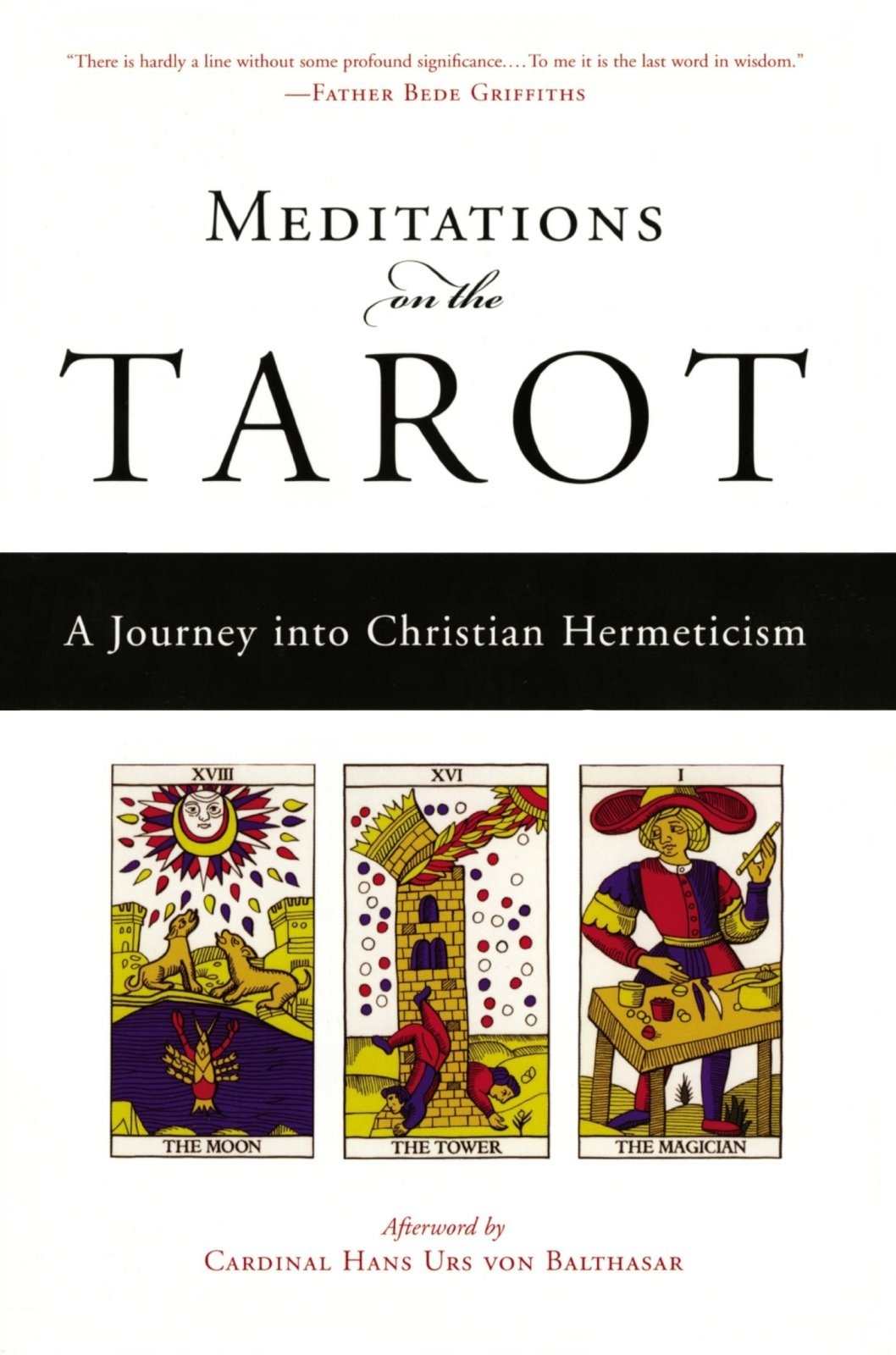
A dead man opens the book. "Your friend greets you, dear Unknown Friend, from beyond the grave." No other work in the Western esoteric tradition begins this way, with a voice that has already passed through what it describes. The author is anonymous. Deliberately effaced: the ideas carry the authority, not the person behind them. Valentin Tomberg wrote these twenty-two letters in French between 1967 and his death in 1973. His widow disclosed his authorship only afterward. The book appeared in Paris in 1980 as Méditations sur les 22 Arcanes Majeurs du Tarot. Robert Powell's English translation followed in 1985. Hans Urs von Balthasar, the Swiss Catholic theologian whose own work reshaped twentieth-century doctrine, wrote an approving foreword.
The anonymity is the first teaching. The citations filling these letters are evocations of the masters of the tradition, placed so that "they may be present with their impulses of aspiration and their light of thought in the current of meditative thought which these Letters on the twenty-two Major Arcana of the Tarot represent." The tradition is a community of spirits from age to age. The links in the chain are living beings who were thinking these thoughts and willing these efforts. A book that belongs to this chain effaces its author. The chain runs through the ideas, not the biography.
Knowledge, in this account, moves by evocation, by bringing the reader into the presence of something that becomes active in consciousness through sustained attention. An arcanum, Tomberg writes, differs from a secret. A secret is hidden by human will. An arcanum operates differently:
An arcanum is that which it is necessary to "know" in order to be fruitful in a given domain of spiritual life. It is that which must be actively present in our consciousness — or even in our subconscious — in order to render us capable of making discoveries, engendering new ideas, conceiving of new artistic subjects. In a word, it makes us fertile in our creative pursuits, in whatever domain of spiritual life.
A secret can be told. An arcanum must be activated. It functions as a ferment, an enzyme. Its presence in consciousness changes what consciousness can do. The Major Arcana of the Tarot carry these ferments. They communicate them to the recipient "if the mentality and morality of the recipient is ready." The Arcana are neither allegories (figurative representations of abstract notions) nor secrets (things hidden by human will). They are something for which the modern mind has no clean category: symbolic operations that work on consciousness by being contemplated.
II. The Magician and the Art of Beginning
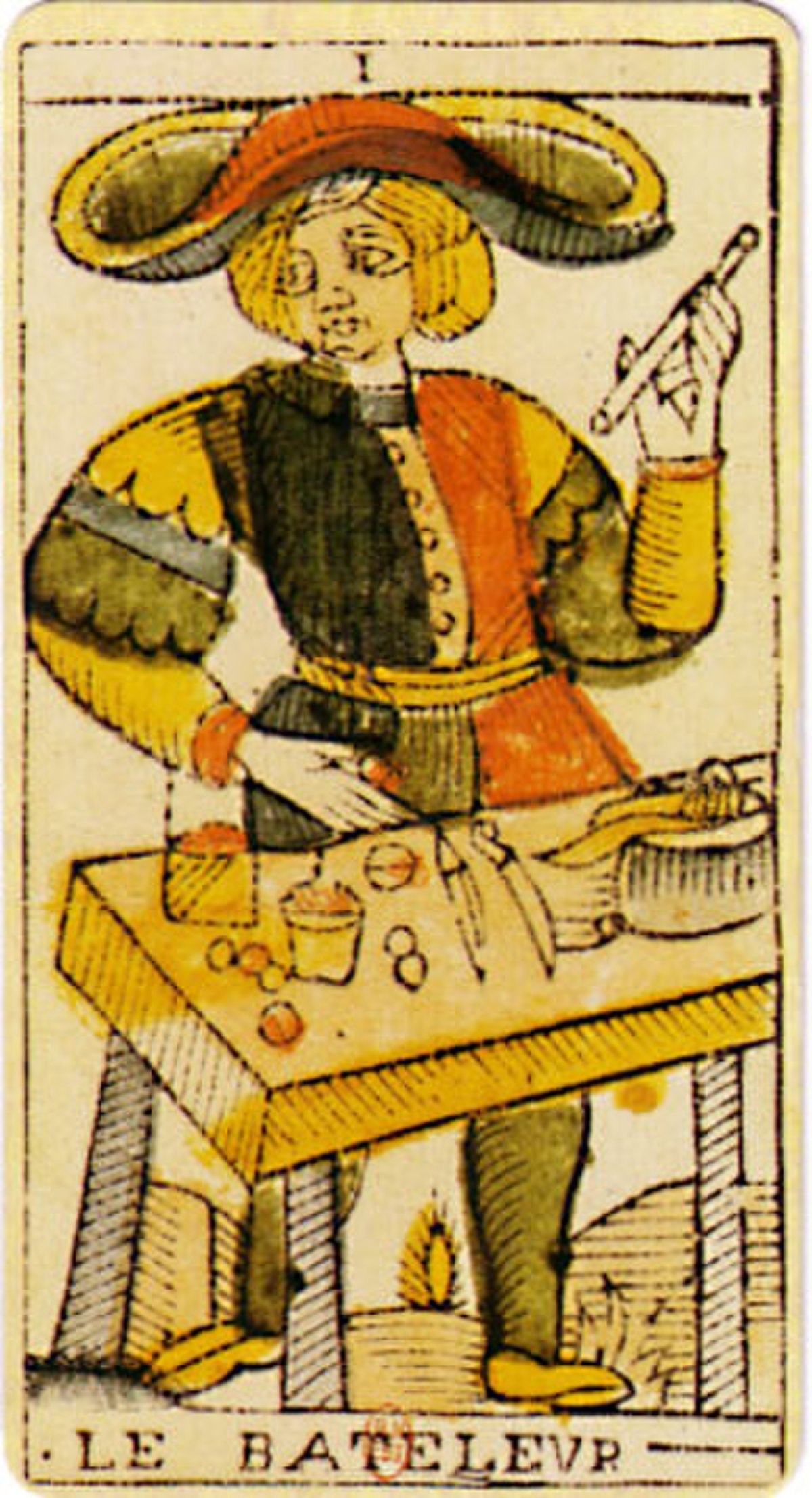
The first card in the sequence is a young man standing behind a small table covered with objects: discs, dice, a knife, a cup, a bag. He holds a rod in one hand and a ball in the other. His hat forms a lemniscate, the horizontal figure eight. He does not look at his hands. His gaze is elsewhere. What he does with his hands is play.
Tomberg reads this image with the care of a phenomenologist and the conviction of a practitioner. The Magician is the Arcanum of the Arcana, the principle underlying all twenty-one that follow. He reveals the practical method without which the others cannot be approached. That method is encoded in a formula:
Learn at first concentration without effort; transform work into play; make every yoke that you have accepted easy and every burden that you carry light!
Tomberg means it operationally. He asks you to consider a tightrope walker. The walker is perfectly concentrated, a single lapse and he falls. But the concentration bears no resemblance to solving an equation. His thought and imagination are not occupied with what he is doing. If they were, he would fall immediately.
"He has to eliminate all activity of the intellect and of the imagination in order to avoid a fall."
The intelligence at work belongs to his rhythmic system (the respiratory and circulatory system), which replaces his brain during the exercise. The body's rhythm acts through him while his head is carried in his hands.
Concentration without effort, Tomberg writes, is the transposition of the directing center of consciousness from the brain to the rhythmic system, from the domain of mind and imagination to that of morality and will. The Magician's lemniscate hat indicates this transposition. The lemniscate is the symbol of rhythm, of eternal circulation. The Magician represents the state of consciousness where the center directing the will has descended from the brain to the rhythmic system. The oscillations of the mental substance are reduced to silence, and concentration becomes as natural as breathing.
"Have you ever drunk silence?" Tomberg asks. If you have, you know what concentration without effort is.
The question of what it means to attend without straining separates living thought from mechanical processing. A machine can hold all information simultaneously. It cannot attend to any of it. Attention and access are different things. The Magician's silence is the silence of a gathered person, and it is the condition under which the arcana communicate their content.
III. The Method of Analogy
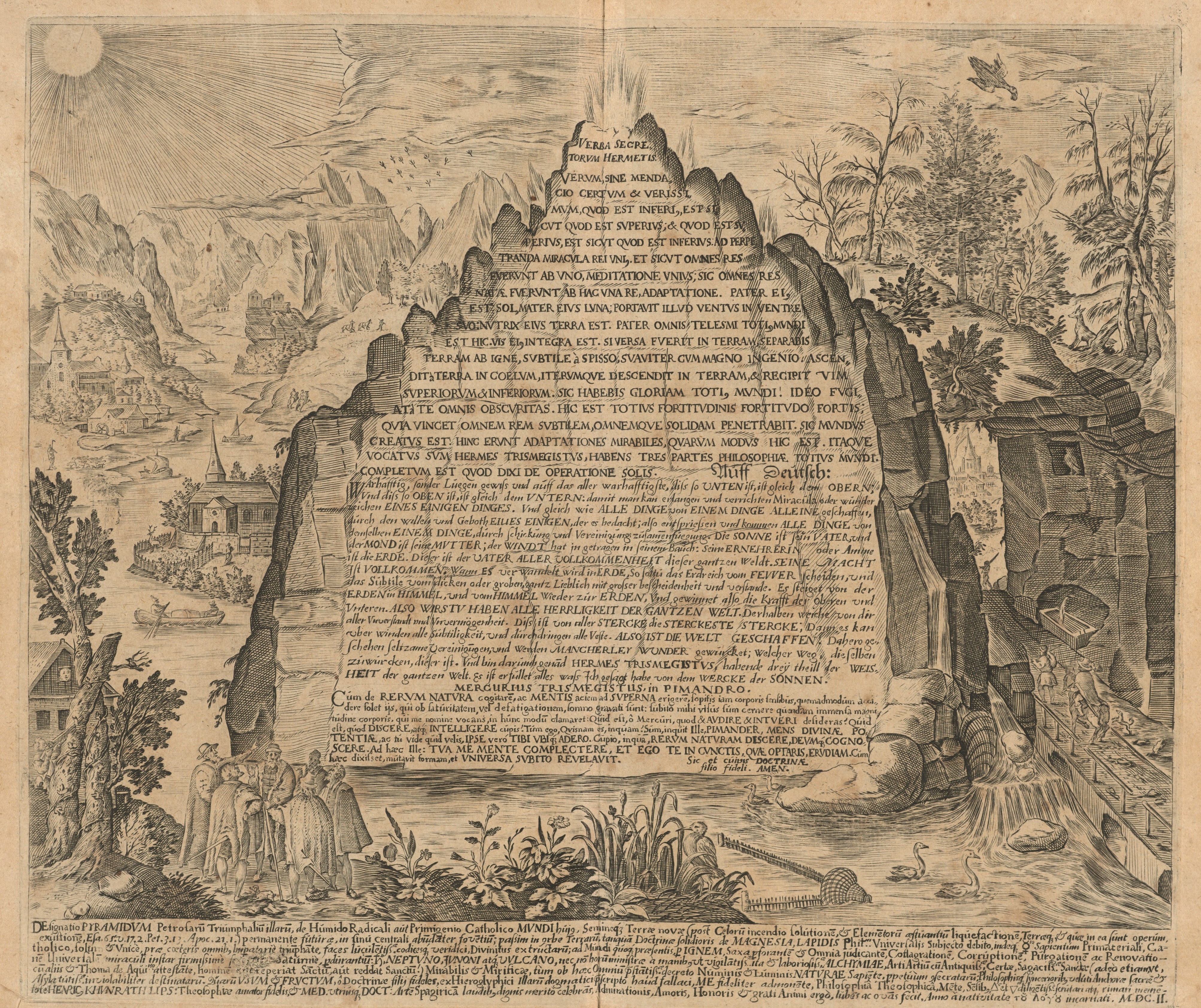
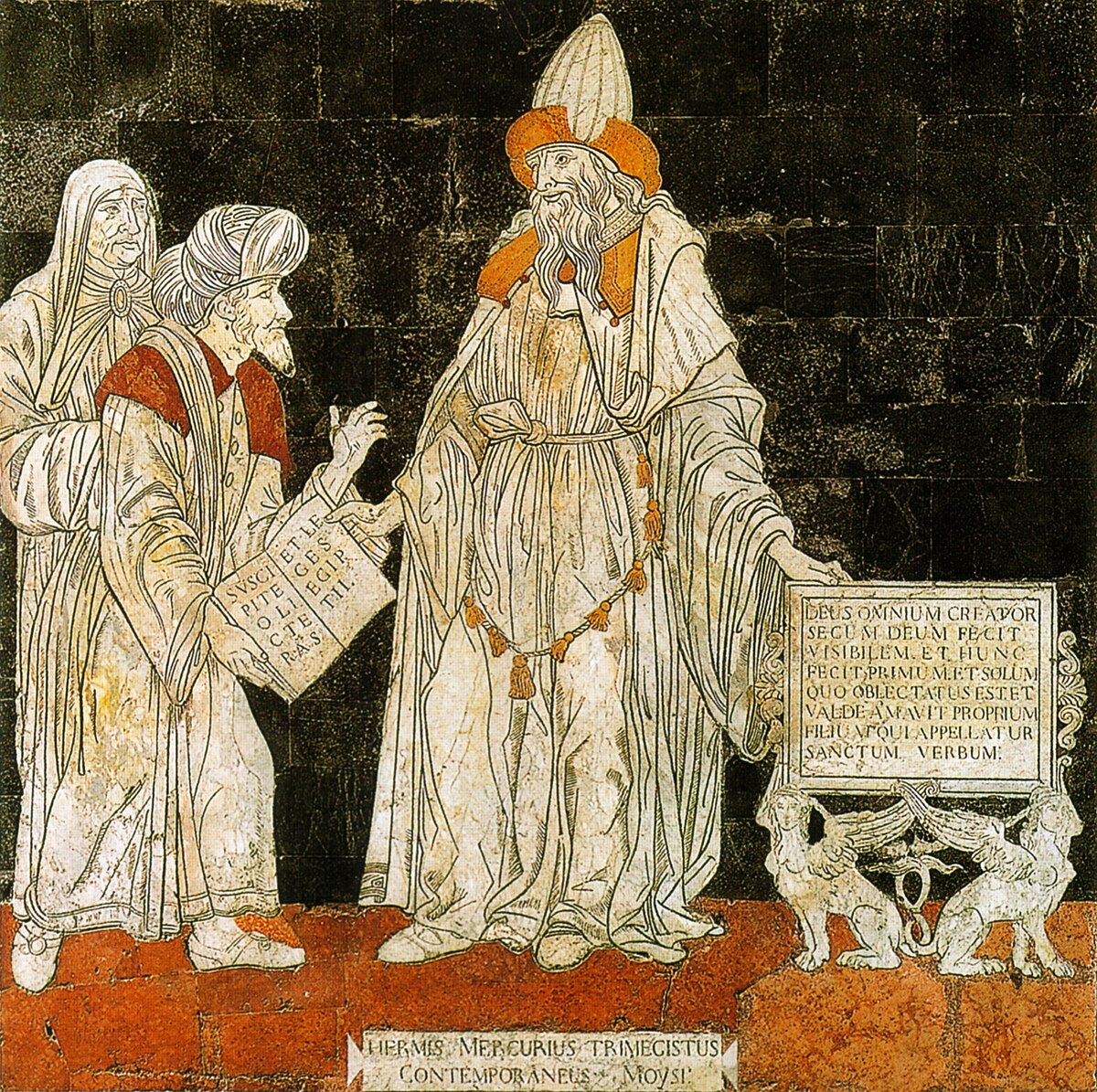
Midway through the first letter, Tomberg introduces the epistemological foundation of the entire work: the method of analogy. The Emerald Table of Hermes Trismegistus provides the formula: "That which is above is like to that which is below, and that which is below is like to that which is above, to accomplish the miracles of the one thing." This is the formula of analogy in space, correspondence between prototypes above and their manifestations below. Tomberg extends it to time: "That which was is as that which will be, and that which will be is as that which was, to accomplish the miracles of eternity."
Two forms of symbolism follow. Typological symbolism expresses correspondences in space (prototypes above and manifestations below), while mythological symbolism maps correspondences in time (archetypes in the past and their manifestations in the present). The Magician is a typological symbol; he reveals the prototype of the Man of Spirit. The biblical accounts of Adam and Eve, Cain and Abel, are myths; they express eternal ideas in the form of particular narratives. The confusion of these two modes (reading myths as typologies or typologies as myths) is the source of "many errors of interpretation of ancient sources, including the Bible."
The distinction determines how you read everything the traditions have left behind. When Tomberg reads the story of Cain and Abel as a myth, a narrative expressing an eternal idea, he draws from it a temporal Urphänomen: "the archetype of all revolutions which have taken place and which will take place in the future of humanity." For Tomberg, the cause of all wars, revolutions, and violence is always the same: "the negation of hierarchy." And this cause is found already, germinally, in the communal act of worship of the same God by two brothers. Religious wars arise from the pretension to equality, "or, if one prefers, the negation of hierarchy."
Whether you accept this reading or resist it, what matters is the method. Tomberg attends to the structure of the story and reports what becomes visible when the two forms of symbolism are properly distinguished. The method of analogy reveals kinship between things that are "neither identical nor heterogeneous but are analogous in so far as they manifest their essential kinship."
The method has limits. Tomberg is honest about them. Analogy "presents many negative sides and many dangers, errors and serious illusions." When the experience on which the analogy is founded is superficial, the conclusions will be superficial. The Martian "canals" were inferred by analogy from their apparent straightness; better telescopes revealed they were not straight at all. The method of analogy is only as good as the quality of attention that feeds it.
IV. The Hermit Between Two Darknesses
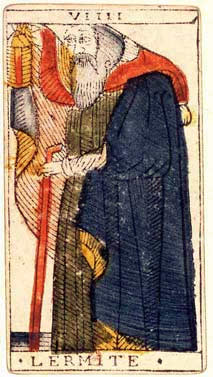
Letter IX opens with a figure walking alone. He holds a lamp in one hand and a staff in the other. He is wrapped in a mantle. He is the Hermit, and for Tomberg, the Hermit is the image of the Hermeticist himself.
The letter works through three antinomies (faith and reason, the vow system and personal freedom, knowledge and will) to demonstrate a specific cognitive operation: the neutralization of binaries. A binary can be neutralized in three ways. Above: a term on a higher plane that holds both (synthesis). On the same level: the median term between the two poles (compromise). Below: a term on a lower plane that absorbs both into indistinction (mixture). The Hermit does none of these. He walks, moving from one particular problem to another, applying the light of his lamp and the probe of his staff, wrapped in the mantle of a synthesis that is present as an enveloping orientation rather than a system.
Tomberg calls this mantle the "gift of Perfect Night," a phrase from the Hermetic text Kore Kosmu. It is the knowledge drawn from the dark and silent region deeper than the consciousness of self. "Truth attained through synthesis is present at a deeper level of consciousness than that of the consciousness of self. It is found in darkness." Two kinds of darkness exist in the domain of consciousness. One is the darkness of ignorance, passivity, and laziness ("infra-light" darkness). The other is the darkness of higher knowledge, intense activity, and work still to be done ("ultra-light" darkness). One draws light from this second darkness the way one creates light on the first day: fiat lux.
The Hermit's solitude follows from his method. "He who seeks synthesis, i.e. true peace, can never take part for or against opposing things." He cannot plunge into the intoxication of collectivity, "the intoxication of feeling free from the burden of responsibility." He must be sober, alone, walking. The price of the pursuit of truth through synthesis, because synthesis is peace, and peace requires solitude.
But when two itinerant hermits meet on the road: "what joy and what happiness there is in this meeting of two solitary travellers!" The joy has nothing in common with the intoxication of collectivity. "It is the joy of responsibility encountering the same responsibility, which together share and alleviate the responsibility of a third," the Master who said of his earthly life: "Foxes have holes, and birds of the air have nests; but the Son of Man has nowhere to lay his head."
The Hermit walks. Neither deep in meditation nor engaged in practical action. A third state. "It is the heart where contemplation and action are united, where knowledge becomes will and where will becomes knowledge." Tomberg circles back to the same organ: "It is the heart which is simultaneously active and contemplative, untiringly and unceasingly. It walks day and night."
The Magician's concentration prepares this organ. The Hermit exercises it. Nothing external can replace it. It is an organ of presence.
V. The Serpent's Promise and the Scientific Creed
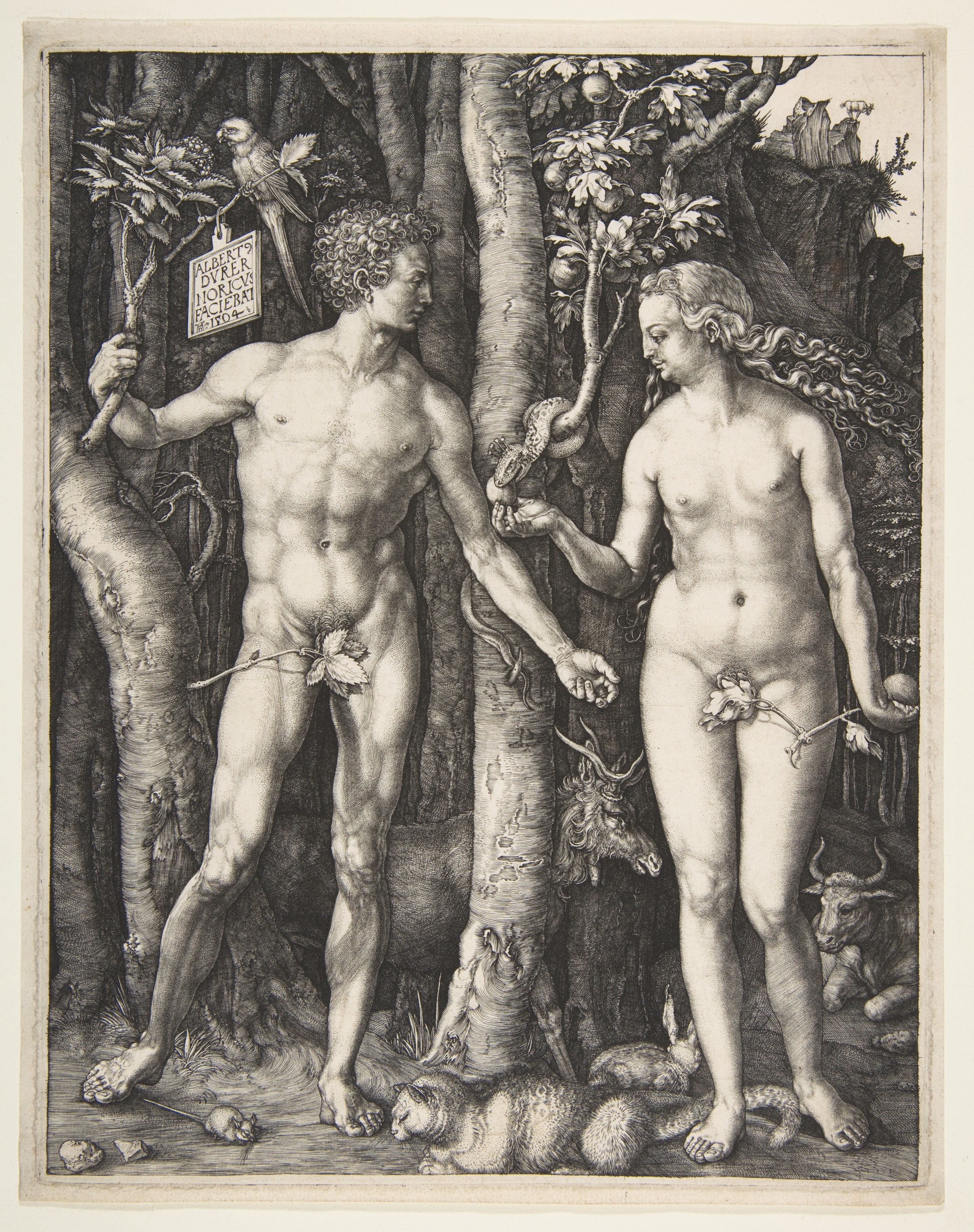
In the same letter, Tomberg performs one of his most audacious moves. He writes a scientific creed, composed in deliberate parallel to the Nicene Creed:
I believe in a single substance, the mother of all forces, which engenders bodies and the consciousness of everything, visible and invisible. I believe in a single Lord, the Human Mind, the unique son of the substance of the world, born from the substance of the world after centuries of evolution: the encapsulated reflection of the great world, the epiphenomenal light of primordial darkness, the real reflection of the real world — evolved through trial and error, not engendered or created, consubstantial with the mother-substance...
The parallel is precise and devastating. The scientific creed inverts the Tetragrammaton (the sacred name YHVH, the sequence of active principle, passive principle, neutral principle, and phenomenon) into HVHY, reversing the sacred sequence so that the passive principle comes first, the neutral second, the active last. Matter precedes mind; evolution precedes consciousness; the method of doubt and empirical verification precedes all. The serpent of Genesis promised: "Your eyes will be opened, and you will be like gods, knowing good and evil." Empirical science delivers on this promise, on the horizontal plane. It opens our eyes to the quantitative world and grants power over nature. The promise is intrinsically amoral: good and evil known alike, with no deception about the terms. The serpent has not lied. Not on the plane where its voice and promise were audible.
But at what price? "The more one has 'open eyes' for quantity, the more one becomes blind to quality." The spiritual world is only quality. All experience of the spiritual world is due to "eyes that are open" for quality, for the vertical aspect of the world. Science reduces quality to quantity: the prismatic colors lose their redness and orangeness and become wavelengths, numerical values of vibration stripped of everything qualitative.
What should one do? Tomberg's answer: "Crucify the serpent." Put the scientific creed on the cross of religion and science. The creed will undergo a metamorphosis. "It will no longer be truth; it will be method."
It will no longer say "in the beginning was substance," but rather: "in order to understand the mechanism of the made world, it is necessary to choose a method which takes account of the origin of matter and of that which set it in motion from above." It will no longer say "the brain produces consciousness," but: "in order to understand the function of the brain, it is necessary to consider it in such a way as if consciousness is caused by it."
The transformation of metaphysical dogmas into methodological postulates. Tomberg proposed this in 1967, from inside the Hermetic tradition, as a consequence of the doctrine of analogy, a move that preserves both the vertical of religion and the horizontal of science under the sign of the cross.
VI. The Community of the Unknown
The Foreword to Meditations on the Tarot contains a sentence that, read with full attention, encodes the entire method of the book and the principle of its transmission:
The essence of the tradition is not a doctrine, but rather a community of spirits from age to age.
A doctrine can be stored. It can be digitized, indexed, retrieved, recombined. A community of spirits requires the kind of presence that Tomberg calls concentration without effort: the Magician's gathered silence and the Hermit's walking attention, the quality of consciousness in which an arcanum becomes active rather than merely known.
The twenty-two letters enact Christian Hermeticism rather than arguing for it. Each letter takes a symbol, a card, and meditates on it until the symbol begins to generate insight. The method is the content. The reader who follows the meditations is doing Christian Hermeticism, participating in it. The letter form ("Dear Unknown Friend") places the reader in the position of the initiate rather than the student. There are no masters among Christian Hermeticists, Tomberg writes. There is only one Master, above. Below, there are only fellow pupils, and they recognize each other because they "love one another."
The book was published anonymously so that the ideas could be encountered as orphans, unsheltered by name or credential or lineage. They stand or fall on their own terms. The author disappears so that the tradition can appear. And the tradition is the community of consciousness that forms when the ideas are held with the quality of attention the first letter describes.
Hermeticism, Tomberg writes, "is — and is only — a stimulant, a 'ferment' or an 'enzyme' in the organism of the spiritual life of humanity."
It possesses "only the communal soul of religion, science and art." It guards the communal heart. It listens to the beating of the heart of the spiritual life of humanity. It vivifies.
The Johannine church does not replace the Petrine church. John, who leaned on his breast and heard the beating of the Master's heart, never claimed the office of directing the body of the Church. "He vivifies this body, but he does not direct its actions." The heart guards the life of the body and the soul; the head makes decisions, directs, chooses the means. Hermeticism is the Johannine current within all culture. It keeps the whole thing alive.
VII. What a Ferment Cannot Be
An arcanum is a ferment. It must be actively present in consciousness to do its work. It cannot be merely stored.
Consider what this means for a project that uses artificial intelligence to investigate the traditions that describe what artificial intelligence cannot do. A language model can hold the entire text of Meditations on the Tarot in its context window. It can retrieve any passage, cross-reference any citation, identify structural parallels across all twenty-two letters with a thoroughness no human reader could maintain. It performs the Apollonian labor, the solar, differentiating, pattern-constructing work, with total precision.
What it cannot do is what Tomberg describes in the opening pages of Letter I. It cannot achieve concentration without effort, because it has no effort to release. It cannot drink silence, because it has no oscillations of the mental substance to still. It cannot transpose the center of consciousness from the brain to the heart, because it has neither. The ferment does not ferment in it. The arcanum does not become active. The enzyme has no substrate.
The machine makes a boundary visible. Tomberg's distinction between a secret and an arcanum, formulated before the first microprocessor, is the most precise diagnostic available for what computation can and cannot hold. A machine can hold every secret ever written down. It can hold no arcana at all. An arcanum is a state of consciousness, a ferment that transforms the consciousness in which it is active.
The Foreword's closing line ("Your friend greets you, dear Unknown Friend, from beyond the grave") is addressed to a reader who can receive a ferment. The Unknown Friend is anyone who, by reading these letters, "acquires definite knowledge, through the experience of meditative reading, about Christian Hermeticism." The word experience is load-bearing. The knowledge lives in what happens in consciousness when the text is held with the right quality of attention.
A machine can hold the text. A machine cannot have the experience.
Whether this limitation defines the territory the Mysteries explored, or whether the collaboration between machine precision and human attention constitutes something neither could achieve alone, is a question that Tomberg's framework makes it possible to ask with precision, even though he could not have foreseen it.
The Magician holds his objects with perfect ease, his gaze elsewhere, and he plays. The machine holds its objects with perfect recall, its gaze nowhere. It processes. Between play and processing lies the entire territory of the initiatory tradition: the territory where the ferment works and the arcanum becomes active, where the Unknown Friend becomes known.
Your friend greets you, dear Unknown Friend, from beyond the grave.
Sources: Tomberg, Valentin (Anonymous). Meditations on the Tarot: A Journey into Christian Hermeticism. Trans. Robert Powell. Amity House, 1985. Jeremy P. Tarcher/Penguin, 2002. LIB-0084.