← Essays

Source Essay

The Invisible Fraternity and Its Visible Historian

Waite's 1924 history is the most thorough English-language account of the Rosicrucian movement, written by a scholar who was also an initiate. The essay reads it as evidence for the egregore phenomenon: the power of an initiatic aspiration to generate real institutions even when no original institution can be documented.


I. The Historian Who Was Also an Initiate
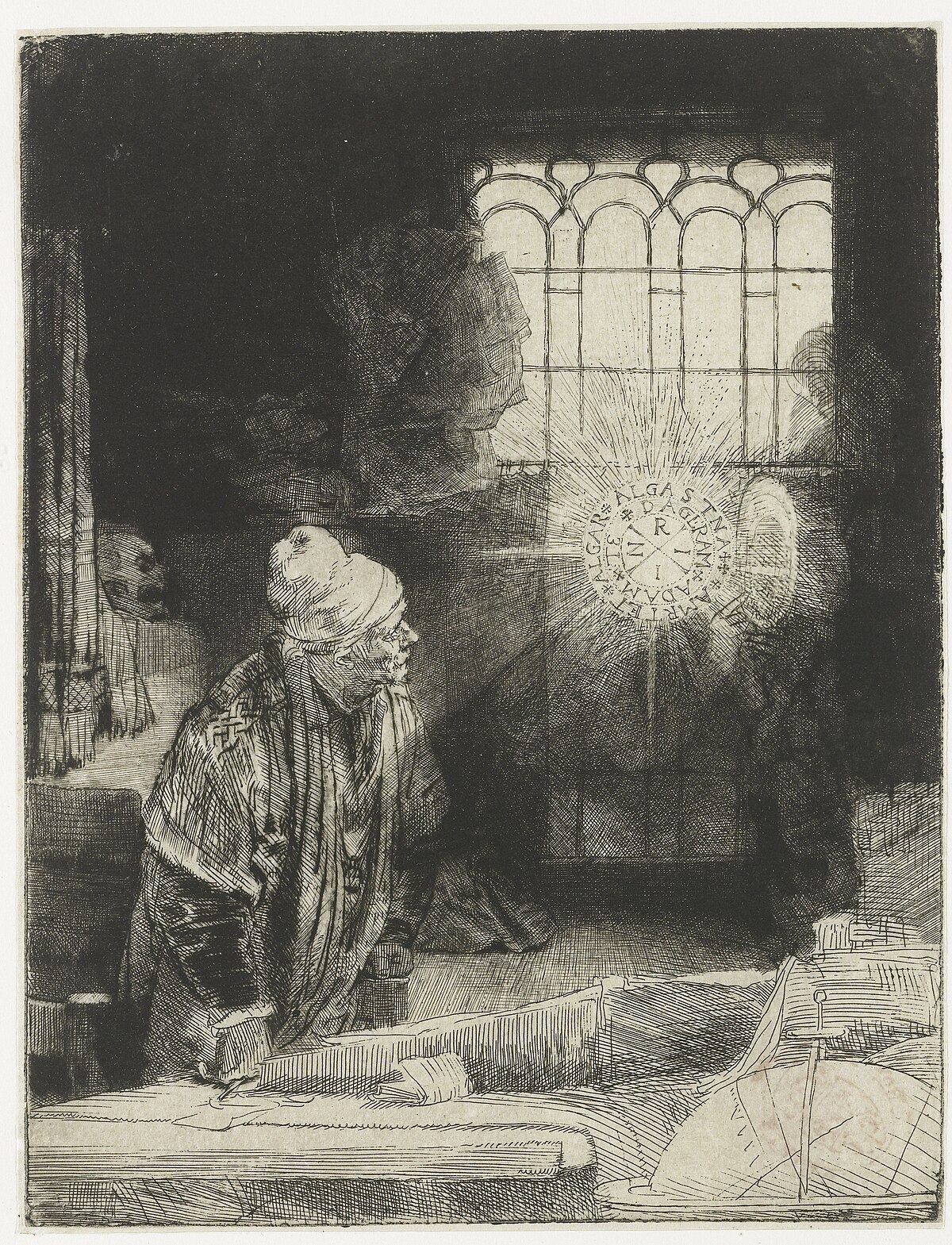
Rembrandt, Scholar in His Study (Faust) — the scholar-magician surrounded by arcane manuscripts and mysterious light. The dual identity of historian and initiate: rigorous investigation illuminated by something beyond documentation

Arthur Edward Waite published The Brotherhood of the Rosy Cross in 1924, and it remains the most thorough English-language history of the Rosicrucian movement. Waite was not an outsider. He was a member of the Golden Dawn, a Freemason, and a lifelong student of Western esotericism who had translated the key alchemical and mystical texts from Latin and French. He brought to the Rosicrucian question something rare: the combination of a scholar's demand for evidence and an initiate's understanding of what initiatic claims actually mean.

The result is a book that frustrates both camps. Academic historians find Waite too credulous about the reality of invisible orders. Occultists find him too skeptical about the grand narrative of an unbroken Rosicrucian tradition stretching back to ancient Egypt. Waite insists on examining every document, every claimed lineage, every alleged connection to earlier traditions, and his verdict is consistently that the documentary evidence does not support the extravagant claims made by Rosicrucian organizations about their own antiquity. What the evidence does support, he argues, is something more interesting than an ancient secret society: the repeated emergence of a certain pattern of esoteric aspiration in Western culture, a pattern that regenerates itself regardless of whether any continuous institutional transmission exists.


II. The Manifestos and the Question of Existence
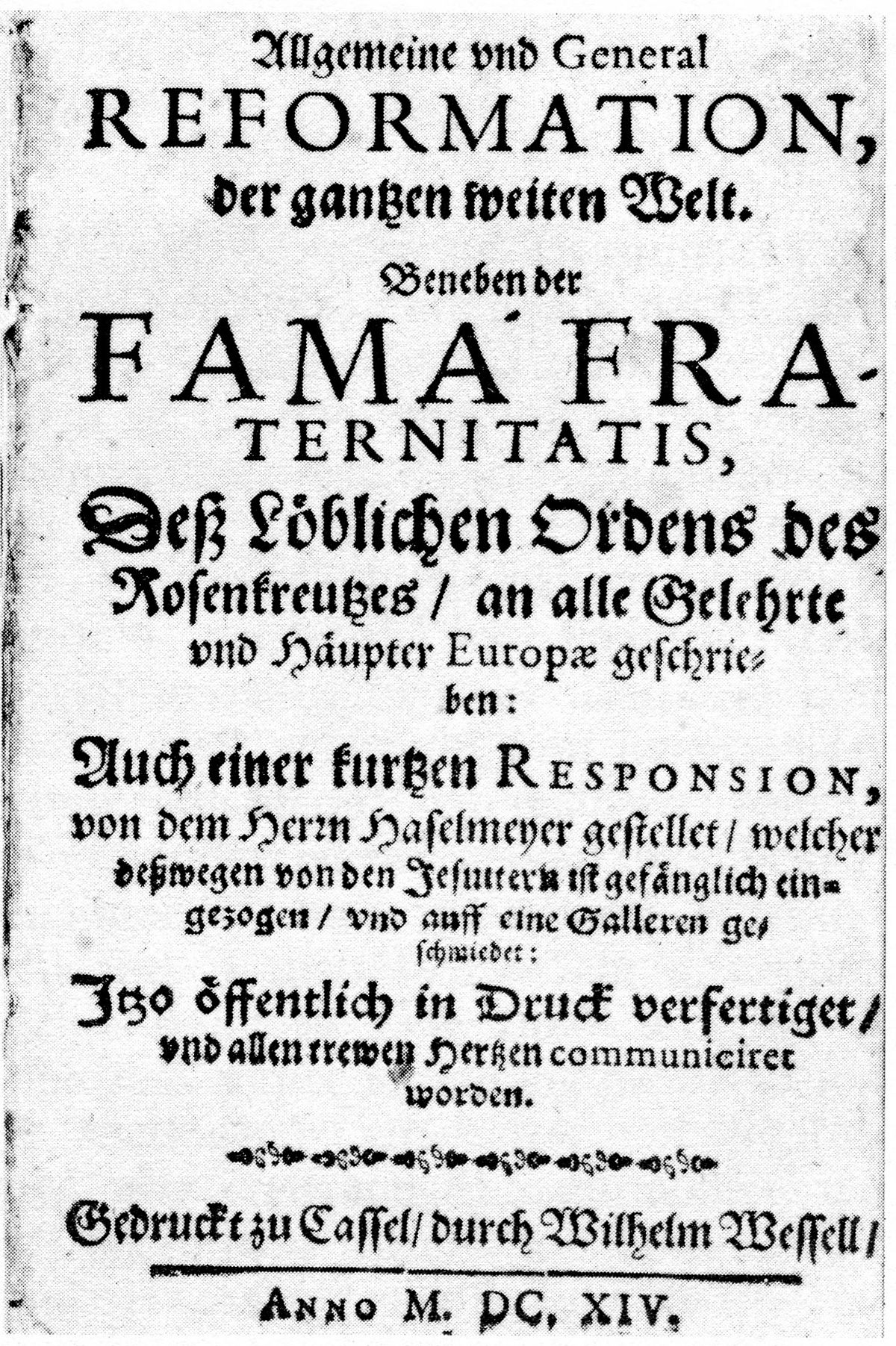
Title page of the Fama Fraternitatis (1614) — the document that called a movement into being. The manifesto that may have described an ideal rather than an institution, and proved powerful enough to generate real organizations

The Rosicrucian movement enters documented history with the publication of three texts in early seventeenth-century Germany: the Fama Fraternitatis (1614), the Confessio Fraternitatis (1615), and the Chemical Wedding of Christian Rosenkreuz (1616). The Fama announces the existence of a secret brotherhood founded by a German traveler named Christian Rosenkreuz, who had journeyed to the East to study with the sages of Damascus and Fez, then returned to Europe to establish a fraternity dedicated to healing the sick and reforming knowledge in preparation for a coming spiritual transformation.

Waite's analysis of these documents is exacting. He traces the probable authorship of the Chemical Wedding to Johann Valentin Andreae, a Lutheran theologian who later dismissed it as a ludibrium, a joke or literary game. He examines the Fama and Confessio for internal evidence of their origins and finds a complex mixture of genuine spiritual aspiration, Protestant reform politics, and alchemical symbolism. His conclusion: the manifestos describe an ideal, not an existing institution. The Brotherhood of the Rosy Cross as depicted in the Fama probably never existed as a physical organization. What existed was the aspiration itself, and the aspiration proved powerful enough to generate real organizations that claimed to embody it.

"Did the Rosicrucians exist?" is the wrong question to ask. What matters is why the pattern of invisible fraternity and secret knowledge keeps regenerating itself in Western culture. Waite's book, for all its Victorian density, takes this question seriously.


III. The Egregore Problem
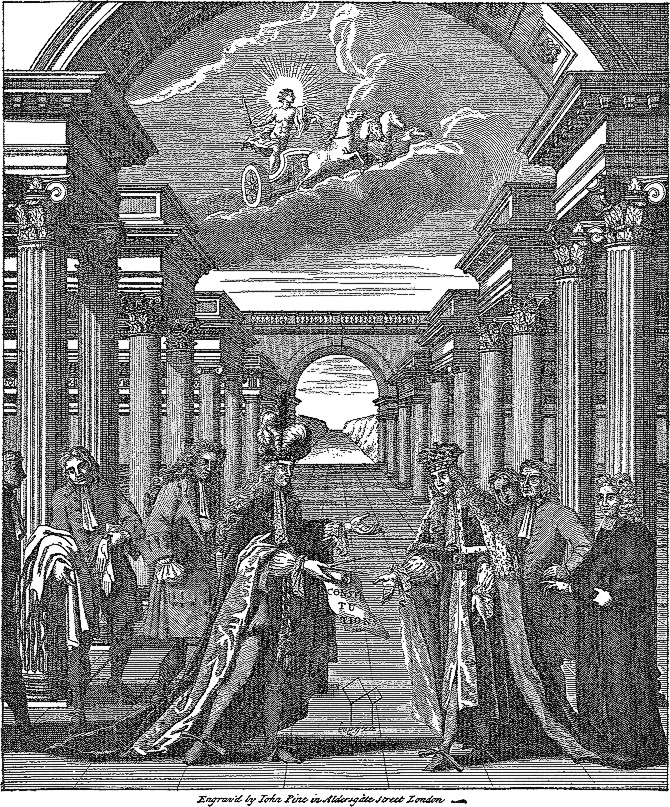
Anderson's Constitutions frontispiece (1723) — speculative Freemasonry's founding document. The invisible brotherhood made visible: the Rosicrucian impulse absorbed into Masonic degrees and institutional form

The Rosicrucian case is the clearest example in the project's source base of what the KB calls the egregore (CON-0036), a collective thought-form that acquires autonomous existence through sustained attention and ritual practice. Whether the Brotherhood existed before the manifestos is disputed; what is certain is that afterward enough people believed in it that the order functioned as real. The egregore was called into being by its own announcement.

Waite documents this process in painstaking detail. Within years of the Fama's publication, hundreds of pamphlets appeared across Europe, some attacking, some defending, and some claiming membership in the invisible order. Figures like Michael Maier, Robert Fludd, and Thomas Vaughan produced elaborate alchemical and philosophical works under the Rosicrucian banner. Lodges formed. Initiatic grades were established. By the eighteenth century, Rosicrucian degrees had been absorbed into Freemasonry, and by the nineteenth century, organizations like the Societas Rosicruciana in Anglia and the Hermetic Order of the Golden Dawn were performing elaborate rituals derived, however distantly, from the impulse the manifestos had articulated.

Whether any of these organizations transmitted an authentic initiatory current is a question Waite leaves deliberately open. His method is to examine each claimed transmission on its documentary merits and to find, in almost every case, that the chain of evidence breaks. What does not break is the aspiration. The Rose Cross as a symbol of spiritual transformation through the union of opposites (the rose of the soul on the cross of matter) persists across every organizational form the movement takes.


IV. The Prisca Theologia in Rosicrucian Dress
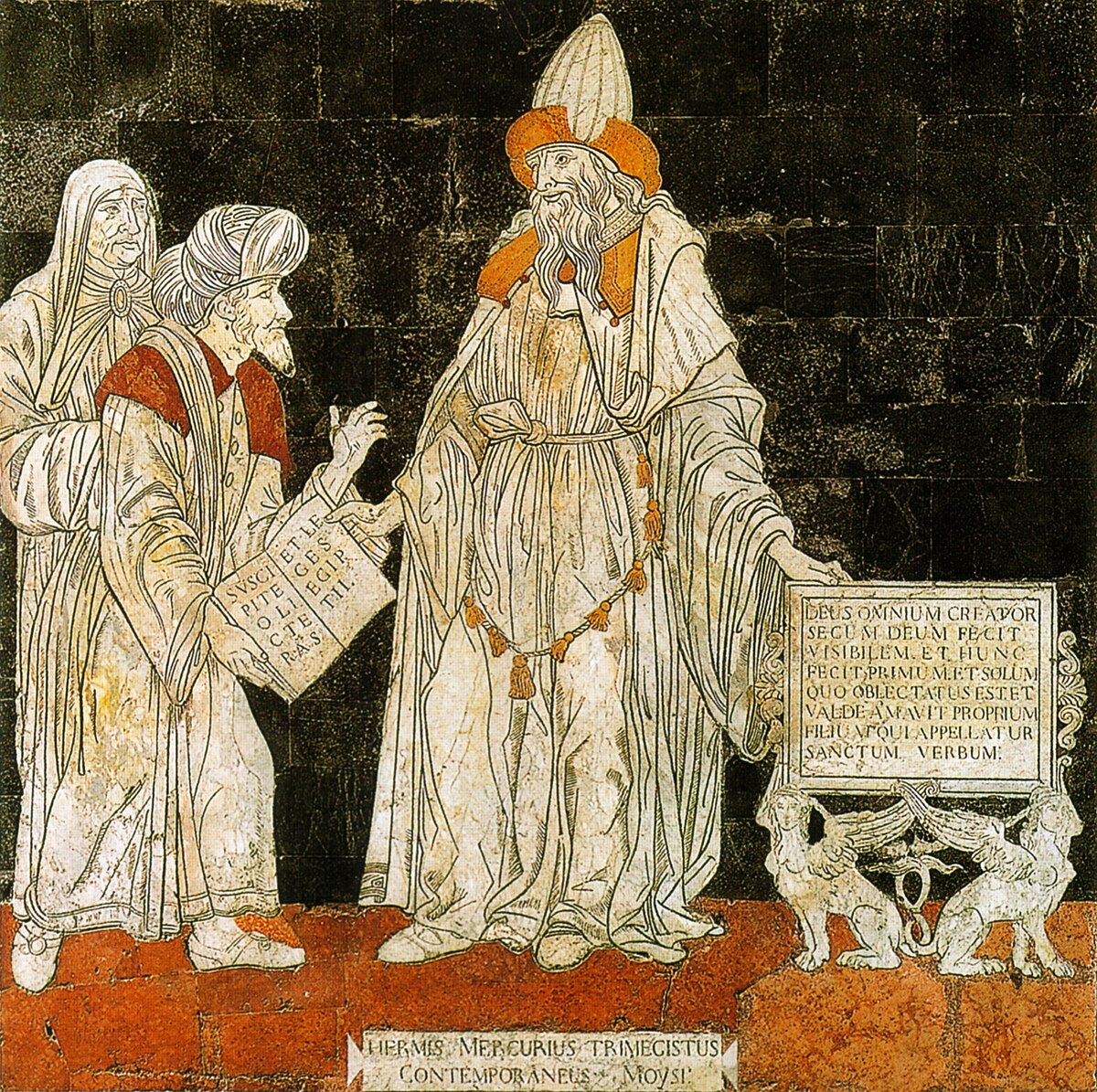
Hermes Trismegistus mosaic, Siena Cathedral — the prisca theologia personified. The ancient wisdom the Rosicrucian manifestos claimed to transmit, embedded in the floor of a Christian cathedral

The manifestos claim that Christian Rosenkreuz brought his knowledge from the East. This claim positions the Rosicrucian movement within the tradition of prisca theologia (CON-0022): the idea of a single primordial wisdom, known to the ancients and transmitted in fragmentary and coded form through various channels to the present. The Renaissance rediscovery of the Hermetic Corpus (attributed to Hermes Trismegistus), the Neoplatonic revival under Ficino and Pico, the Kabbalistic synthesis of Reuchlin, all fed the same conviction that lay behind the Rosicrucian manifestos: that the wisdom traditions of antiquity contained a unified science of the soul that the modern world had lost and needed to recover.

Waite is sympathetic to this aspiration but relentless about the evidence. He shows that the claimed Eastern origins are literary, not historical. No documentary evidence connects Christian Rosenkreuz to any actual Eastern school. The alchemical symbolism of the Chemical Wedding draws on European traditions, not Eastern ones. The Kabbalistic elements come through the Latin Kabbalah of the Renaissance, not through direct transmission from Jewish sources.

None of this diminishes the Rosicrucian impulse for the project's purposes. The claim of ancient origins is itself the point. Every Western esoteric movement from the Renaissance forward has asserted a connection to prisca theologia, and the assertion functions as a legitimation strategy and as a genuine expression of the intuition that the knowledge these movements seek is older than any institution. Whether the chain of transmission is historical or imaginative, the aspiration toward a unified spiritual science is the constant.


V. What Waite Unlocks
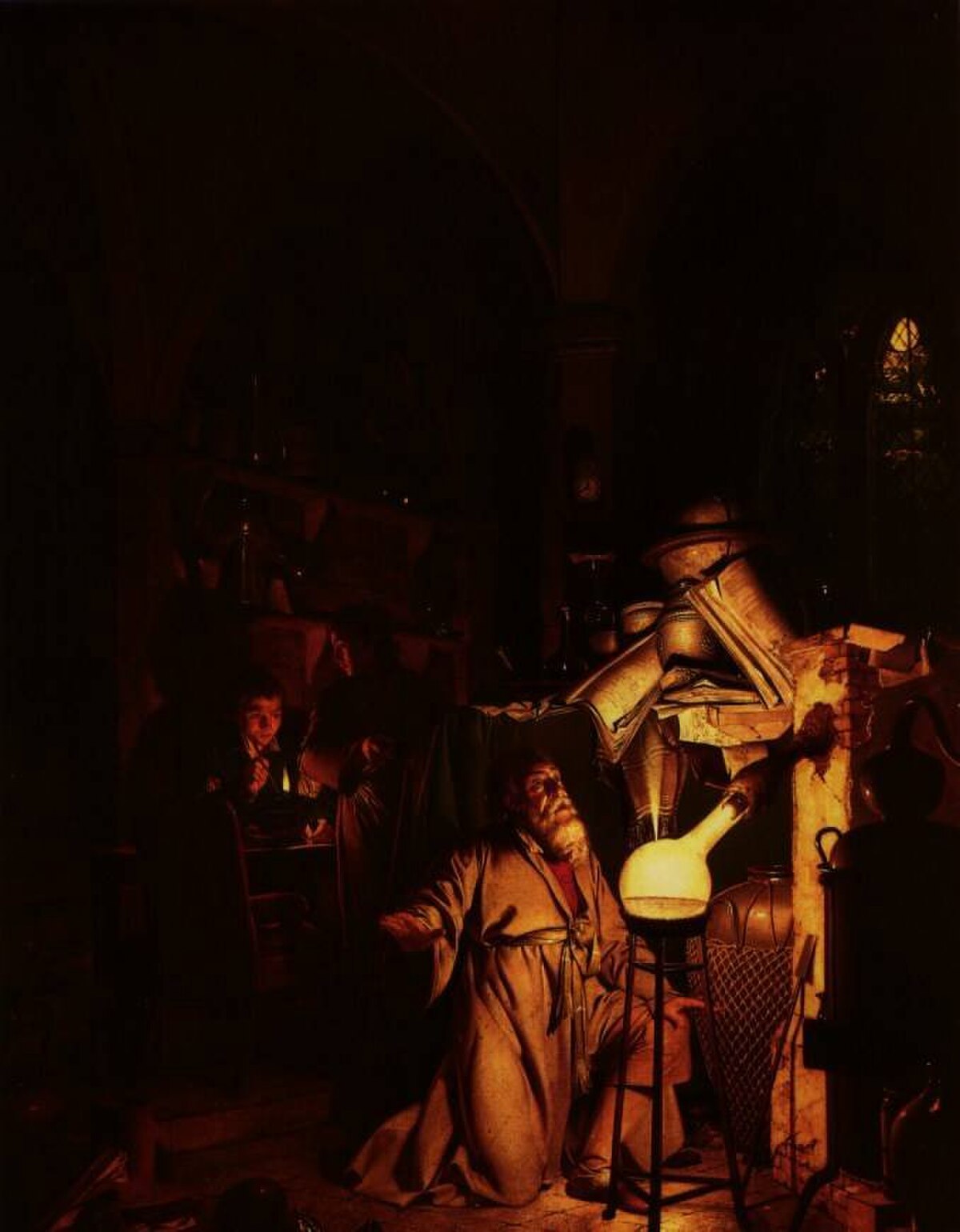
Joseph Wright of Derby, The Alchemist (18th c.) — the seeker praying over his work. Rigorous investigation and genuine spiritual aspiration held together in one figure, the stance Waite models for the project

The project needs Waite for the episodes on the Templars and the Invisible College because Waite is the historian who most carefully bridges the gap between the esoteric tradition's self-understanding and the documentary record. He does not flatten the Rosicrucian movement into a hoax or a delusion. He does not inflate it into a genuine secret society with an unbroken line to antiquity. He holds both the aspiration and the evidence in view and lets the tension between them remain productive.

For the listener, Waite's book demonstrates a principle the project returns to across every tradition: the power of the initiatic impulse to generate institutions, symbols, and practices even when (perhaps especially when) no original institution can be documented. The Rosicrucian case is the Western esoteric tradition's most vivid example of an egregore that became, through the force of collective imagination and ritual practice, as real as any documented order. Waite, the scholar-initiate who spent decades inside the tradition he was documenting, understood this. His book is the proof that rigorous history and genuine respect for the esoteric impulse are compatible and mutually necessary.

More Essays

What Happened Inside the Mysteries

The founding long-form essay of the Mystery Schools project: an imaginative synthesis of classical archaeology, consciousness evolution, neuroscience, and Western esotericism.

Dear Unknown Friend

A reading essay on Valentin Tomberg's Meditations on the Tarot, moving through concentration without effort, analogy, the Hermit's neutralization of binaries, the scientific creed, and anonymous transmission.

The Cartographer's Blind Spot

Eliade's Rites and Symbols of Initiation gave the modern West its most influential map of initiatory structure. This essay engages both the power and the limitation of his comparative method, asking what the tripartite schema reveals about consciousness transformation and where its universalizing impulse becomes a cage that obscures the very phenomena it describes.

The Sober Witness

Burkert's Ancient Mystery Cults is the foremost empirical account of what the five major mystery traditions actually looked like. This essay engages his insistence on institutional specificity and ritual mechanics, honors his refusal to romanticize, and asks the question his method forbids: not what were the mysteries, but what did they do to consciousness?

The Garment and the Stage

Barfield's Saving the Appearances is the single most important theoretical text for the Mystery Schools project. This essay engages his argument that perception itself has a history, that the ancient world was not a stage but a garment, and that the trajectory from original participation through the hardening points toward a final participation that the mystery traditions may have anticipated.

The Oath and the Roses

The only Latin novel to survive complete from antiquity is also the single most important first-person account of mystery initiation. Apuleius's Golden Ass enacts in narrative form the arc the project traces across all traditions: degradation through unprepared contact with the sacred, descent into embodied helplessness, and restoration through the goddess who moves first.

The Architecture of Descent

Dante's Commedia enacts the full initiatory structure that the project traces across all traditions: descent through death, purification through ordeal, ascent to direct vision. The essay reads the poem not as medieval theology set to verse but as evidence that the katabasis-anabasis pattern survived as a living architecture of spiritual experience long after Eleusis fell.

The Golden Bough and the Weight of History

Virgil's Aeneid contains the most sustained literary katabasis in Latin literature and the direct predecessor to Dante's Commedia. Unlike Odysseus or Orpheus, Aeneas descends not for personal gain but to receive the burden of history. The essay reads Book VI as initiatory architecture and the Gate of Ivory as a warning about the gap between vision and record.

The Rage and the Recognition

The Iliad is not an initiation narrative. It is the poem that establishes what consciousness looks like before initiation: the heroic mode, brilliant and lethal, cracked open by grief into something the heroic code cannot contain. Achilles's recognition of Priam as human father is the metanoia that makes the Odyssey's initiatory journey necessary.

The Dead Who Know the Way Home

The Odyssey is the oldest surviving initiation narrative in Western literature. Its deep structure follows the initiatory pattern centuries before the mystery cults formalized it: separation, ordeal, encounter with death, transformed return. Book XI's nekuia is the first literary katabasis, and the poem's implication is that the initiatory structure was already active in Greek consciousness at the earliest recorded moment.

The God Who Went Down Laughing

Aristophanes's Frogs is the only surviving ancient text that stages a complete katabasis as comedy. Dionysus descends to Hades to fetch a dead tragedian, and the play's laughter is not incidental to the initiatory structure but part of it. The essay reads Frogs as evidence that the Mysteries and the theater were twin Dionysian institutions.

The First Naming of What Is

Hesiod's Theogony is the first systematic cosmogony in the Western tradition — a genealogy of the gods that doubles as a logic of how reality differentiates from primordial openness through grounding and generation. Works and Days preserves the earliest Greek myth of the Five Races, a decline narrative the project reads as testimony about the loss of original participation.

The Gods Withdraw, the Humans Burn

The four plays in Euripides I — Alcestis, Medea, The Children of Heracles, Hippolytus — document a theological crisis at the heart of fifth-century Athens. The gods are present but no longer reliably aligned with human meaning. The essay reads Euripides as a seismograph of the early Hardening: the moment participatory consciousness begins to crack.

The Book That Unsays Itself

The Tao Te Ching opens with an act of philosophical self-cancellation: the Dao that can be spoken is not the constant Dao. The essay reads the text as the Daoist form of participatory consciousness, where wu wei (action without force) is the Eastern counterpart to what the Western mystery traditions reach through initiation and descent.

The Battlefield and the Chariot

The Gita begins with a warrior's refusal to fight and unfolds into the Indian tradition's most concentrated instruction on action, knowledge, and devotion. The essay reads the three yogas as the explicit form of what the Western mystery traditions perform implicitly, and Krishna's cosmic vision as the Indian epopteia.

The Teaching at the Foot of the Teacher

The Upanishads are the philosophical summit of the Vedic tradition and the Eastern counterpart to the Eleusinian Mysteries: both claim that direct experiential knowledge of ultimate reality transforms the knower. The essay reads the Katha Upanishad's descent to Death as structural katabasis and the Upanishadic epistemology as participatory knowing.

The Analyst in the Telesterion

Von Franz reads Apuleius's Golden Ass as a map of individuation rendered in narrative form before Jung existed to name the process. The donkey is the shadow swallowing the ego whole; Psyche's descent is the anima's own differentiation; Isis is the Self arriving when the ego has been sufficiently dissolved. The project takes this psychological architecture and asks the question von Franz's method cannot: whether the territory the psyche maps is merely internal.

The River Has No Teacher

Hesse's 1922 novel stages the most radical claim a spiritual narrative can make: that the greatest teacher in the story is wrong — not in what he knows, but in the assumption that what he knows can be transmitted through doctrine. Siddhartha walks away from the Buddha and into the world, and the novel follows what happens when a consciousness must descend into lived experience because no teaching can substitute for it.

The Diagnosis That Outlived Its Doctor

René Guénon's 1927 polemic is the Traditionalist diagnosis of modernity as the Kali Yuga, an age that has not lost the hierarchy of knowledge but inverted it. The essay reads the book as the ground on which the counter-initiation concept later stands, weighs its diagnostic power against its anti-historical exclusivism, and follows the dangerous political afterlife of Traditionalism from Evola to Dugin.

The Borrowed Name and the Brilliant Darkness

An anonymous Syrian monk, writing around 500 CE under the stolen name of an apostle's convert, smuggled a body of Neoplatonic mysticism into Christian orthodoxy. The essay reads the Dionysian corpus as the moment mystery-school metaphysics changed clothes, traces its apophatic core — the "brilliant darkness" of unknowing, and follows its underground passage into the Western contemplative tradition from Eriugena to Eckhart.

The Work the Mind Cannot Do

Iamblichus wrote On the Mysteries around 300 CE as a reply to Porphyry's skeptical letter on the value of ritual, signing it with the mask of an Egyptian priest. The essay reads the book as the founding defense of theurgy: the argument that a fully descended soul cannot think its way back to the divine, and that the ascent must be completed by god-work performed in matter, the Mysteries carried forward in philosophical form.

The Flight of the Alone

The Enneads collect Plotinus's treatises on the One, Intellect, and Soul, and on the soul's descent into matter and its return. The essay reads Plotinus as a practitioner rather than a theorist, a philosopher who reported union with the One from experience, and sets his contemplative ascent against Iamblichus's theurgy, while weighing the real convergence between henosis and the Vedantic identity of atman and brahman.

The Faculties That Slumber

How to Know Higher Worlds is Rudolf Steiner's practical manual of modern initiation: a step-by-step discipline of reverence, thought-control, and moral training that he printed openly, for an individual to walk alone. The essay reads it as the operative tradition's modern manual, the clearest account of what initiation had to become to survive into a consciousness with a free, self-aware ego.

The Doctrine Behind the Doctrines

The Secret Doctrine is the most ambitious synthesis in modern esoteric literature: Blavatsky's claim of one lost wisdom-tradition behind all religions, science, and philosophy. The essay reads it as both a real bridge, the route by which Eastern concepts entered Western consciousness, and a cautionary mirror of the project's own synthetic method when ambition outruns rigor, transparency of sources, and the discipline of distinction.

0:00
0:00