I. The Youngest Tragedian
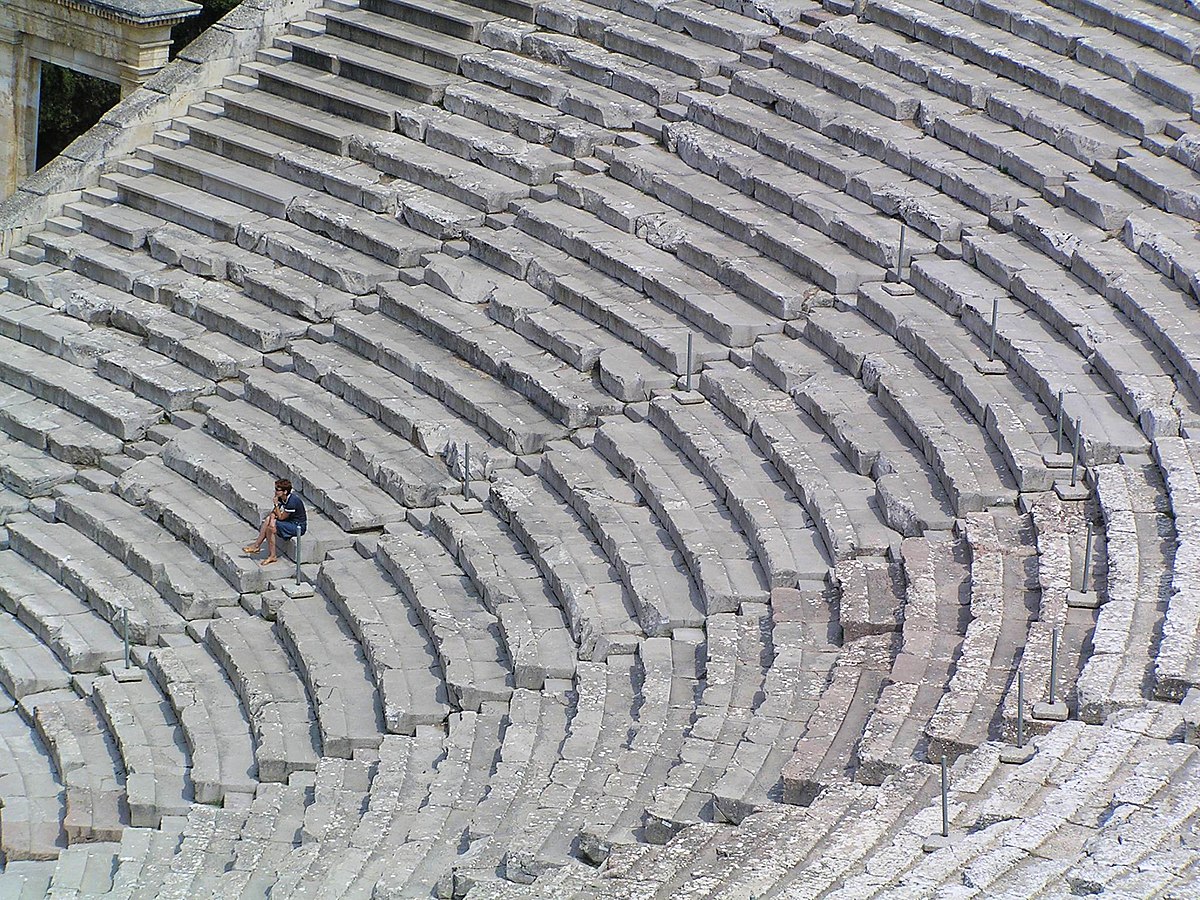
Euripides was born around 480 BCE, the year of Salamis, the sea-battle that secured Athens's survival and launched its imperial century. By the time he began producing tragedies in the 450s, the Athenian theater was already a mature institution with fixed conventions: mythic plots sung by choruses and resolved by divine intervention. Aeschylus had established the form. Sophocles had perfected it. Euripides broke it open.
The four plays in this volume (Alcestis, Medea, The Children of Heracles, Hippolytus) span roughly 438 to 428 BCE, the early and middle period of a career that would produce some ninety plays, of which eighteen survive. They are not Euripides's most famous works (the Bacchae holds that distinction for this project), but they are the plays where his distinctive signature first becomes unmistakable: the gods are present but unreliable, the heroes are damaged, the women carry the dramatic weight, and the audience is denied the clean resolution that catharsis (CON-0043) traditionally requires.
II. Alcestis and the Debt That Cannot Be Paid
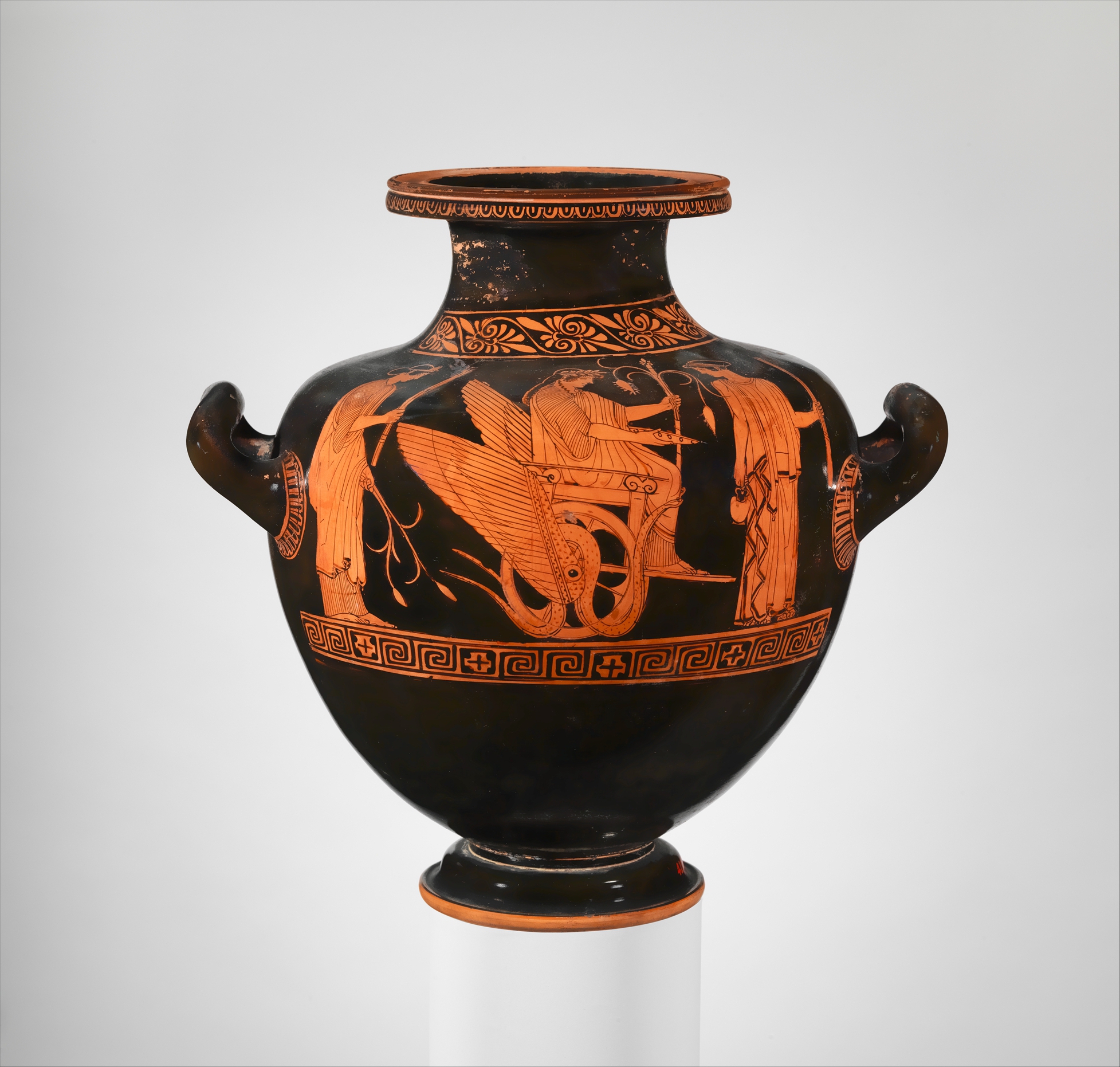
Alcestis occupies a strange generic position: the fourth play in its original tetralogy, the slot usually reserved for a satyr play, comedy after tragedy. It is neither. Admetus, king of Pherae, has been granted a privilege by Apollo: when his fated day of death arrives, he may live if someone volunteers to die in his place. Everyone refuses: parents, friends, the whole court. Everyone except Alcestis, his wife.
She dies. The household mourns. Heracles arrives and gets drunk at the funeral feast, oblivious. When he learns the truth, he wrestles Death at the tomb and brings Alcestis back. On the surface, the play resolves. Wife restored, husband preserved, the bonds of guest-friendship honored. But Euripides has planted a question the resolution cannot answer. Admetus, watching his wife die for him, realizes that surviving her death is worse than dying himself. "I see it now," he says. "Too late." He has purchased life at a cost that makes life unbearable.
This is not a moral fable about selfishness. It is a diagnosis of a specific failure of consciousness. Admetus understood death as a problem to be solved, a transaction in which a substitute could be arranged. He treated the sacred boundary between life and death as negotiable. The play reveals that it is not. Alcestis's return does not undo the revelation. She comes back veiled and silent. She will not speak for three days. The woman who returns from the dead is not simply the woman who left. Something has changed that festive resolution cannot repair. Euripides gives his audience the happy ending and then shows them that the happy ending is not enough.
III. Medea and the Failure of Containment
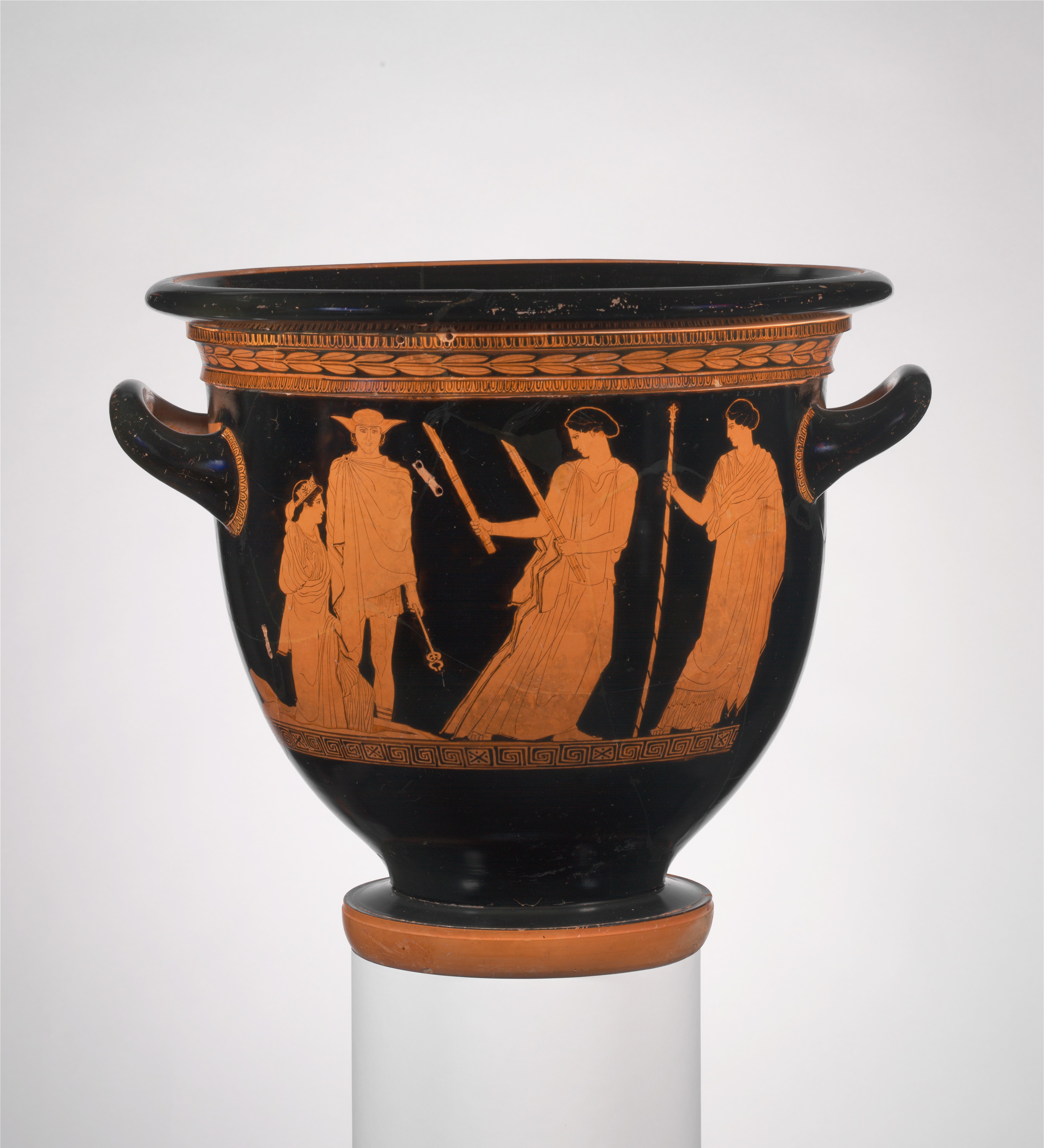
Medea is the most disturbing play in the Greek tragic canon. Medea, the foreign sorceress who helped Jason obtain the Golden Fleece, has been abandoned by him in Corinth. He is marrying the king's daughter for political advantage. Medea, barbarian, female, displaced, has no legal standing and no recourse. She kills Jason's new bride, the bride's father, and her own two children. Then she escapes in the chariot of the Sun, her grandfather, ascending above the stage while Jason screams below.
The play's horror is not the violence. Greek tragedy is full of violence. The horror is that Euripides makes Medea's logic intelligible. She is not mad. She calculates. She knows exactly what the murder of her children will cost her. "I understand what evil I am about to do," she says, "but my thymos is stronger than my counsels." Thymos (spirit, passion, the seat of rage and honor) overrides bouleumata, deliberation. The play stages the catastrophe that occurs when a consciousness contains powers it cannot integrate.
For the project's purposes, Medea is a document of what happens when the ritual container fails. Medea is a priestess of Hecate, trained in the pharmaka: drugs, herbs, poisons, the ambiguous substances that heal or kill depending on dosage and context. She is, in the project's terms, an initiate whose initiatory knowledge has been severed from its proper context. Displaced from Colchis and betrayed by the man for whom she used her arts, stripped of every social bond that might contain her power, she becomes the pharmakon uncontained: transformation without direction, power without architecture. The children die because there is no structure left to hold what Medea carries.
IV. Hippolytus and the God Who Destroys What He Demands
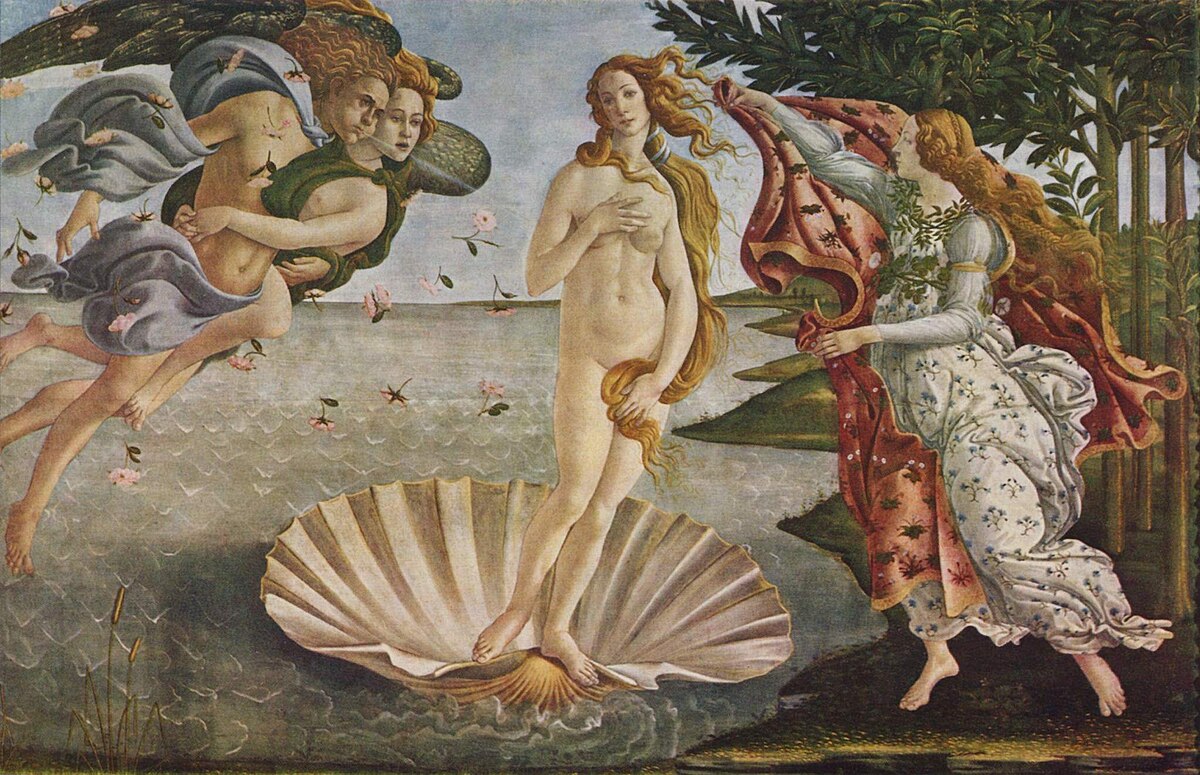
Hippolytus is the play in this volume most directly relevant to the mystery traditions. Hippolytus, son of Theseus, has devoted himself entirely to Artemis, goddess of the hunt, of virginity, of the wild. He refuses Aphrodite. Not politely. Contemptuously. He will not acknowledge her power. He will not sacrifice at her altar. He considers erotic desire a contamination.
Aphrodite destroys him for it. She causes his stepmother Phaedra to fall catastrophically in love with him. Phaedra, ashamed, kills herself and leaves a note accusing Hippolytus of rape. Theseus curses his son. Poseidon sends a bull from the sea. Hippolytus is dragged to death by his own horses. Artemis appears at the end to explain what happened, to comfort the dying Hippolytus, and then, in one of the most devastating lines in Greek tragedy, to leave. "It is not lawful for me to look upon the dead," she says. "I see that you are near that moment now. Farewell."
The play's theological structure is precise. Hippolytus's error is not that he chose chastity. It is that he chose one god against another. He elevated Artemis by denigrating Aphrodite. In the Greek religious world, this is not piety but hubris, because the divine powers are real, and refusing to acknowledge a real power does not make it disappear. It makes it destructive. Aphrodite does not punish Hippolytus for failing to love her. She punishes him for denying that she exists in him.
The initiatory reading is direct. The mystery traditions insisted on wholeness: the initiate cannot choose which gods to face. The terrifying and the erotic are as real as the luminous. Hippolytus's exclusive devotion to the virginal, the wild, the uncontaminated is itself a form of contamination: the refusal to integrate what is dark, embodied, and desirous. Catharsis (CON-0043) in its original ritual sense requires confronting the full range of what the soul contains. Hippolytus refuses the confrontation. The play is the consequence.
V. Where the Gods Stand
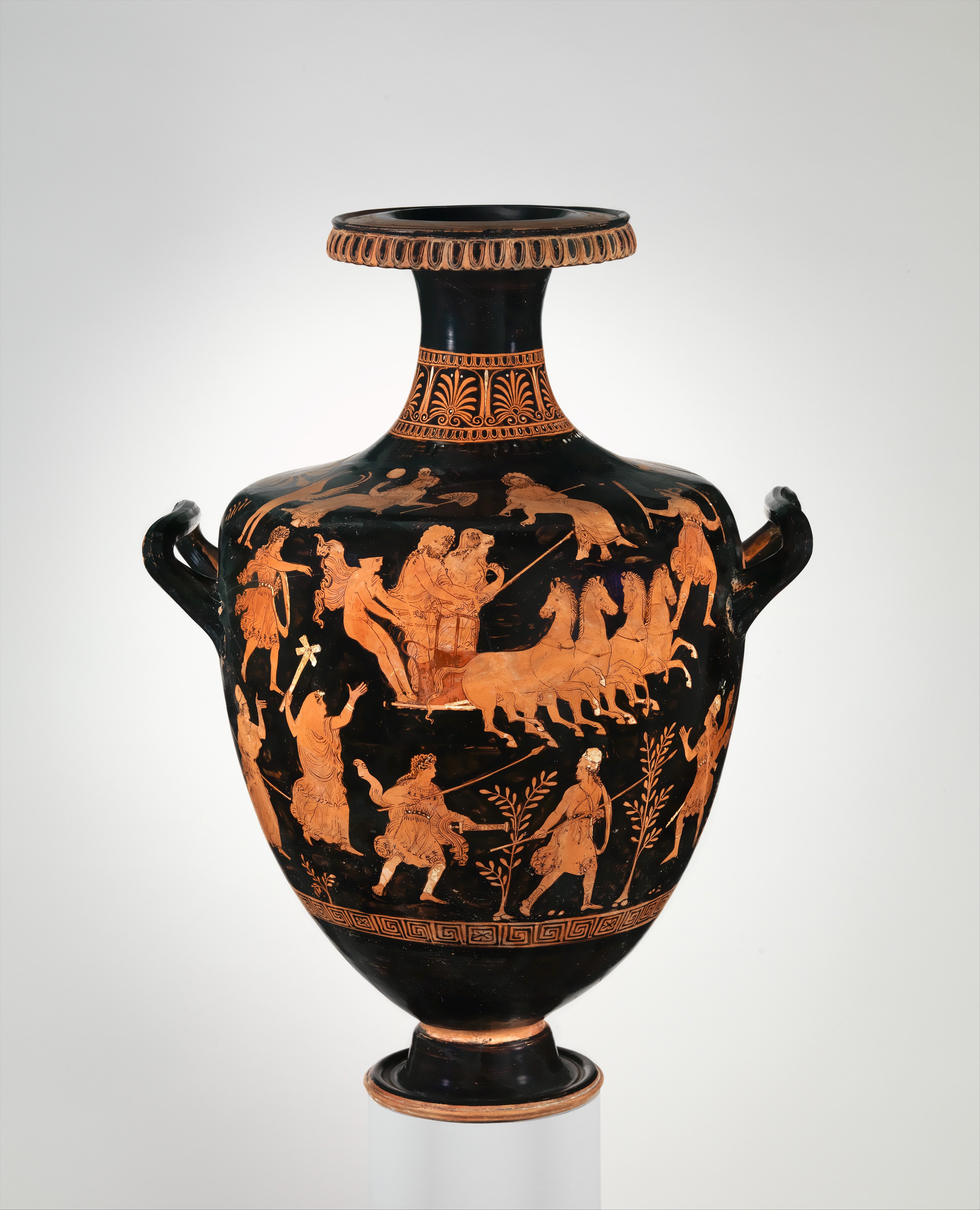
What unites these four plays, and what makes Euripides essential for the project, is a theological question more radical than anything in Aeschylus or Sophocles. In Aeschylus, the gods are terrible but just. The Oresteia ends with a new cosmic order. In Sophocles, the gods are inscrutable but their oracles are reliable. Oedipus fulfills his fate precisely because every attempt to avoid it drives him toward it. In Euripides, the gods are present, powerful, and not reliably on the side of human meaning.
Aphrodite destroys Hippolytus and Phaedra to settle a personal slight. Apollo saves Admetus through a bargain that makes Admetus's life unlivable. Hera and Athena do nothing for Medea's children. The divine machinery operates, but it does not produce justice or wisdom. It produces consequences. The gods are forces (real, impersonal in their operations, devastating in their intersection with human lives), and Euripides refuses to soften this into a morally consoling frame.
This is the consciousness shift the project needs to register. Between Aeschylus (born c. 525 BCE) and Euripides (born c. 480 BCE), something has changed in the Greek mind's relationship to the divine. The participatory consciousness that experienced the gods as present and legible has not disappeared, but it has become strained. Euripides still believes in the gods (his plays make no sense without real divine agency), but he no longer trusts that divine agency and human flourishing are aligned. The gods withdraw not by disappearing but by becoming unintelligible.
This is the early tremor of what Barfield calls the loss of participation and what the project calls the Hardening. The gods are still there. The rituals still operate. But the consciousness that could undergo catharsis and feel genuinely restored has begun to crack. Euripides registers the crack. He does not cause it. He does not celebrate it. He stages it, unflinchingly, in plays that deny the audience the resolution tragedy traditionally provides.
For the listener encountering these plays for the first time: read them as seismographs. They record the first vibrations of a centuries-long shift: the gods ceasing to carry intelligibility and becoming, instead, problems to be solved. The mystery traditions existed, in part, to hold this shift at bay, to maintain the participatory encounter with the divine that ordinary consciousness was beginning to lose. Euripides shows us what it looked like when the holding began to fail.