I. The Philosopher Who Would Not Discuss His Birthday
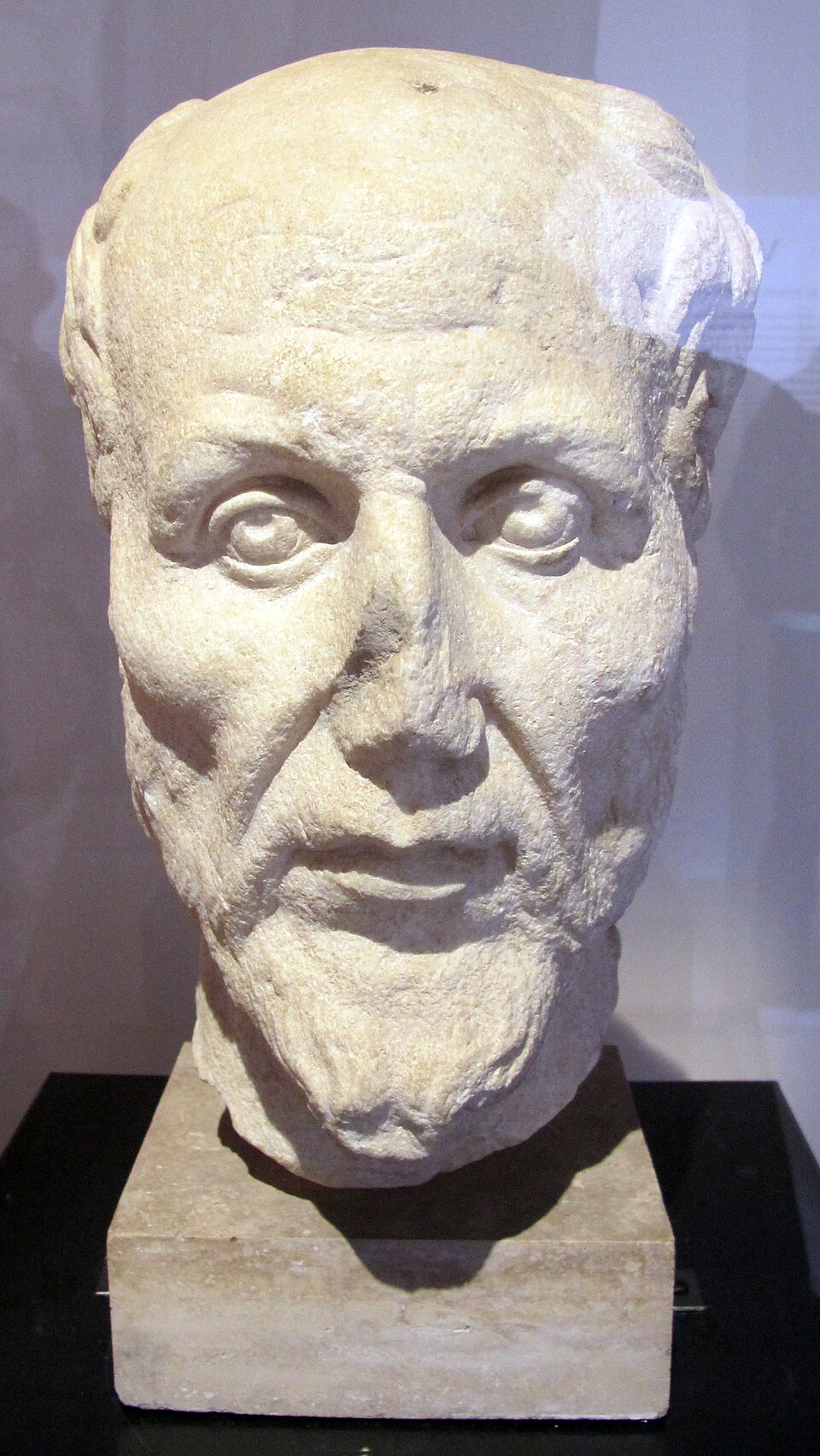
Plotinus did not like to talk about where he came from. His student Porphyry, who wrote the only contemporary account of his life, records that the philosopher seemed ashamed of being in a body at all, and would not discuss his ancestry, birthplace, or birth date. What is reasonably certain is that he was born around 204 in Roman Egypt, studied for eleven years in Alexandria under the shadowy teacher Ammonius Saccas, and then, around the age of forty, did something strange for a philosopher. He joined a Roman military expedition against Persia, hoping to travel far enough east to study the philosophy of the Persians and the Indians at its source.
The campaign collapsed. Plotinus never reached the Brahmins. He made his way instead to Rome, founded a school, taught for the rest of his life, and wrote fifty-four treatises that Porphyry collected after his death and arranged into six groups of nine. The Greek for "nines" gives the collection its name: the Enneads.
The treatises do not read like a finished system handed down from a podium. They read like a mind at work, doubling back, testing, describing. Plotinus writes as a practitioner, and the project reads him as one: not a theorist of the soul's ascent but a man giving an account of a country he had visited.
II. The Overflowing One
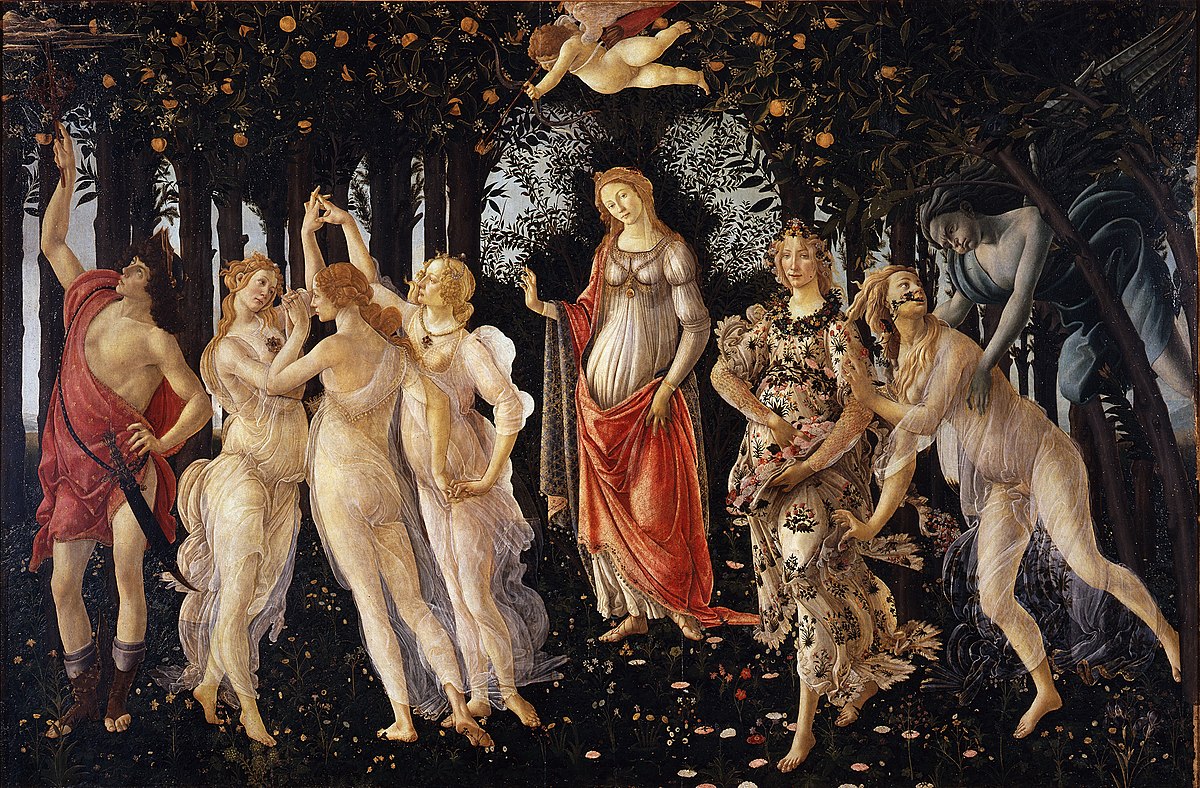
At the summit of Plotinus's cosmos there is the One. It is not a being among beings, not even the greatest of them. It is beyond being, beyond intellect, beyond every quality that could be named, because naming a quality introduces a distinction, and the One is absolute simplicity. Plotinus reaches it the way the apophatic tradition would later make formal (CON-0007): by removing, by negating what it is not, until nothing is left to say.
From the One, all else proceeds. Plotinus describes this not as a decision but as an overflow. The One does not choose to create; it is so full that reality spills from it the way light streams from a source that loses nothing by shining. The first radiation is Nous, Intellect, the realm of the Forms and of perfect self-knowing thought. From Nous proceeds Psyche, Soul, and from Soul the material world, the last and faintest reach of the light.
Two consequences matter for the project. First, matter is not a rival principle, not a fallen or evil thing. It is simply where the radiance grows thin. Evil, for Plotinus, is privation, the absence of form, not a power in its own right. Second, every level is at once a diminished image of what stands above it and a road back to it. The cosmos is built so that descent and return use the same staircase.
III. The Soul's Long Way Back
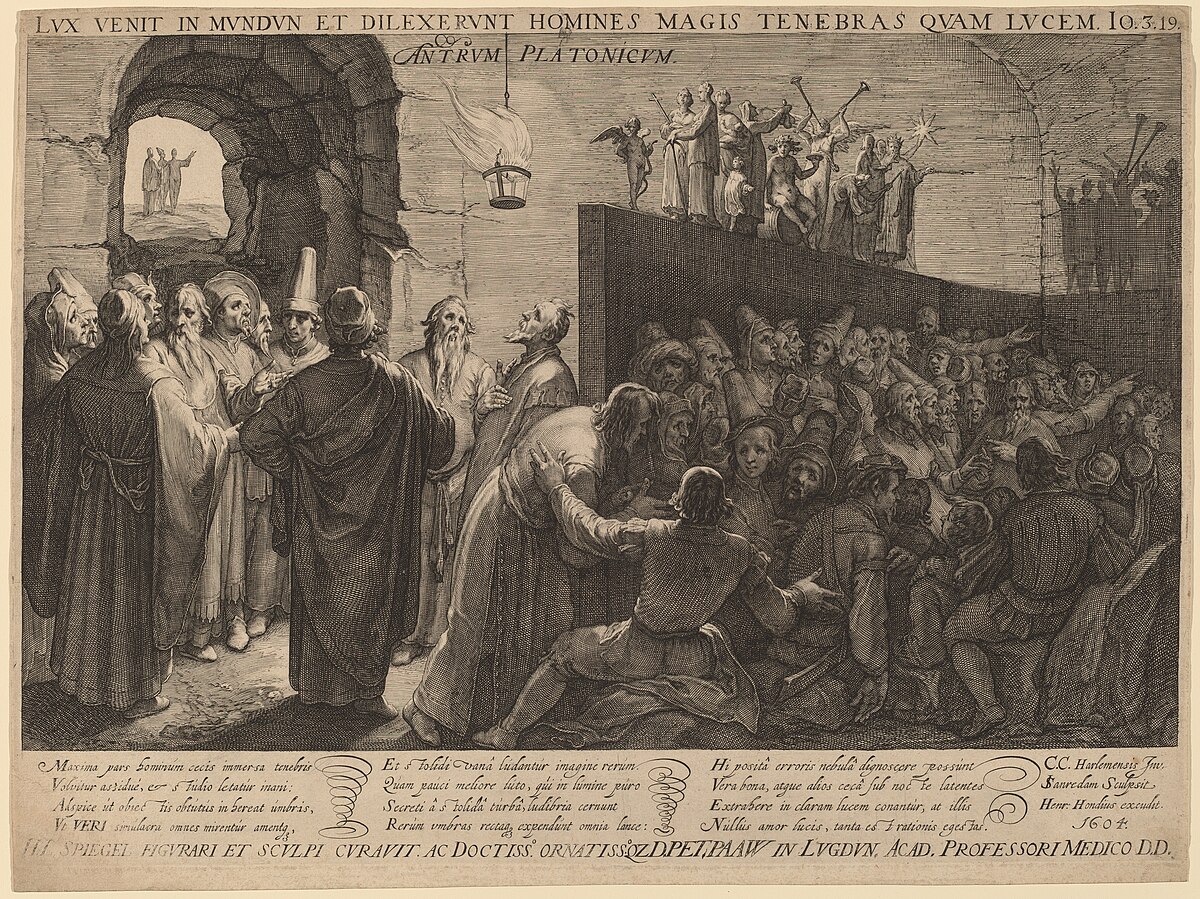
The human soul, in this scheme, has come down the staircase. It has descended into matter and become absorbed in the business of a body. But Plotinus holds a claim his successors would fight over: the soul never descends completely. Some apex of it remains in contact with Nous, never severed, never asleep. The return is not, on this account, a journey to somewhere new. It is the recovery of something the soul has never actually lost.
This makes philosophy, for Plotinus, a practice rather than a body of doctrine. Its work is epistrophē, turning back: a disciplined reversal of attention away from the outward scatter of the senses and toward the soul's own source. It has the structure of anamnesis (CON-0013), the Platonic recollection of what was always known. And its destination collapses a distinction the modern mind keeps firmly apart. For Plotinus, to know the One and to know oneself truly are a single act. The deepest self-knowledge is not information about a person; it is gnosis (CON-0009), the soul's discovery that its own ground and the ground of everything are one.
IV. The Flight of the Alone
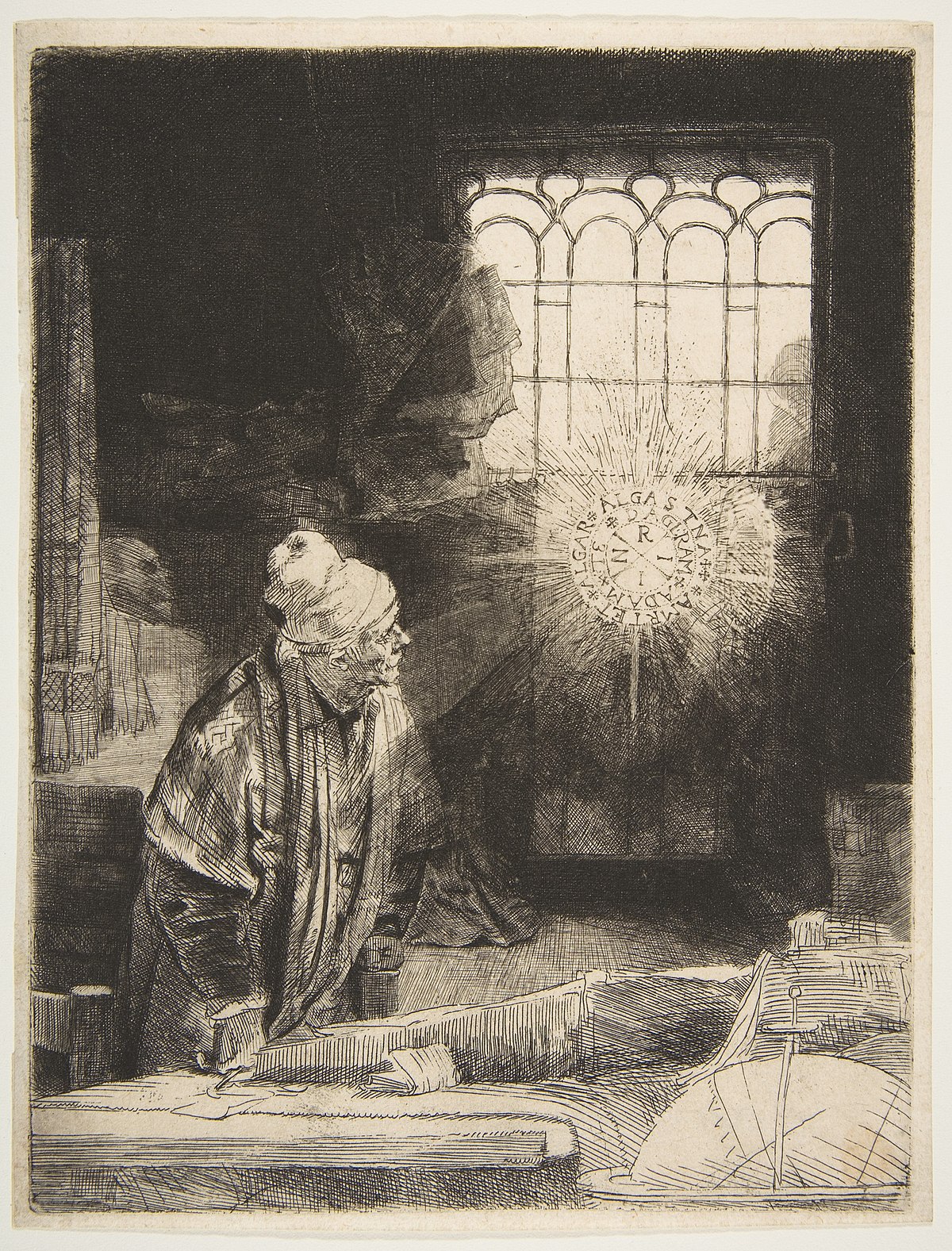
What waits at the end of the return Plotinus calls henosis (CON-0019), union. It is the point at which the soul, stripped of every particular attachment and even of intellectual content, meets the One in absolute simplicity. The last line of the Enneads, as Porphyry arranged them, gives it its enduring phrase: the flight of the alone to the Alone. The soul must become alone, bare, single, to reach the One that is Alone in its perfect self-sufficiency.
Plotinus does not present this as theory. Porphyry reports that his teacher attained the union four times in the years they were together, and the treatises carry Plotinus's own first-person account: many times, he writes, it has happened: lifted out of the body into himself, beholding a beauty beyond anything else, then afterward the descent back into reasoning and the puzzle of how a fall from that vision is even possible. This is the sentence that fixes the project's reading of him. The Enneads are not the map of a country drawn by someone who studied maps. They are the report of someone who went.
V. Plotinus and the Brahmins
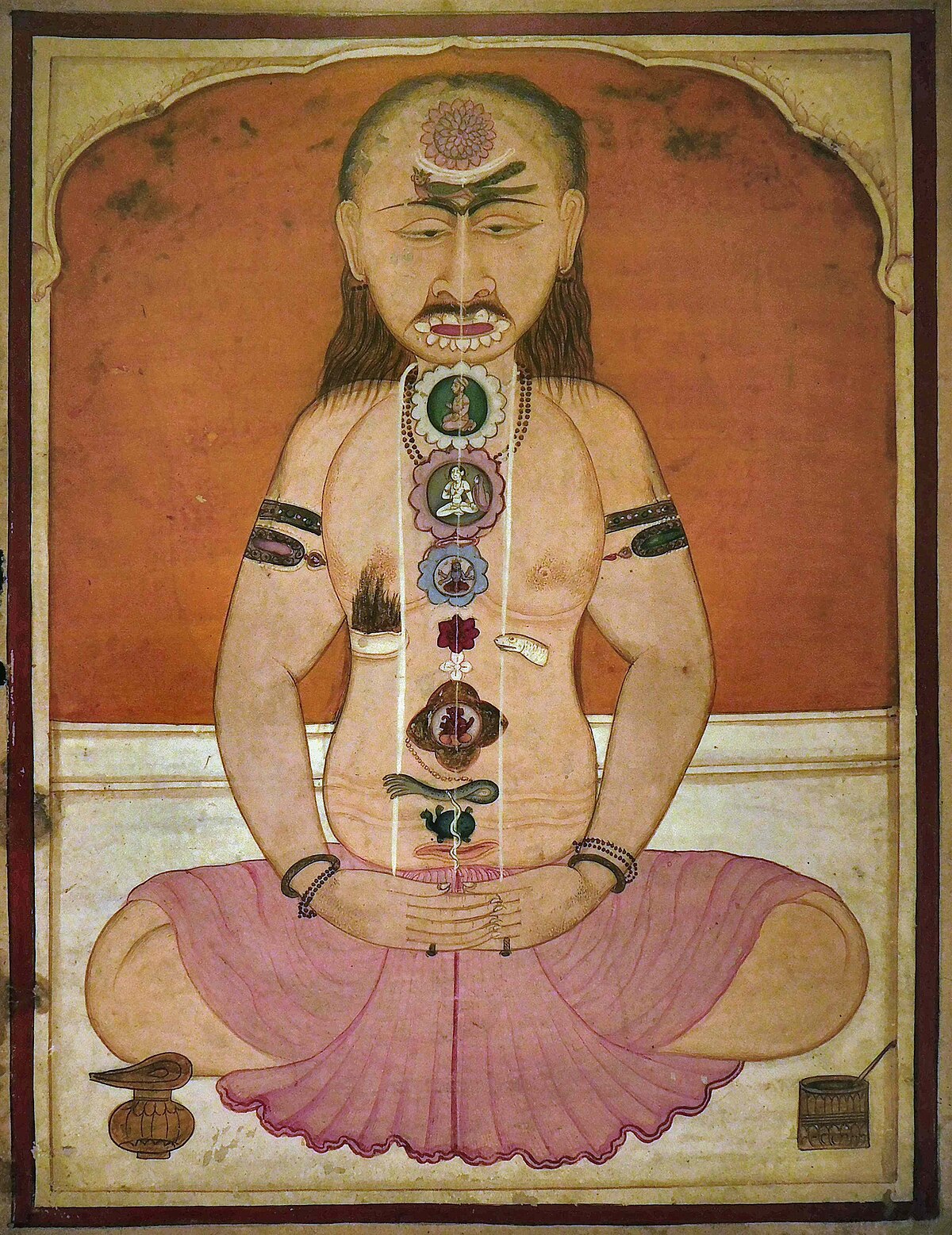
Plotinus tried to reach India and failed. The resonance reached the West anyway, and it is real enough that the project gives it an episode of its own. The Upanishadic tradition arrives, by a wholly different route, at a claim that sits close to henosis: that atman, the innermost self, and brahman, the ground of all reality, are not two things. The flight of the alone to the Alone and the identity of atman and brahman are not the same doctrine. They come from different cosmologies and practices, in different languages. But they are descriptions that keep pointing at one structure, and the convergence is worth attention rather than dismissal.
It is built into Plotinus's universe. His cosmos is held together by sympatheia (CON-0018), a living interconnection in which every part feels and answers every other, because all of them radiate from a single source. To exist at all, on this account, is to participate, methexis (CON-0016), in the levels above. A universe like that does not contain isolated minds. The Plotinian soul that flies alone to the Alone is not escaping the world. It is arriving at the unity the world was always an expression of.
VI. What the Enneads Unlock
The project does not read Plotinus as the last word. It reads him as one pole of an argument. A generation later Iamblichus would insist that the contemplative ascent Plotinus describes is not enough for a soul that has truly descended, and that the return requires ritual, the body, the work of the gods. Plotinus stands for the opposite conviction: the intellect, rightly turned, can complete the journey alone. The project treats him as partially right. The contemplative ascent is real, and the Enneads describe it with unmatched precision. But a discipline available only to a rare philosopher in a rare hour is not yet the whole answer.
There is a further reservation, and it is the one that matters most. The project holds, with Owen Barfield, that consciousness itself has a history (CON-0005), that the kind of awareness available to a third-century Alexandrian is not a fixed human constant. Read through that lens, Plotinus's union looks less like a timeless human possibility and more like a particular achievement at a particular moment: a reach toward a participation that an individual mystic could touch but that the consciousness of the age could not yet hold open. What the Enneads finally unlock for the listener is not a technique to be copied. It is a witness. Here is a philosopher who treated philosophy as a way of returning, and who came back from the return able to say, with the plainness of a man reporting the weather, that many times it has happened.