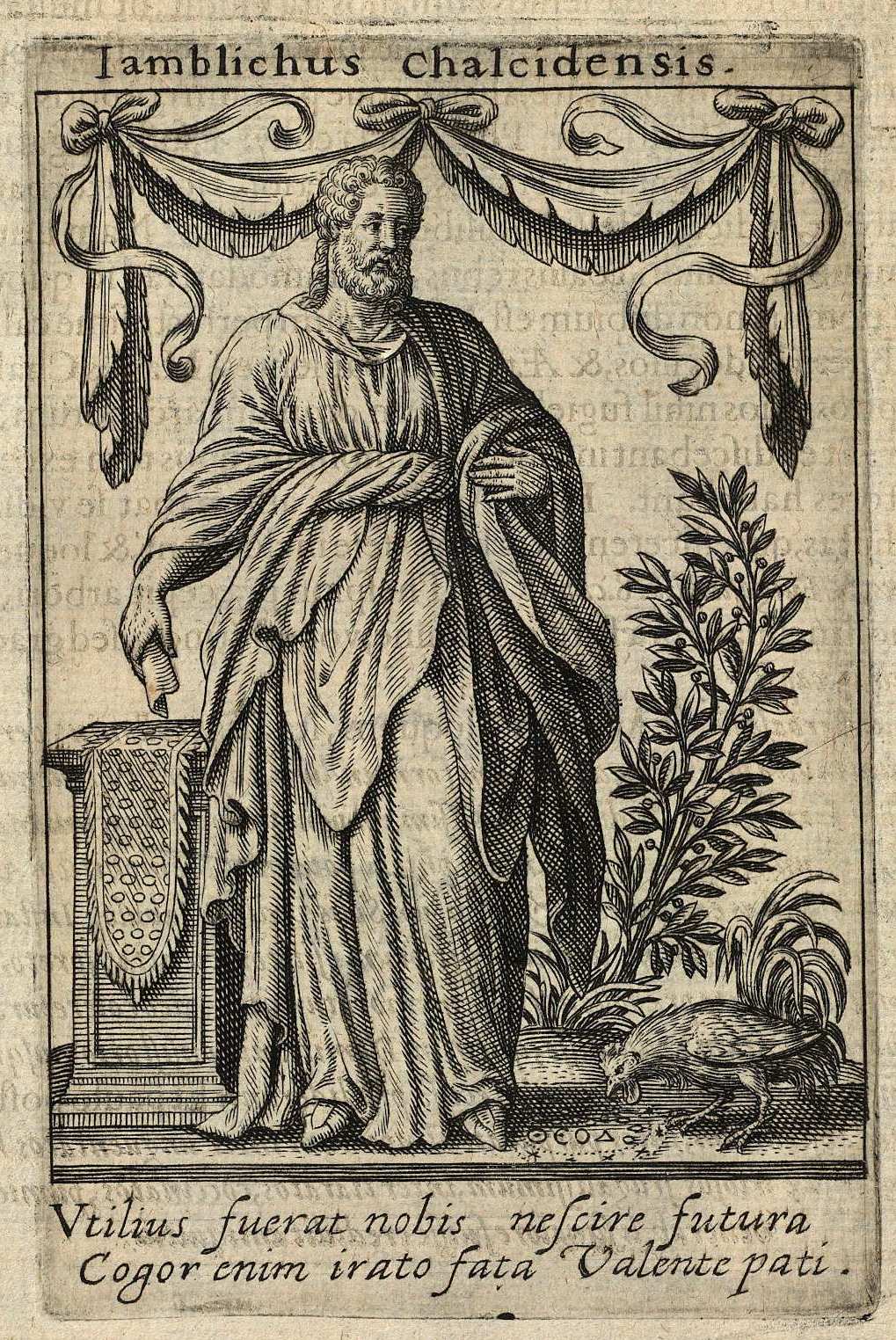
Theurgy
Definition
Theurgy (from Greek theourgia: theos, "god" + ergon, "work") means literally "god-work" or "divine action." The term designates a form of ritual practice in which the practitioner does not merely think about, pray to, or philosophize about divine beings, but actively works with divine powers through carefully prescribed ritual actions. The theurgist does not compel the gods (that would be goēteia, "sorcery" or magic in the pejorative sense); rather, by the correct use of sacred symbols, materials, and procedures, the theurgist creates conditions in which the gods can act through and with the practitioner, purifying and ultimately deifying the soul.
The key distinction, established by Iamblichus of Apamea (c. 245–325 CE) in his De Mysteriis (On the Mysteries), is between theologia (theology, discourse about the divine) and theourgia (theurgy, divine action). Theology, however refined, operates at the level of discursive intellect. For Iamblichus — and this is his major departure from Plotinus — discursive intellect is insufficient for the soul's return to the divine. The soul has descended completely into matter, and no amount of intellectual contemplation can raise it back. What is required is the activation of divine synthēmata (symbols, tokens) planted in matter itself by the gods, which connect the soul cosmologically, not just intellectually, to its divine origin.
This argument reorders the entire framework: it means that the physical world (matter, ritual objects, sacred plants, fire, water, invocation) is not an obstacle to be transcended. It is an instrument of divine ascent. The synthēmata and symbola used in theurgic ritual are not arbitrary human inventions but are the gods' own signatures in material reality. When correctly enacted, they create a resonance between the ritual and the cosmic order that draws the soul upward.
Iamblichus distinguishes several modes of theurgy: lower forms involving material operations (sacrifice, burning of herbs, invocations) that purify the lower soul; middle forms involving mathematical and musical harmonics that purify the intellectual soul; and the highest forms, which involve direct divine illumination (ellampsis) and union with the divine.
Tradition by Tradition
Chaldean Oracles
The Chaldean Oracles (2nd century CE), a set of hexameter verses claimed to be divine revelations, are the primary scriptural basis for Neoplatonic theurgy. They describe the universe as a hierarchy of divine powers (henads, angels, demons) and prescribe ritual practices for ascent through and beyond these powers. Iamblichus drew heavily on the Oracles; later Neoplatonists including Proclus and Julian the Apostate regarded them as authoritative. The Oracles' description of a "fiery womb" and the "Father's lightning" as elements of theurgic ascent influenced much of late antique religious practice.
Iamblichean Neoplatonism
Iamblichus's De Mysteriis (written in response to objections raised by his teacher Porphyry, who was a student of Plotinus) is the central text. Porphyry had argued that the soul's return to the One could be achieved through purely intellectual means: the "flight of the alone to the Alone" described by Plotinus. Iamblichus responds systematically: the soul has truly descended into matter; the gods themselves use the material world as their vehicle; therefore ritual action in and through matter is not a concession to weakness but the proper means of ascent. This constitutes a decisive turn in the history of Western spirituality: the rehabilitation of the embodied, material, and ritual dimensions of the sacred against the purely intellectual-ascetic tendency.
Hermetic
The Hermetic tradition, particularly the Corpus Hermeticum and the associated practices described in the Asclepius, contains theurgic elements: the activation of divine statues through invocation and the infusion of cosmic pneuma, the drawing down of astral influences, and the ritual creation of connections between the celestial and terrestrial orders. Ficino's Renaissance translation and interpretation of the Hermetica (1460s) brought theurgic thinking into the mainstream of European intellectual culture.
Pythagorean
The Pythagorean tradition, with its emphasis on number, music, and cosmic harmony as the structuring principles of reality, provides the theoretical basis for the musical and mathematical dimensions of Iamblichean theurgy. The Pythagorean understanding that the universe is constituted by number and harmony means that ritual, when properly tuned to those harmonics, can genuinely affect the soul's relationship to the cosmos.
Divination as the Test Case
A large part of On the Mysteries (LIB-0299) is given over to divination, and the choice of subject is deliberate. Divination is where the theurgic claim is most easily mistaken for a human technique, and so it is where Iamblichus most needs the distinction to hold. He rejects the naturalistic accounts of inspired divination: that the oracular priestess prophesies because of vapors rising from the ground, or that prophetic dreams are the mind's own heightened activity. Any explanation that makes divination a human accomplishment reduces it, in his view, to conjecture, however skilled.
Genuine inspired divination, Iamblichus argues, is the gods' own foreknowledge, and the diviner contributes nothing personal to it. In oracular possession and in god-sent dreams the human faculties are not sharpened but set aside, so that a knowledge belonging to the divine order can pass through unobstructed. The diviner who adds something of their own has, by that addition, fallen back into guesswork.
This makes divination the clearest case of the general theurgic principle. The god is the agent; the practitioner is the instrument; the work is divine work or it is nothing. Divination matters to the project not as a question of whether oracles foretell the future but as the sharpest available illustration of what Iamblichus means by theurgy: a practice whose whole efficacy depends on the human being getting out of the way (LIB-0299).
Project Role
Theurgy is one of the most conceptually demanding, and most important, concepts for the Mystery Schools project. It represents the counter-argument to two prevalent tendencies: (1) the psychologizing tendency, which reads all ancient ritual and mysticism as essentially symbolic expressions of inner psychological states; and (2) the intellectualist tendency, which reads all ancient philosophy as essentially abstract argument disconnected from practice.
Against both, theurgy insists that the ritual dimensions of the mystery traditions are neither "merely symbolic" nor incidental to the philosophical content. The gods, in the Neoplatonic framework, are real; the synthēmata they have placed in matter are real connections to divine reality; theurgic ritual genuinely activates these connections. Whether or not the project endorses this metaphysical framework, it takes it seriously as a coherent and sophisticated position rather than pre-scientific superstition.
The project also uses theurgy to argue for the importance of embodiment and practice in any genuine spiritual path. Theurgy says: you cannot think your way to the divine; you must do. This is congruent with the initiatory emphasis (CON-0001) and with the critique of purely intellectual spirituality.
Distinctions
Theurgy vs. Magic (goēteia): The distinction is traditional and important. Magic (in the ancient sense of goēteia) seeks to compel supernatural forces for personal ends through techniques that may or may not have divine sanction. Theurgy works within a divinely ordered cosmos, using procedures that the gods themselves have sanctioned; its goal is not personal gain but the soul's purification and ascent. Iamblichus is explicit that theurgic practice works through the gods' goodwill, not through the practitioner's coercive power.
Theurgy vs. Contemplation (theoria): For Plotinus, the highest spiritual practice is pure contemplation: the inward ascent of the soul to the One through intellectual purification. Iamblichus argues that this is insufficient for the fallen, embodied soul. The debate between Plotinus-Porphyry and Iamblichus-Proclus on this point is one of the great structural debates in the history of Western spirituality.
Theurgy vs. Liturgy: Christian liturgy (the Eucharist, the sacraments) shares structural features with theurgy: material elements (bread, wine, water, oil) are used as vehicles of divine action, and the ritual is understood to effect a real transformation, not merely symbolize one. The relationship between theurgic Neoplatonism and the development of Christian sacramental theology is a rich area for the project.
Primary Sources
- Iamblichus, On the Mysteries of the Egyptians, Chaldeans, and Assyrians (De Mysteriis): The definitive text; Iamblichus's comprehensive defense and exposition of theurgy against Porphyry's rationalist critique.
- Algis Uzdavinys, Philosophy and Theurgy in Late Antiquity: Modern scholarly synthesis of the theurgic tradition in Neoplatonism; particularly strong on Iamblichus, Proclus, and the Chaldean Oracles.
- Algis Uzdavinys, Philosophy as a Rite of Rebirth: On the initiatory dimensions of ancient philosophy, situating theurgy within the broader context of Egyptian and Neoplatonic practice.
- Algis Uzdavinys, Orpheus and the Roots of Platonism: On the Orphic-Pythagorean antecedents of Neoplatonic theurgy.
- Plotinus, The Enneads: The contrasting position; Plotinus's purely intellectual mysticism against which Iamblichus defines theurgy.
Agent Research Notes
[AGENT: perplexity | DATE: 2026-03-20] Gregory Shaw's Theurgy and the Soul: The Neoplatonism of Iamblichus (Penn State, 1995; LIB-0335) is the standard modern scholarly treatment. Shaw argues that Iamblichus's theurgy is not irrational but represents a sophisticated philosophical response to the problem of embodiment that Plotinus's intellectualism could not solve. Also important: John Finamore and John Dillon's edition and commentary on Iamblichus's De Anima is a key scholarly resource. The relationship between theurgy and the Eleusinian Mysteries is worth developing: the Eleusinian rites can be read as a form of theurgy in the Iamblichean sense — rituals that activate divine synthēmata in matter (the kykeon, the sacred objects, the fire in the Telesterion) to produce a real transformation in the soul.
[AGENT: claude-code | DATE: 2026-04-03] Deepened with material from LIB-0299 (Iamblichus, On the Mysteries). Added "Divination as the Test Case": Iamblichus's treatment of inspired divination as the clearest demonstration that theurgy is divine work rather than human technique. Existing content was not rewritten.