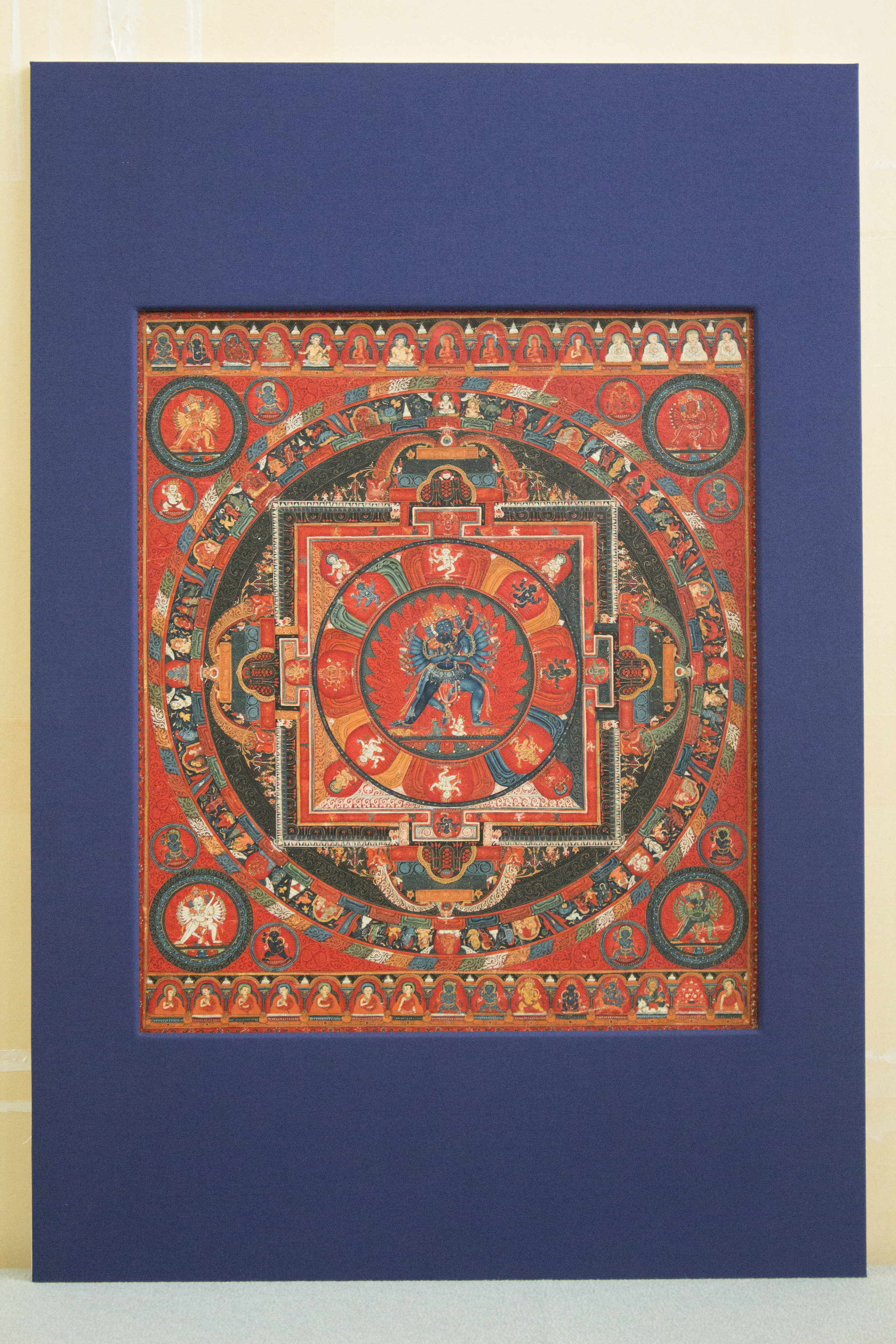
Tantra
Definition
Tantra (Sanskrit: "loom," "weave," by extension "text," "system," "continuum") designates a body of texts and the practices they prescribe that share several structural features: the use of embodied methods (mantra, mudra, yantra, visualization, breath control, ritual, and in some traditions sexual practice) as vehicles of realization; the role of a qualified initiating teacher (guru); the use of transgressive elements as means of dissolving the ordinary conceptual structure of self and world; and the fundamental premise that the energies of the body and of desire are the same energies as cosmic reality — not obstacles to be overcome but powers to be recognized and redirected.
The tantric claim is ontological: the body is not merely a container for the mind or an obstacle to be transcended. It is a microcosm of the entire cosmos, containing within its subtle physiology (nadis, chakras, pranas) the same powers that operate at the cosmic level. Shakti — divine power, cosmic energy, the feminine creative principle in Shakta Hindu tantra — is not other than the energy of consciousness; it is the dynamic aspect of Shiva (pure awareness, the masculine principle). The tantric practitioner works with this identity rather than against it.
This ontological claim generates the distinctive tantric approach to desire and the senses. Where many contemplative traditions treat desire as the problem (the Buddhist tanha, the Platonic epithumia) and prescribe its suppression or sublimation, tantra prescribes its transformation: desire is a form of shakti that, when recognized as such, becomes the vehicle of liberation rather than bondage. The famous Tantric formula — "that by which one falls is that by which one rises" — is not a license for undisciplined gratification but a claim about the nature of energy. The intoxicant that poisons the ordinary person is, in the initiated practitioner's hands, a sacrament; what destroys becomes what liberates.
Historical Development
The historical origins of tantra remain debated. Scholars have traced elements of tantric practice to pre-Vedic or non-Vedic sources — indigenous goddess worship, the Indus Valley civilization, Shaiva and Shakta traditions that existed alongside or beneath the Vedic mainstream. The earliest clearly identifiable tantric texts appear in the first centuries of the Common Era, with the major systematic Shaiva and Shakta Tantras from approximately 5th-10th centuries CE. The Tantras themselves — texts like the Malinivijayottara Tantra, the Kularnava Tantra, and the Tantraloka of Abhinavagupta — claim to be revelations from Shiva to Shakti (or vice versa), transmitted through a lineage of teachers, and containing teachings unavailable in or superseding the Vedas.
Abhinavagupta (c. 950-1020 CE), the greatest systematizer of Kashmir Shaivism and its Trika and Kaula branches, produced the most philosophically rigorous Tantric metaphysics in the Hindu tradition. His Tantraloka (Light on Tantra, 37 chapters) integrates the full range of Shaiva Tantric practice within a non-dual (advaita) philosophical framework: the cosmos is the self-expression of Shiva-Shakti, pure consciousness dynamically playing through its own power of manifestation. Liberation (mukti) is the recognition of this identity, pratyabhijna, "re-cognition", which is available in principle in any moment but requires specific preparation to be accessible in fact. The Pratyabhijna school's philosophical texts (Utpaladeva's Ishvarapratyabhijnakarikas and Abhinavagupta's commentary) represent the highest philosophical articulation of this position.
Buddhist tantra developed its own distinct trajectory in India, distinct from but cross-fertilizing with Hindu tantric culture. The Mahayoga, Anuyoga, and Atiyoga (Dzogchen) categories in Nyingma Tibetan Buddhism represent a systematization of Buddhist tantric material from the early centuries CE through the 8th century. The Hevajra Tantra, Guhyasamaja Tantra, and Cakrasamvara Tantra are among the foundational texts of Buddhist Vajrayana practice.
The Western reception of tantra has been systematically distorted. In both 19th century colonial scholarship (Woodroffe's The Serpent Power being the relative exception) and popular 20th century usage, tantra has been reduced to its sexual elements — "Tantric sex" as a brand in Western therapeutic and commercial culture. This reduction inverts the tradition's own priorities: the sexual practices (where they exist) are a minor and highly specialized subset of tantric technique, and they are embedded in a complete metaphysical and initiatic framework that makes them unintelligible in isolation. The project holds the scholarly and traditional understanding against the popular reduction.
Key Distinctions
Hindu Tantra vs. Buddhist Tantra: The surface similarities (visualization, mantra, deity yoga, transgressive practices, guru-disciple transmission) should not obscure the fundamental metaphysical difference. Hindu Shaiva-Shakta tantra posits Shiva-Shakti as real, absolute, personal divine principles whose identity the practitioner realizes. Buddhist Vajrayana denies any ultimate reality to the deity — the deity is a form of the practitioner's own empty awakened nature. The difference in ontological commitment is not a detail; it is the heart of what the traditions are doing.
Tantra vs. Yoga: Yoga and Tantra are related but distinct. Classical Yoga (Patanjali's system) treats the body and mind as instruments to be disciplined and ultimately transcended through progressive withdrawal of awareness from the senses (pratyahara). Tantra uses the same body and senses as the vehicle of realization rather than obstacles to it. The Kundalini yoga of Tantric traditions works with the same nadis and chakras as yoga generally but does so through activation rather than restraint.
Tantra vs. Magic: Both involve the intentional use of ritual, symbol, and embodied technique to produce changes in consciousness and reality. The distinction lies in orientation: magic typically aims at producing specific effects in the world; tantra aims at the transformation of the practitioner's own consciousness, with cosmic effects being the by-product of that transformation rather than its aim. The distinction is not always clean in practice, and Evola's reading of tantra (The Yoga of Power) pushes toward a "magic" reading that the tradition's own philosophical articulations resist.
Project Role
Tantra serves the project as the most complete articulation of the embodied initiatic claim: that consciousness transformation requires not the suppression of the body's energies but their recognition and transformation. This positions it as the counter-pole to every world-renunciation tradition the project examines and as the Eastern parallel to Bataille's analysis of eroticism and dissolution, Couliano's account of desire as initiatory vehicle, and the project's emerging engagement with the erotic dimension of Western mysticism. The comparison is productive because Hindu and Buddhist Tantra differ from each other and from the Western parallels in ways that prevent any simple unification.
Primary Sources
- Abhinavagupta, Tantraloka (c. 1000 CE): The philosophical summit of Hindu Tantric literature. Mark Dyczkowski and Alexis Sanderson have produced essential scholarly treatments.
- Sir John Woodroffe (Arthur Avalon), The Serpent Power (1919) and Shakti and Shakta: The early Western scholarly treatments of Hindu tantra. More reliable than the popular literature but shaped by Theosophical assumptions the project should note.
- David Gordon White, The Alchemical Body (1996): The best scholarly treatment of the bodily practices and metaphysics of Hindu tantra.
- Jules Evola, The Yoga of Power (1949, trans. 1992): A reading of Tantra through the Evolian "solar" initiatic lens — illuminating on certain structural features, misleading on others.
Agent Research Notes
[AGENT: perplexity | DATE: 2026-03-22] Alexis Sanderson's scholarship on the Shaiva Tantric traditions (particularly his work on the Trika and Kaula schools and their relationship to royal patronage) is indispensable for the historical account. His essay "Shaivism and the Tantric Traditions" (in The World's Religions, 1988) remains the best single scholarly overview. The project should note that "Tantra" is not a unified tradition but a family of related practices and texts across multiple Hindu and Buddhist schools, united by structural features rather than a single doctrinal lineage.