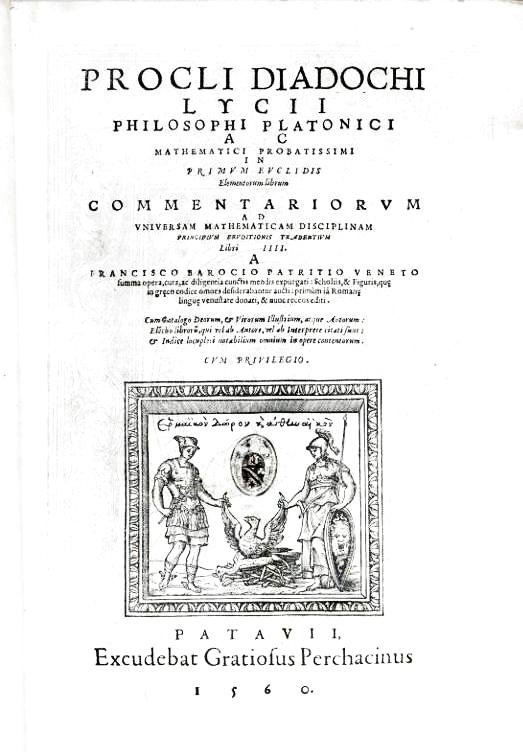
Proclus
Dates: 412–485 CE Domain: Neoplatonism, Theurgy
Biography
Proclus Lycaeus was born in Constantinople in 412 CE and raised in Xanthus, Lycia (modern Turkey). He studied rhetoric and law in Alexandria before traveling to Athens, where he entered the Neoplatonic Academy and quickly became the star pupil of Syrianus, who succeeded Plutarch of Athens as head of the school. Proclus succeeded Syrianus as scholarch (head) of the Academy around 437 and held the position until his death in 485, a tenure of nearly fifty years.
Proclus was both a philosopher and a practicing theurgist. He observed the religious festivals of multiple traditions (Egyptian, Chaldean, Greek), practiced the theurgic rites described by Iamblichus, and composed hymns to the gods. His philosophy was not academic in the modern sense. It was a way of life oriented toward the soul's return to the One, pursued through both intellectual dialectic and ritual practice. He reportedly achieved henosis (mystical union) on several occasions.
He was prodigiously productive: his surviving works include commentaries on five Platonic dialogues (Timaeus, Parmenides, Republic, Alcibiades, Cratylus), systematic treatises, and a collection of hymns.
Key Works
The Elements of Theology is a rigorous deductive system of 211 propositions, proceeding from the One through the divine henads, Intellect, and Soul to the material world. It provides the most systematic formulation of the Neoplatonic emanation scheme and was immensely influential in the Arabic and Latin medieval traditions (through the Liber de Causis, long attributed to Aristotle).
The Platonic Theology is a six-volume treatment of the divine orders, correlating Plato's dialogues with the Chaldean Oracles and the Orphic tradition. It is the summa of Neoplatonic theology.
The Commentary on the Timaeus (the most important surviving Platonic commentary from antiquity) treats the Timaeus as a cosmological and theurgic text, reading the creation of the world-soul as a description of the soul's return to its source.
Role in the Project
Proclus is the supreme systematizer of Neoplatonic philosophy and the last great head of the Platonic Academy before Justinian's closure. His synthesis of Plotinian metaphysics with Iamblichean theurgy creates the definitive Late Antique philosophical framework. His triadic structure of remaining-procession-return (mone-proodos-epistrophe) provides the most rigorous conceptual architecture for the initiatory journey the project tracks.