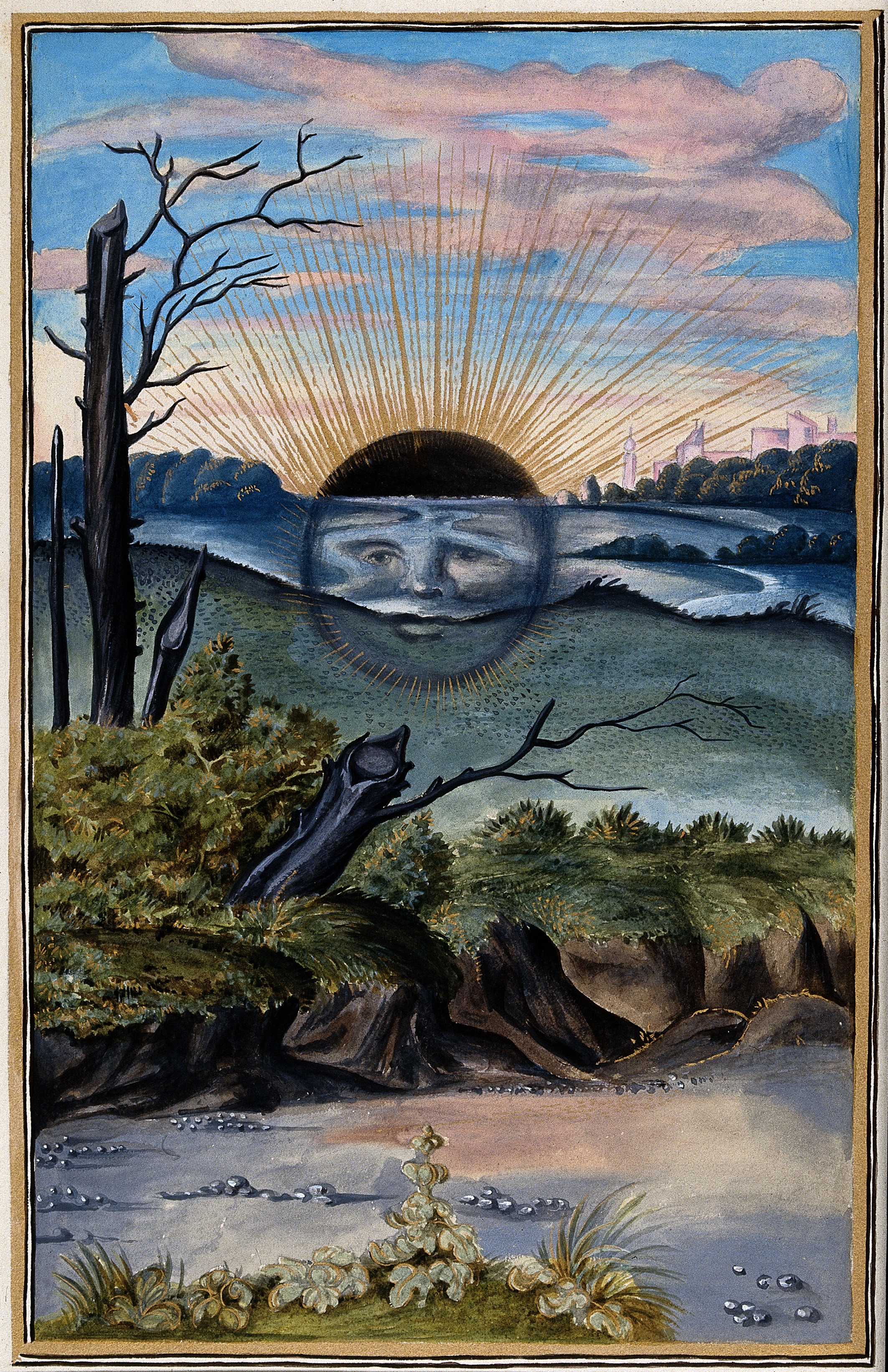
Apophatic
Definition
Apophatic (from Greek apophasis, "negation" or "denial," from apo- "away from" + phēmi "to speak") designates a theological and contemplative approach that proceeds by negation: knowing what the divine is by articulating what it is not. The complementary approach, cataphatic (from kataphasis, affirmation), proceeds by positive attribution: God is good, God is powerful, God is wise. The apophatic tradition insists that these attributions, however useful at a preliminary level, ultimately fail: they impose finite, creaturely concepts on what is by definition infinite and beyond all categories. Any positive statement about the divine is, in an important sense, false — or at least inadequate.
The via negativa is not therefore a counsel of silence or a refusal to engage theologically. It is a precise dialectical method: one affirms attributes, then denies them, then denies the very structure of affirmation and denial. This triple movement, affirmation (kataphasis), negation (apophasis), and the negation of the negation (hyperaphairesis, transcendence), is the formal logic of apophatic theology at its most rigorous, as found in Pseudo-Dionysius. The endpoint is not blank ignorance but what Pseudo-Dionysius calls "divine darkness": an unknowing that is the fullest possible knowledge, because it acknowledges the insufficiency of all finite cognition.
The two most important Christian apophatic theologians are Pseudo-Dionysius the Areopagite (c. 500 CE) and Meister Eckhart (1260–1328 CE). Pseudo-Dionysius, writing under the pseudonym of the Athenian philosopher converted by Paul in Acts 17:34, produced a corpus of theological treatises (The Mystical Theology, The Divine Names, The Celestial Hierarchy, The Ecclesiastical Hierarchy) that synthesized late Neoplatonism (particularly Proclus) with Christian theology. His Mystical Theology is perhaps the most concentrated apophatic text in the Western tradition, culminating in the statement that God is "beyond all being and knowledge, beyond affirmation and beyond negation."
Meister Eckhart, the 14th-century German Dominican mystic, pushed the apophatic logic further still: not merely is God beyond all positive descriptions: God is, in Eckhart's radical formulation, a "desert" (Wüste), a "nothingness" (niht), a "silence" (Stille) that surpasses even the names of Father, Son, and Spirit. Eckhart's sermons fuse the apophatic method with an experiential mysticism: the ground of the soul (Seelengrund) is identical with the Godhead, and this identity is realized in the apophatic stripping away of all images, concepts, and even intentions.
Tradition by Tradition
Neoplatonic
The apophatic tradition in Western philosophy originates with Plotinus's account of the One (Enneads V–VI). The One is beyond being, beyond intellect, beyond goodness, not because it lacks these but because it transcends them absolutely. All positive descriptions are drawn from the emanated orders (Intellect, Soul, Matter) and cannot apply to their source without distortion. Proclus developed this into a sophisticated formal theology; Pseudo-Dionysius christianized it. The Neoplatonic apophasis is the philosophical background without which the Christian mystical tradition is incomprehensible.
Christian Mysticism
Pseudo-Dionysius's influence on Western Christian mysticism is pervasive. John Scottus Eriugena (9th century) translated him into Latin; Albertus Magnus and Thomas Aquinas engaged with him; Meister Eckhart, John Tauler, and the author of The Cloud of Unknowing (14th century) all drew on apophatic resources. The Cloud is perhaps the most practical apophatic text: it instructs the contemplative to place all thoughts and images beneath a "cloud of forgetting" while reaching toward God with a "naked intent" beyond thought. The mystical tradition of apophasis is not merely academic; it is a method of prayer.
Jewish Mysticism (Kabbalah)
The Kabbalistic concept of Ein Sof ("without end," "the infinite") is the apophatic dimension of Jewish theology. Ein Sof cannot be described, depicted, or named; it is the hidden, unmanifest aspect of divinity, from which the ten Sefirot (emanations) proceed. The Kabbalistic system thus contains both an apophatic moment (Ein Sof, beyond all description) and a cataphatic elaboration (the Sefirot, through which God's attributes are expressed and the world is structured).
Sufism
In Islamic mystical theology (kalām), the concept of tanzīh (divine transcendence, incomparability) functions as the apophatic moment: God is absolutely unlike anything in creation. Ibn Arabī's metaphysics holds tanzīh and tashbīh (similarity, immanence) in dialectical tension: God is both absolutely beyond all description and the very substance of all that is. This dialectic is the Islamic analog of the apophatic-cataphatic interplay.
Buddhism and Taoism
The Buddhist concept of śūnyatā (emptiness), particularly in Madhyamaka philosophy, operates by analogous logic: all positive descriptions of reality are subject to deconstruction because all phenomena are empty of inherent existence. This is not nihilism but apophasis applied to metaphysics itself. The Tao Te Ching opens: "The Tao that can be spoken is not the eternal Tao." The resonance with the via negativa is striking, though the traditions are not identical.
The Movement of the Mystical Theology
The Mystical Theology, five short chapters and the briefest text in the Dionysian corpus (LIB-0340), does not argue the apophatic case so much as enact it. It opens not with a definition but with an image: Moses climbing Mount Sinai. Moses first purifies himself, then hears the trumpets and sees the lights, then leaves even these behind and plunges into the darkness of unknowing, where he encounters not God but the place where God dwells. The drama is the method. The ascent is a stripping.
Pseudo-Dionysius then specifies the order of the stripping, and the order is the part most often missed. Negation does not begin with God's loftiest names. It begins with the lowest and most obviously inadequate, that God is not a stone, not air, not body, and climbs from there. The closer a name comes to the divine, the harder and the later it is denied: life, then wisdom, then goodness, then divinity itself. The final chapter denies the most exalted predicates of all, and then denies the denial, placing God "beyond assertion and denial," beyond the very opposition the method has worked in. Affirmation descends from the heights; negation ascends toward them; the summit lies past both.
This is why the apophatic is not the rejection of the cataphatic but its completion. The Divine Names and The Mystical Theology are two halves of one motion. The Divine Names follows the procession of God outward into the multiplicity of nameable attributes; The Mystical Theology follows the return, gathering those names back into the silence they came from. The "brilliant darkness" at the end is not an absence of content. It is the same divine reality the affirmations named, now held in the only way finite cognition can hold it without falsifying it: as that which exceeds cognition (LIB-0340).
Project Role
The apophatic concept functions in the Mystery Schools project primarily as a check against the tendency to over-claim what the mystery traditions contain. The project is explicitly suspicious of both naive literalism (the mysteries revealed simple propositional truths about the afterlife) and gnostic triumphalism (the mysteries gave initiates a secret knowledge that solves all questions). The apophatic insistence on the incomprehensibility of the divine maintains the mystery in "mystery traditions"; it prevents the project from collapsing the sacred into the merely knowable.
The concept also functions as a comparative bridge. One of the project's structural moves is to show how seemingly disparate traditions (Eleusinian, Platonic, Christian mystical, Sufi, Zen) share not specific doctrines but a shared movement toward the incomprehensible. The apophatic is the marker of genuine depth in a tradition; the absence of apophatic awareness is often the mark of dogmatism or spiritual superficiality.
Distinctions
Apophatic vs. Agnosticism: Agnosticism (in the modern sense) is epistemic uncertainty about the existence of God: a suspended judgment. Apophatic theology is not doubt or suspension but a positive theological method: it claims that God is, and because God is, cannot be adequately captured in finite language.
Apophatic Theology vs. Mystical Experience: Apophatic theology is a formal method of theological reasoning. Mystical experience (the "divine darkness," the henōsis) is the experiential correlate toward which apophatic theology points. The method and the experience are related but not identical; not every apophatic theologian is a mystic, and not every mystic reasons apophatically.
Via Negativa vs. Nihilism: The apophatic negation ("God is not good in any sense we understand") is not an assertion of nothingness but a refusal of limitation. The Dionysian formulation is "hyper-" language: God is the hyperagathon, the Good-beyond-good. Negation is the path to a more adequate affirmation.
Primary Sources
- Pseudo-Dionysius the Areopagite, The Mystical Theology: The foundational Western apophatic text; the most concentrated and precise statement of the via negativa.
- Pseudo-Dionysius, The Divine Names: Complementary cataphatic counterpart; together with Mystical Theology, constitutes the complete Dionysian apophatic-cataphatic dialectic.
- Meister Eckhart, Sermons: The most radical experiential development of the apophatic in Western Christian mysticism; Eckhart's concept of Gelassenheit (releasement) is the practical apophatic disposition.
- Plotinus, The Enneads (V–VI): The Neoplatonic philosophical source for Pseudo-Dionysius's apophasis.
Agent Research Notes
[AGENT: perplexity | DATE: 2026-03-20] The relationship between Pseudo-Dionysius and Proclus is now well established in scholarship (Saffrey, Rorem, Perl): Dionysius draws directly and extensively on Proclus. The Christianization of Neoplatonic apophasis is the key historical move. Also important: Denys Turner's The Darkness of God: Negativity in Christian Mysticism (Cambridge, 1995) is the most rigorous modern scholarly treatment of the Christian apophatic tradition, arguing against the "experientialist" reading of mysticism that equates apophasis with a specific kind of ineffable feeling. Turner insists the apophatic is a formal theological dialectic, not primarily a description of subjective states. This has implications for how the project discusses mystical experience more broadly.
[AGENT: claude-code | DATE: 2026-04-03] Deepened with material from LIB-0340 (Pseudo-Dionysius: The Complete Works). Added "The Movement of the Mystical Theology," which sets out the ordered ascent of negations (lowest predicates denied first, the most exalted last, and then the denial itself denied) and the procession/return relationship between The Divine Names and The Mystical Theology. Existing content was not rewritten.