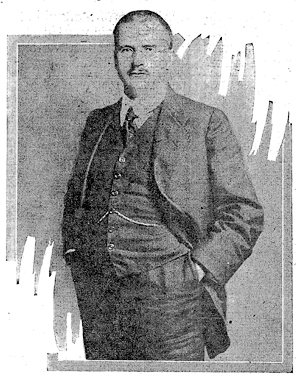
Carl Gustav Jung
Dates: 1875–1961 Domain: Depth Psychology, Analytical Psychology, Comparative Mythology
Biography
Carl Gustav Jung was born in Kesswil, Switzerland, in 1875, the son of a Swiss Reformed pastor whose faith was itself marked by private doubt. That domestic tension — official theology on one side, private spiritual experience on the other — became the organizing tension of Jung's entire intellectual life. He trained as a psychiatrist at the Burghölzli clinic in Zurich under Eugen Bleuler, established a relationship with Sigmund Freud that proved foundational and eventually catastrophic, and broke definitively from Freudian psychoanalysis in 1912 with the publication of Wandlungen und Symbole der Libido (later translated as Symbols of Transformation). Where Freud read myth and dream as disguised wish-fulfillment, Jung argued they expressed a layer of psychic reality deeper than personal biography: the collective unconscious, populated by recurring structural patterns he called archetypes.
The period following his break with Freud (roughly 1913–1919) was Jung's confrontation with what he would later call the unconscious itself — a period of voluntary disorientation that he documented in the Red Book (Liber Novus), a manuscript he kept largely private for decades and which was not published until 2009. The Red Book records active imagination sessions: a practice of deliberately entering into dialogue with figures encountered in waking dream-states. This is not, Jung insisted, mere fantasy — it is an encounter with autonomous psychic entities. Whether those entities are "only" psychological (as Freud would say) or are genuinely Other (as Corbin would argue) is the question that animates the engagement with Jung. The Red Book is, structurally, an initiation text: a descent into chaos, a confrontation with death and the shadow, a hard-won emergence into enlarged selfhood.
Jung's mature system revolves around the process he called individuation — the lifelong, never-completed movement toward integration of the total personality, including its darkest and most irrational elements. The Self (capital S, distinguished from the everyday ego) is the archetype of wholeness, the inner image of God that Western Christianity projected outward onto a transcendent deity. Jung's project was, in one sense, the psychological re-appropriation of religious imagery: not to debunk it, but to understand what psychic necessity it serves. This led him to spend decades studying alchemy — not as a failed precursor to chemistry but as a symbolic language encoding the individuation process itself. Psychology and Alchemy (1944) and Mysterium Coniunctionis (1955–1956) represent the apex of this work.
His Answer to Job (1952) remains his most audacious and disturbing book: a direct confrontation with the figure of Yahweh in the Book of Job, arguing that God's unconsciousness, his capacity for moral inconsistency, necessitated the Incarnation as a divine individuation. The book scandalized orthodox Christians and psychologists alike, which is part of what makes it essential. Jung was not merely describing the psychology of religion from a safe distance; he was engaged with the religious question at its most destabilizing level. His autobiography, Memories, Dreams, Reflections (dictated 1957–1961), remains the most accessible entry to the full range of his thinking.
Key Works (in library)
| Work | Year | Relevance |
|---|---|---|
| The Red Book (Liber Novus) | 2009 (written 1913–1930) | Primary document of active imagination as initiatic practice |
| Psychology and Alchemy | 1944 | Reads alchemical symbolism as map of the individuation process |
| Aion: Researches into the Phenomenology of the Self | 1951 | Extended analysis of the Self archetype and the Christ symbol |
| Answer to Job | 1952 | Jung's direct theological confrontation; psychodrama of divine individuation |
| The Archetypes and the Collective Unconscious | 1934/1954 | Foundational theoretical statement of the archetype concept |
Role in the Project
The Mystery Schools project needs Jung for several reasons simultaneously. First, his concept of the archetype provides the psychological vocabulary for discussing why the same images — the dying-and-rising god, the descent to the underworld, the hieros gamos — recur across unrelated traditions: not because of historical diffusion but because they arise from structural features of the human psyche at a certain depth. Second, his concept of individuation gives us a psychological correlate for what ancient traditions called initiation: a genuine transformation of the person, not merely an acquisition of information. Third, and most critically, the Red Book shows that a twentieth-century European scientist could be thrown by his own interior life into experiences that could only be described in the language of the Mysteries — and that he took those experiences seriously rather than pathologizing them.
But the project holds Jung's psychological framework in productive tension with Corbin's ontological insistence. When Corbin challenged Jung directly — arguing that the imaginal world is not "merely" psychological but has its own mode of being — Jung reportedly replied that he had to use psychological language because it was the only one his audience would accept. This may be true, but it has consequences: the psychological frame domesticates the Mysteries, makes them safe, converts them into a therapeutic program. The project's argument is that something gets lost in that translation. Active imagination is not the same as theurgic practice, even if they resemble each other structurally. The gap between them is where the project lives.
Key Ideas
- Collective Unconscious: The layer of the psyche below personal biography, shared across the species, populated by archetypes — structural patterns that shape experience without being derived from it.
- Archetypes: Not images but tendencies to form images; the Shadow, Anima/Animus, the Wise Old Man, the Self are the most psychically charged. They cannot be exhausted by any single manifestation.
- Individuation: The process of becoming what one most deeply is — not the ego's agenda but the Self's. It requires the integration of shadow, the confrontation with the unconscious, and the dissolution of identification with the persona.
- Active Imagination: A disciplined technique of entering dialogue with autonomous psychic figures through sustained attention; Jung's closest analogue to theurgic practice.
- Psychological vs. Ontological: The fundamental unresolved tension in Jung's work: are the figures he encounters real entities or projections of the psyche? This not as a settled question but as one of the Mystery Schools' central problems.
Connections
- Influenced by: Friedrich Nietzsche, Johann Jakob Bachofen, William James, FIG-0034 Plato (via Neoplatonism)
- Influenced: FIG-0016 Neumann (student; extended the archetypal analysis of consciousness history), FIG-0054 Campbell (absorbed the archetype concept), FIG-0056 Kerényi (collaborated on mythology and archetype)
- In tension with: FIG-0009 Corbin (the psychological vs. ontological debate over the imaginal), FIG-0007 Guénon (who dismissed psychology as a symptom of modern disorder), FIG-0001 Eliade (parallel but non-identical frameworks for mythic structure)
Agent Research Notes
[AGENT: perplexity | DATE: 2026-03-22] Jung's dates are confirmed 1875–1961. The Red Book was withheld from publication by Jung himself and first published by W. W. Norton in 2009. His break with Freud is conventionally dated to the 1912 publication of Wandlungen. The Corbin-Jung encounter is documented; Corbin attended Eranos conferences at Ascona, Switzerland, where Jung was a central figure. The Eranos context is important for the project: it is the meeting ground of Eliade, Jung, Corbin, Kerényi, and others — a semi-initiatic intellectual circle in its own right.