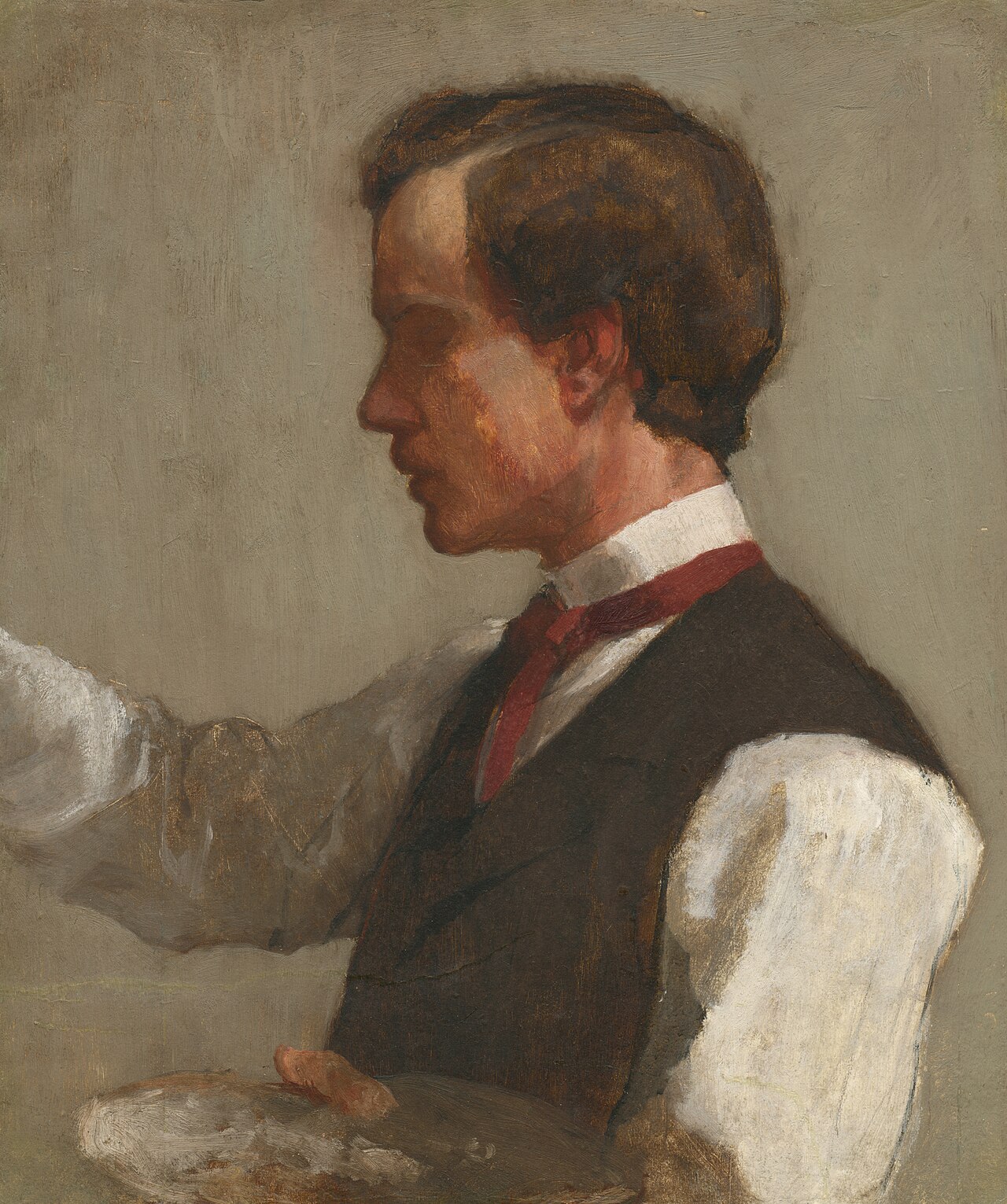
William James
Dates: 1842–1910 Domain: Philosophy, Psychology, Philosophy of Religion
Biography
William James was born in New York City in 1842, the eldest son of the Swedenborgian theologian Henry James Sr. And the brother of the novelist Henry James. He trained as a physician at Harvard Medical School, spent years in psychological and philosophical depression, and emerged from it through an act of will — literally willing himself to believe that his will was free, which he recorded in his diary in 1870 as the beginning of his recovery. He taught anatomy, physiology, psychology, and finally philosophy at Harvard for thirty-five years, building the first psychology laboratory in America and becoming the dominant figure in American philosophy.
The Varieties of Religious Experience (1902) — delivered as the Gifford Lectures at Edinburgh — is his primary contribution to the project. Its method is empirical: James takes personal testimonies of religious and mystical experience from across traditions, cultures, and centuries, and analyzes them not for their theological truth-claims but for their phenomenological structure and their psychological effects. His four marks of mystical states — noetic quality (they carry a sense of knowledge, not merely feeling), transience (they are temporary, though their effects persist), passivity (the subject is taken, not in control), and ineffability (they resist adequate verbal description) — provide a cross-traditional taxonomy.
His distinction between healthy-mindedness (the consciousness that finds the world fundamentally good) and sick-soulness (the consciousness that has looked at the darkness and cannot look away) maps onto the project's analysis of the two fundamental dispositions toward the sacred, and his concept of the "twice-born" — the soul that has gone through a crisis and emerged transformed — is his secular version of initiation.
Key Works (in library)
| Work | Year | Relevance |
|---|---|---|
| The Varieties of Religious Experience | 1902 | Empirical methodology for mystical experience; four marks of mystical states |
| The Principles of Psychology | 1890 | Stream of consciousness; the foundational work of modern psychology |
| A Pluralistic Universe | 1909 | Radical empiricism and the possibility of genuine mystical knowledge |
Role in the Project
James provides the methodological bridge between the academic study of religion and the project's own commitment to taking the experiences seriously as data. His insistence that the experiences must be judged by their fruits — by what they produce in the lives of those who have them — rather than by their theological pedigree or their philosophical coherence is consistent with the project's empirical seriousness about the traditions.
Key Ideas
- Noetic Quality: Mystical states feel like states of knowledge — revelations of truth, not merely feelings of well-being. James's insistence on this quality distinguishes mystical experience from other altered states.
- The Twice-Born: The soul that achieves integration only after having genuinely confronted the darkness — the sick soul who cannot take the healthy-minded path and who emerges from the crisis transformed.
- Stream of Consciousness: The continuous, undivided flow of subjective experience that James's psychology posits as the basic datum of inner life — the metaphor that shaped the next century's understanding of mind.
- Fruits, Not Roots: The pragmatist criterion for evaluating religious experience — not its origins or its philosophical credentials but its effects on the lives it touches.
Connections
- Methodological foundation: FIG-0001 Eliade (Eliade's phenomenology of religion builds on James's empirical approach), FIG-0091 Otto (Otto's phenomenology of the numinous provides the specific vocabulary James's taxonomy needs)
- Psychological tradition: FIG-0021 Jung (Jung read James carefully; the Varieties influenced the development of depth psychology)
- Empirical mysticism: CON-0033 Entheogen (James's experiments with nitrous oxide as a form of evidence for mystical states)
Agent Research Notes
[AGENT: perplexity | DATE: 2026-03-22] William James died August 26, 1910 at Chocorua, New Hampshire. The Gifford Lectures were delivered at Edinburgh in two series: 1901 and 1902. His diary entry of April 30, 1870 (the "free will" recovery) is in The Letters of William James, vol. 1. He experimented with nitrous oxide and reported the results in "Subjective Effects of Nitrous Oxide" (1882). Gerald Myers' William James: His Life and Thought (1986) is the standard biography.