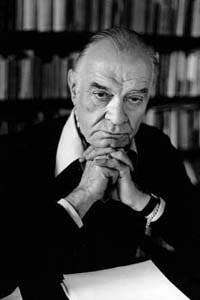
Denis de Rougemont
Dates: 1906–1985 Domain: Cultural Criticism, Philosophy of Love
Biography
Denis de Rougemont was born in Couvet, Neuchatel, Switzerland, in 1906. He studied at the University of Neuchatel and the University of Vienna, became involved in the personalist movement in 1930s France (associated with Emmanuel Mounier and the journal Esprit), and spent the war years in the United States, lecturing at the Ecole Libre des Hautes Etudes in New York. After the war, he became a leading advocate for European federalism, founding the Centre Europeen de la Culture in Geneva in 1950.
De Rougemont's intellectual range was broad: political philosophy, cultural criticism, theology, and literary analysis. He is remembered primarily for a single, provocative thesis about the origins of Western romantic love.
Key Works
Love in the Western World (L'Amour et l'Occident, 1939; revised 1956) argues that the troubadour tradition of courtly love, which appears in Provence in the twelfth century and transforms the entire Western literary conception of erotic passion, is a covert expression of Cathar-influenced Gnostic mysticism. The troubadour's adoration of the unattainable Lady is, on this reading, a coded devotion to the Sophia figure of Gnostic theology. Romantic love as the West knows it, the passion that exalts suffering, courts death, and seeks transcendence through the beloved, is a heresy disguised as poetry.
The thesis is contested. Scholars have questioned the historical connections between the Cathars and the troubadours, and the identification of courtly love with Gnostic theology requires significant interpretive leaps. The project engages de Rougemont's argument as an illuminating hypothesis rather than an established finding, per the epistemic spectrum in editorial-guidance.md.
Role in the Project
De Rougemont's thesis in Love in the Western World — that the troubadour tradition of courtly love is a covert vehicle for Cathar-influenced mystical eroticism, and that romantic passion in the West is secretly a heresy — provides the project's framework for understanding the relationship between eros, initiation, and the Western literary tradition. His reading of the Tristan myth as coded Gnostic theology opens a critical interpretive line.