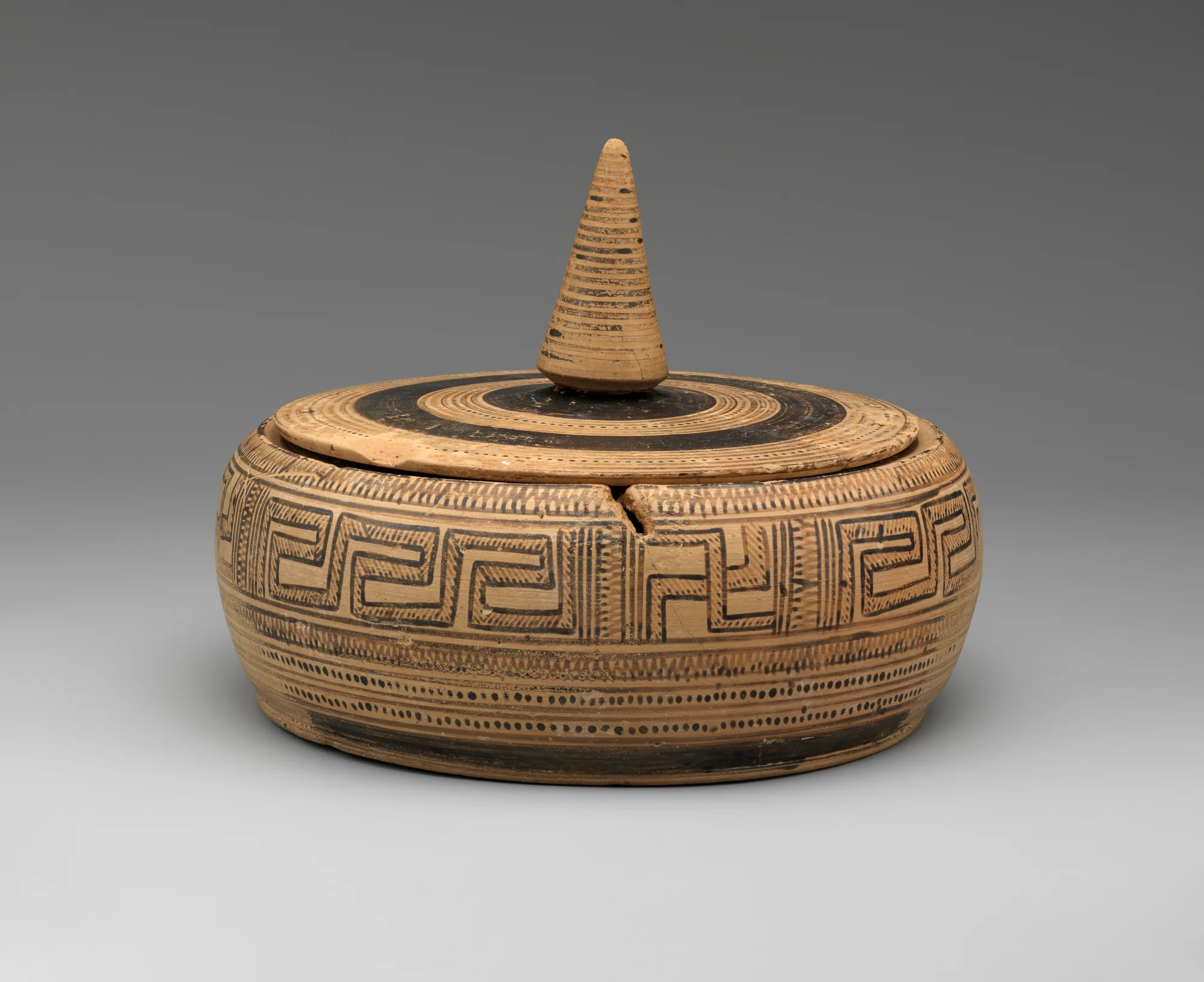
Coincidentia Oppositorum
Definition
Coincidentia oppositorum, the coincidence (or coinciding) of opposites, is the central speculative concept in the thought of Nicholas of Cusa (Nikolaus von Kues, 1401–1464), the German cardinal, philosopher, and mathematician who represents one of the most sophisticated minds of the fifteenth century. The concept holds that in the infinite, which for Cusa is God, the maximum that admits of no greater, all opposites coincide. Maximum and minimum, being and non-being, motion and rest, unity and multiplicity: in the finite world these are genuinely distinct and mutually exclusive. In the infinite they coincide, not because the distinction is dissolved, but because the infinite transcends the category of distinction itself.
Cusa introduced the concept in De Docta Ignorantia ("On Learned Ignorance," 1440), his most important philosophical work, and developed it across a series of subsequent writings. The phrase docta ignorantia, learned ignorance, names the epistemic posture that the coincidentia demands: to know the infinite, one must know that one does not know, because the infinite exceeds the grasp of discursive reason. Reason operates through distinctions: this is not that, A is not non-A. The infinite is beyond the jurisdiction of this logic. Genuine knowledge of the infinite therefore requires a kind of knowing that exceeds reason's ordinary mode: what Cusa calls intellectus (as distinct from ratio) or visio intellectualis, an intellectual vision that can apprehend the coinciding of opposites without needing to resolve them.
This is not irrationalism or mystical vagueness. Cusa was a rigorous thinker who used mathematical examples to make the point precise. Consider an infinite circle: as the radius of a circle increases toward infinity, the circumference becomes increasingly straight. At true infinity, the circle and the straight line coincide; the maximum curve and zero curvature are the same. Finite geometry cannot make this claim; infinite geometry can. The mathematical limit is an analogue for the theological claim: in the infinite, opposites that are genuinely distinct in the finite domain genuinely coincide.
Historical and Intellectual Context
Coincidentia oppositorum did not originate with Cusa, though he gave it its definitive philosophical formulation. The idea that the divine transcends and subsumes opposites runs through multiple streams of intellectual history that converge in the fifteenth century.
Heraclitus (c. 535–475 BCE): The pre-Socratic philosopher from Ephesus whose surviving fragments insist on the unity of opposites: "The path up and the path down are the same"; "The sea is the purest and most polluted water: for fish, drinkable and life-giving; for humans, undrinkable and deadly." Heraclitus does not merely observe that opposites coexist; he argues that they are the same, that their opposition is the form in which their underlying unity manifests. His concept of the Logos as the governing principle that holds opposites together is an early articulation of what Cusa will develop philosophically.
Pseudo-Dionysius the Areopagite (FIG-0010): The apophatic theologian (5th–6th century CE) whose Divine Names and Mystical Theology argue that God is beyond all opposites: neither being nor non-being, neither light nor darkness, neither something nor nothing. Pseudo-Dionysius is the most important immediate predecessor for Cusa's coincidentia: the apophatic tradition (CON-0007) is the logical space within which the coincidence of opposites becomes intelligible. If God cannot be named positively (if every affirmative statement about God fails) then God is equally beyond the opposed pairs of every predicate. God is beyond large and small, beyond one and many, beyond beginning and end.
Meister Eckhart (c. 1260–1328): The Dominican mystic and theologian whose speculative mysticism centers on the paradoxical identity of the soul with God: "The eye with which I see God is the same eye with which God sees me." Eckhart's Godhead (Gottheit), which he distinguishes from God in the personalist sense, is beyond all distinctions including the distinction between being and non-being. Cusa is directly in Eckhart's wake.
The Kabbalah: The Kabbalistic concept of Ein Sof (the Infinite, literally "without limit") as the divine reality prior to all attributes and distinctions, within which all contraries are united in undifferentiated unity, is a parallel development in Jewish mystical thought. The Kabbalistic tsimtsum (contraction) by which the Ein Sof creates space for the finite world involves a kind of coincidence: the divine fullness and the void of creation coincide in the moment of contraction.
The Concept in Practice
The most direct formulation in Cusa occurs in De Visione Dei ("On the Vision of God," 1453), his most accessible mystical work:
"You, O God, are the antithesis of opposites, because you are infinite; and because you are infinite, you are infinity. In infinity, the antithesis of opposites is without antithesis... The Absolute Infinite includes all and encompasses all."
Cusa uses the famous image of the "wall of paradise": the boundary beyond which God dwells. This wall is the coincidence of opposites; it is the barrier that logic cannot cross, because on the other side, all of reason's distinctions fail. The contemplative who would apprehend God must somehow pass through this wall, not by abandoning reason, but by allowing reason to become aware of its own limit and pass, in that awareness, beyond itself.
This is what Cusa means by docta ignorantia: not ignorance as mere lack, but ignorance as the highest form of wisdom: the learned recognition that the infinite exceeds what reason can grasp, and that this recognition is itself the closest we can come to genuine knowledge of the infinite.
Coincidentia Oppositorum and the Project's Method
The project's governing intellectual habit, holding tensions open rather than forcing resolution, is the coincidentia as method. The project inhabits, without resolving:
- The decline reading (Guénon's Kali Yuga) and the evolution reading (Gebser's integral structure, Barfield's final participation). Both are accurate as diagnostics of aspects of the present situation; the project holds both rather than choosing.
- The entheogenic hypothesis and the ritual-structural account of the Eleusinian Mysteries. The kykeon may have been psychoactive and may not have been; the experience may have depended primarily on chemistry or primarily on the initiatic architecture or on their combination. The project does not force a resolution.
- The AI as Hardening and the AI as strange participant. The machine that produces content about the loss of participation may be exhibiting the loss; it may be doing something new. The project inhabits this coincidence without pretending to resolve it.
These are not failures of decisiveness. They are the posture appropriate to genuinely infinite questions: the recognition that the questions themselves exceed the binary logic by which resolution would be achieved.
The Dionysian Connection
The Bacchae of Euripides is the most dramatic ancient staging of the coincidentia oppositorum. Dionysus is simultaneously divine and human, masculine and feminine, hunter and hunted, the one who destroys and the one who liberates. His worship brings ecstasy and madness, community and dissolution, the sacred and the dangerous. The coincidence of opposites is not merely a philosophical concept for the Dionysian tradition; it is the structural feature of the divine as it appears in the world: always double, always dangerous, always carrying its own opposite within it.
The Eleusinian Mysteries, which are connected to but distinct from the Dionysian tradition, share this structure. Persephone is both queen of the dead and goddess of spring; the grain is simultaneously what dies in the earth and what rises from it; the initiatory death is simultaneously the worst thing and the condition of the best thing. The mystery enacts the coincidentia at the level of experiential encounter, not merely conceptual recognition.
Distinctions
Coincidentia Oppositorum vs. Hegelian Dialectic: Hegel's dialectic also deals with opposites, thesis, antithesis, synthesis, but the Hegelian synthesis resolves the opposition at a higher level; the opposition is aufgehoben (sublated, preserved-and-cancelled). The coincidentia does not synthesize; the opposites coincide without being resolved. In Hegel, the finite opposition is overcome; in Cusa, the infinite is genuinely beyond the finite opposition, and contemplating this transcendence is not the same as synthesizing it.
Coincidentia Oppositorum vs. Paradox: A paradox in the ordinary sense is an apparent contradiction that further analysis will resolve. The coincidentia names genuine, irreducible coinciding: not an apparent contradiction to be cleared up, but a real structure of the infinite that reason can recognize but cannot conceptually resolve. The appropriate response is not to solve the paradox but to recognize that the question exceeds the jurisdiction of the logic that generates it.
Coincidentia vs. Relativism: The coincidentia does not hold that all positions are equally valid or that contradictions are simply tolerated. It holds that the infinite genuinely transcends the distinctions that make contradictions possible. In the finite domain, distinctions are real and important; the project makes many careful distinctions. The coincidentia applies specifically to the questions that arise when finite reason encounters the genuinely infinite: the nature of God, the ultimate ground of consciousness, the meaning of death and return.
Primary Sources
- Nicholas of Cusa, De Docta Ignorantia: The foundational text; the introduction of coincidentia oppositorum in a rigorous philosophical context, with the mathematical analogies.
- Nicholas of Cusa, De Visione Dei: The most accessible treatment; the wall of paradise; the coincidence of opposites in the vision of God.
- Pseudo-Dionysius, The Divine Names and Mystical Theology: The apophatic tradition that is Cusa's most direct predecessor; the foundation for understanding why coincidentia is the structure of the divine.
- Jean Gebser, The Ever-Present Origin (LIB-0243): Gebser's integral structure of consciousness is one in which the mutations of consciousness coincide in a new transparency: an integral vision that holds the previous structures without abolishing them. Gebser's "achronicity" is the temporal version of coincidentia.
- Plato, Parmenides (LIB-0253): The Platonic dialogue that pushes the furthest into the coincidence of opposites in the One, through a series of hypotheses generating contradictory conclusions about the One and the Many.
- Richard Tarnas, The Passion of the Western Mind (LIB-0330): Tarnas's account of Cusa's significance for the transition from medieval to Renaissance thought; the coincidentia as a bridge between medieval mystical theology and Renaissance humanism.
Plato: The Cave as Coincidentia
The allegory of the Cave (Republic VII, 514a-521b) enacts a coincidentia oppositorum in its structure. The prisoner who ascends from darkness to light must return to the cave, and the return is as essential as the ascent. The philosopher who has seen the Good must descend back into the world of shadows and govern. Light and darkness, ascent and descent, knowledge and service, are not opposed alternatives but paired necessities. Plato's cave is the Western tradition's earliest philosophical staging of the insight that the initiated consciousness does not escape the world of appearances but returns to it with transformed perception: seeing the shadows as shadows, knowing their source, and serving the community that cannot yet see.
Dante: The Nadir as Turning Point (Inferno, LIB-0136)
At the center of Dante's Hell, climbing over Satan's frozen body, the direction of gravity reverses. Down becomes up. The pilgrim who has been descending through nine circles suddenly finds himself ascending, not by changing direction but by passing through the center point where all directions coincide. This is the coincidentia oppositorum made architectural: the lowest point in the cosmos is also the point from which ascent begins. Satan's three mouths chew the three greatest traitors (Judas, Brutus, Cassius), and his frozen tears are the ultimate image of will turned against itself. The passage through this center is not an escape from Hell but a transformation of the traveler's orientation: what was below is now above. Dante's Inferno enacts in narrative what the mystery traditions performed in ritual: the descent through the worst the cosmos contains, arriving at the point where opposition collapses and the only remaining direction is return.
Barfield: The Withdrawal as Necessary Opposition (Saving the Appearances, LIB-0240)
Barfield's developmental framework embeds a coincidentia oppositorum in the history of consciousness itself. Original participation and final participation are opposites (pre-reflective immersion vs. conscious reintegration), but they are also the same movement experienced from different directions. The withdrawal of participation (the Hardening, the Cartesian split, the loss of the participatory bond) is, in Barfield's reading, not simply a catastrophe but a necessary condition for the emergence of individual self-consciousness. Without the withdrawal, the individual could not distinguish itself from the participatory field; without that distinction, final participation (conscious reunion) would be impossible. The loss contains the seed of a higher recovery. This is the coincidentia oppositorum operating at the scale of civilizational history: the death of participation is the precondition for its resurrection.
Plotinus: The Intelligible Where Each Is All (LIB-0254)
Cusa located the coincidence of opposites in the infinite. Plotinus, in the Enneads, describes a level of reality where a related collapse of separateness already holds: not the One, which is beyond opposition altogether, but Nous, the realm of Intellect and the Forms.
In Nous, Plotinus writes in V.8, "On the Intelligible Beauty," everything is transparent to everything else. Each Form contains all the others and is contained by them, each is all and all is each, and the whole is present in every part without crowding or confusion. There is distinction there; the Forms are genuinely many. But the distinction does not produce the mutual exclusion it produces in the sensible world. A thing can be fully itself and fully the others at once. This is not yet Cusa's coincidentia, but it is its metaphysical ancestor: a region of reality where being many and being one have ceased to be opposed.
The descent into the sensible world is, in this reading, the descent into mutual exclusion, the condition in which this is no longer that, in which to be one thing is to be debarred from the rest. The project's governing habit of holding tensions open is, on Plotinus's terms, an attempt to think from the structure of Nous rather than the structure of the sensible: to treat opposed readings as Forms that interpenetrate rather than particulars that must cancel one another (LIB-0254).
Agent Research Notes
[AGENT: perplexity | DATE: 2026-03-20] Mircea Eliade himself used coincidentia oppositorum as a structural concept in the history of religions; he applied it to the divine or sacred as that which contains opposites (e.g., the sacred is simultaneously tremendum and fascinans, both the most dangerous and the most attractive). This provides another angle for the project: the coincidence of opposites is not merely a philosophical-theological concept but a feature of what Eliade calls "the dialectic of the sacred": the sacred always contains its own opposite, is always simultaneously life and death, creative and destructive. The shamanic tradition is particularly clear on this: the shaman who has been dismembered and reconstructed carries both death and life; the Dionysian thiasos is ecstasy and madness in the same gesture. The coincidentia is not a learned philosophical concept imposed on these traditions; it names a structure they enact.
[AGENT: claude-code | DATE: 2026-04-03] Deepened with material from LIB-0254 (Plotinus, The Enneads). Added "Plotinus: The Intelligible Where Each Is All," on Nous (Enneads V.8) as the metaphysical ancestor of Cusa's coincidentia and a model for the project's habit of holding tensions open. Existing content was not rewritten.