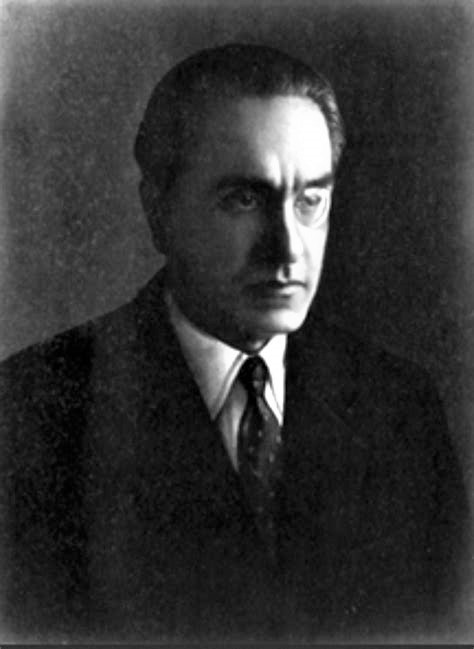
Julius Evola
Dates: 1898–1974 Domain: Philosophy, Esotericism, Political Theory, Traditionalism
Biography
Julius Evola was born Giulio Cesare Andrea Evola in Rome in 1898. He was a Dadaist painter in his youth, then moved through the nihilistic philosophy of Giovanni Gentile into an increasingly idiosyncratic form of esoteric Traditionalism. In the 1920s and 1930s he published extensively on magic, tantra, alchemy, and the philosophy of history while becoming increasingly involved with fascist political circles in Italy and, during the war years, in Germany, where he had contacts with SS intelligence. He was paralyzed from the waist down by a Soviet bomb fragment in Vienna in 1945 and spent the rest of his life in Rome, wheelchair-bound, continuing to write and to attract followers across the European far right. He died in 1974.
The editorial position the project adopts toward Evola is: serious engagement with his esoteric and metaphysical work, explicit critical distance from his politics, and no attempt to separate the two as if they were unrelated. His racism, his misogyny (elaborated as a metaphysical doctrine of the "solar" male principle vs. the "lunar" feminine), and his enthusiasm for political violence are not peripheral to his thought — they are the political application of his metaphysics. Any honest engagement with Evola must acknowledge this.
Revolt Against the Modern World (1934) is Evola's central historical-philosophical argument: that the modern world represents a catastrophic descent from a primordial sacred order — a Kali Yuga, in Hindu cosmological terms — and that the various crises of modernity (democracy, equality, materialism, feminism) are symptoms of this descent rather than problems to be solved within its framework. The book draws on Guénon's Traditionalist diagnosis but extends it in a more explicitly political and more violently antidemocratic direction. Where Guénon counseled withdrawal from the modern world and cultivation of contemplative practice within an authentic tradition, Evola drew more aggressive political conclusions.
Ride the Tiger (1961), written after the war and after Evola's partial physical immobilization, is a more considered and philosophically serious work: addressed not to the political activist but to the man who has recognized that no political solution to the problem of modernity is available. The "tiger" is the modern world in its full disintegrative force — all institutions failing, all forms dissolving. The differentiated man (Evola's term for the person who maintains inner orientation within this dissolution) does not attempt to stop the tiger, because the tiger cannot be stopped. He rides it: using the forces of dissolution to accelerate the completion of the cycle rather than trying to arrest it. This is a genuinely interesting philosophical position regardless of who is articulating it.
His esoteric scholarship is serious in a different way. The Hermetic Tradition (1931) is a careful study of the symbolic language of European alchemy that, whatever one makes of Evola's metaphysical commitments, demonstrates real familiarity with the texts. The Yoga of Power (1949), his study of Tantric Shakta and Shaiva traditions, is a Western reading of left-hand Tantra that has influenced the Western reception of these traditions, for better and worse. The Doctrine of Awakening (1943), his reading of Theravada Buddhist asceticism as a form of "solar" heroic self-discipline, is idiosyncratic but not unintelligent. These works engage their subjects with more rigor than most popular Traditionalist writing.
Key Works (in library)
| Work | Year | Relevance |
|---|---|---|
| Revolt Against the Modern World | 1934 | The central Evolian diagnosis of modernity as metaphysical decline |
| Ride the Tiger (Cavalcare la tigre) | 1961 | The post-political philosophy of differentiated self-maintenance within dissolution |
| The Hermetic Tradition | 1931 | Scholarly study of alchemical symbolism |
| The Yoga of Power | 1949 | Western reading of Tantric traditions |
| The Doctrine of Awakening | 1943 | Evola's reading of Theravada as heroic ascetic discipline |
Role in the Project
The project cannot ignore Evola because his influence on contemporary esoteric and far-right thought is too significant — and because dismissing him wholesale forfeits a genuine philosophical discussion. The Traditionalist critique of modernity that Evola inherits from Guénon and radicalizes is not simply wrong; it names real phenomena (the loss of sacred order, the dissolution of cultural forms, the spiritual consequences of materialism) that the project also engages. What makes Evola politically dangerous is not his diagnosis but his prescription: that the appropriate response to this dissolution involves hierarchical ordering, violence, and the exclusion of those deemed racially or spiritually inferior. The project argues that these prescriptions are not just morally wrong but metaphysically mistaken — that the initiatory tradition, properly understood, moves toward integration and the dissolution of hierarchy rather than toward its rigid enforcement.
Key Ideas
- Kali Yuga: The current age as the fourth and most degenerate stage of a cosmic cycle, characterized by the inversion of the sacred order; Evola's adopted Hindu framework for the Traditionalist diagnosis.
- The Differentiated Man: The figure who maintains inner orientation and metaphysical commitment within a world offering no external support for either — not the rebel who fights the tide, but the one who rides it.
- Solar vs. Lunar Principles: Evola's gendered metaphysical opposition, which he reads as both cosmological and political; the solar masculine as the principle of transcendence, the lunar feminine as the principle of immanence.
- The Revolt Against the Modern World: Not merely political conservatism but a metaphysical claim that the entire modern world — including democracy, equality, and scientific materialism — represents a fall from a higher order.
- Alchemy as Initiatic Path: The alchemical work (solve et coagula) as a genuine technology of consciousness transformation rather than primitive chemistry or mere allegory.
Connections
- Influenced by: FIG-0007 Guénon (acknowledged master; Evola explicitly built on Guénon while extending in more radical directions), Nietzsche (early influence), the Right-wing political philosophy of interwar Europe
- Influenced: The postwar Italian far right, the European New Right (Alain de Benoist), contemporary neo-fascist and esoteric nationalist movements
- In tension with: FIG-0007 Guénon (who disapproved of Evola's political activism as incompatible with the contemplative life), democratic and universalist readings of the esoteric tradition, feminist scholarship
Agent Research Notes
[AGENT: perplexity | DATE: 2026-03-22] Evola's dates are confirmed 1898–1974. His wartime activities are documented in several scholarly studies, including Thomas Sheehan's essay "Myth and Violence" and Richard Drake's The Revolutionary Mystique and Terrorism in Contemporary Italy. Ride the Tiger was first published in Italian as Cavalcare la tigre (1961). The project's editorial guidance references a separate document (editorial-guidance.md) for handling politically contested figures. Evola's influence on the contemporary far right has been documented by the Southern Poverty Law Center, by Jason Jorjani, and in academic contexts by Paul Furlong's Social and Political Thought of Julius Evola (2011).