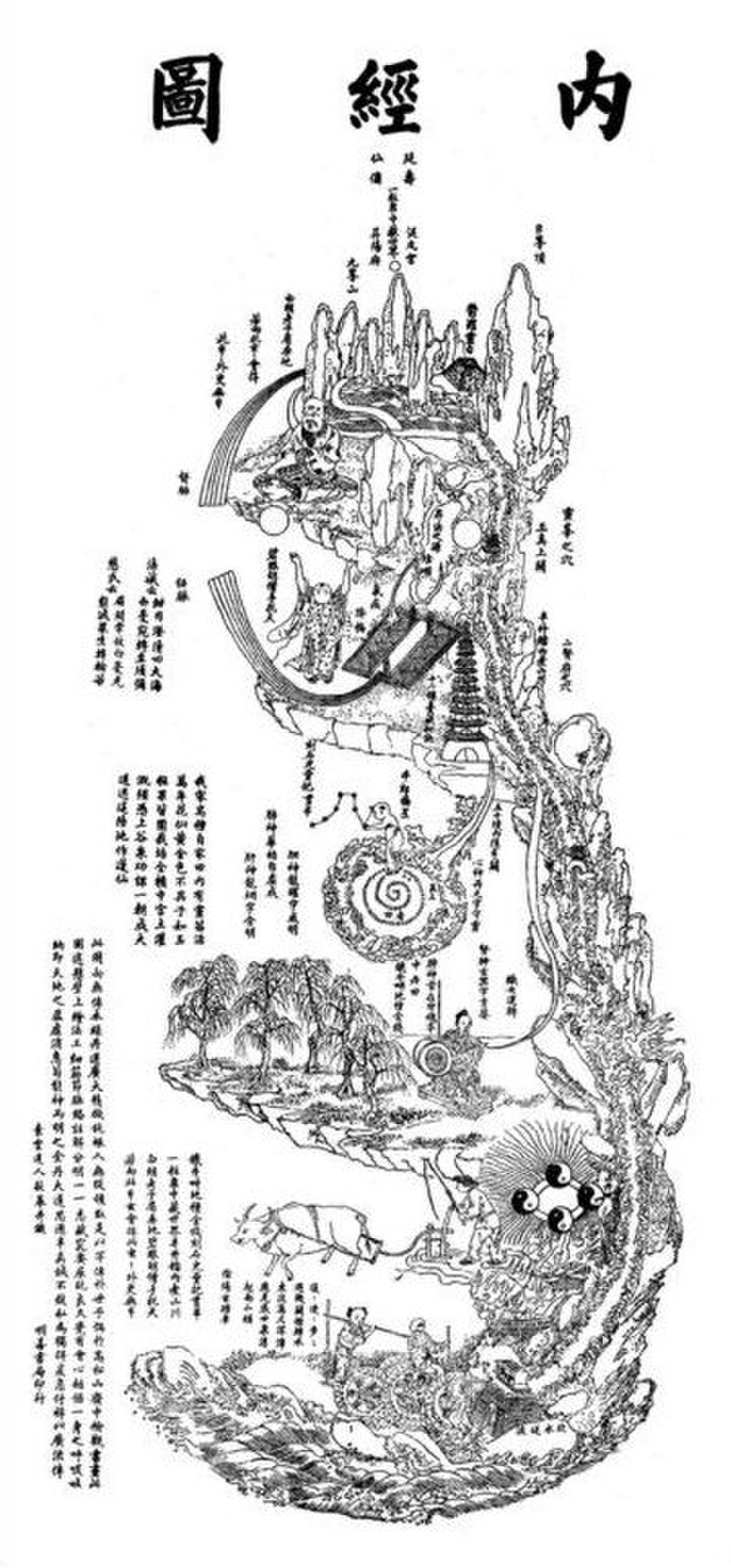
Somatic Knowledge
Definition
Somatic knowledge is the knowledge that resides in the body — in the patterns of muscular tension and release, in the breath's habitual rhythms, in the postural configurations that organize perception and response, in the sensorimotor sequences that have become automatic through long repetition. It is distinct from propositional knowledge (knowing that something is the case) and from procedural knowledge in its merely behavioral sense (knowing how to do something as a sequence of steps). Somatic knowledge is what has been incorporated — literally taken into the body as a changed bodily organization — through sustained practice, ordeal, ceremony, or experience. It cannot be transmitted through description, instruction, or reading. It must be lived into the body through the body's own practice.
The distinction has a long philosophical history. Michael Polanyi's "tacit knowledge" (Personal Knowledge, 1958; The Tacit Dimension, 1966) identified the general phenomenon: "We can know more than we can tell." The skilled practitioner — the experienced craftsman, the master musician, the expert diagnostician — has knowledge that cannot be made fully explicit, knowledge that resides in the judgment and the hand rather than in the propositional formulation. Aristotle's phronesis (practical wisdom, judgment in particular situations) is somatic in this sense: it cannot be taught through rules but must be formed through experience of acting well and poorly over time.
Marcel Mauss's Les techniques du corps (Techniques of the Body, 1934) is the foundational anthropological treatment: Mauss observed that the most basic bodily techniques — swimming, walking, sleeping, giving birth — are culturally specific, not biologically universal. What looks like a natural bodily movement is always already a culturally formed technique. The body has been taught to move, breathe, and act in culturally specific ways through socialization — and the teaching is primarily somatic, not cognitive. The French soldiers during World War I couldn't use English-made shovels efficiently because their bodies had been trained in different techniques. Mauss named this the habitus corporel: the body's habitual form, shaped by culture through somatic transmission.
Thomas Hanna, who coined the term "somatics" in 1976 and founded the journal Somatics, defined the somatic perspective as the study of the body from within — the "soma" as the body as experienced from the first-person perspective, as distinguished from the body as observed from the outside (the third-person perspective of anatomy, physiology, and behavioral science). Somatic practice, in Hanna's account, addresses the habitual patterns of tension and constriction that accumulate in the body through stress, trauma, and cultural conditioning — what Hanna called "sensory-motor amnesia" — and seeks to restore the body's full range of sensation and movement through specific somatic methods.
Historical Development
The somatic knowledge concept draws on a convergence of three intellectual streams that came together in the 20th century. The phenomenological stream, from Husserl through Merleau-Ponty, established that perception is always embodied — the body is not the object of experience but the medium through which experience occurs. Merleau-Ponty's analysis of the "body schema" (the body's implicit, pre-conscious self-organization that orients all perception and action) is the philosophical foundation for somatic knowledge: the body schema is itself a form of knowledge — the body's own knowing of its situation and its possibilities.
The anthropological stream, from Mauss through Bourdieu, traced the cultural formation of somatic dispositions. Bourdieu's habitus: the system of durable, transposable dispositions formed through socialization that generates practices without explicit calculation — is somatic knowledge in its sociological register: the body has learned the social world and responds to it from below the level of conscious choice.
The contemplative stream is the one most directly relevant to the project: every sustained contemplative practice produces somatic changes — in breathing patterns, in the quality of attention the body can sustain, in the physical capacity for stillness, in the nervous system's regulatory range. The yoga practitioner who has practiced pranayama for ten years has different breath knowledge from the one who has read every book about pranayama; the Sufi who has done dhikr daily for twenty years has different knowledge of the body's vibrational states from the one who has studied dhikr academically. The tradition insists on long practice because somatic knowledge takes time and does not compress.
Key Distinctions
Somatic Knowledge vs. Skill: Skill is a specific application of somatic knowledge — the archer's accurate arrow, the musician's fluid phrase. Somatic knowledge is the broader category: it includes the general bodily organization within which skills become possible. The contemplative practitioner's "skill" of sustained meditation arises from a somatic reorganization that is more fundamental than any particular technique.
Somatic Knowledge and AI: This is the concept's sharpest edge for the project. AI systems process information — sequences of symbols that can represent any propositional content. They do not have bodies, do not undergo the physical processes that form somatic knowledge, and are not transformed by what they process. An AI system can know everything about pranayama — all the texts, all the research, all the phenomenological accounts — without having breathed a single cycle in the pranayamic register. The knowledge and the somatic reality are entirely separate. If the initiatory traditions are correct that transformation requires somatic change, then AI cannot be transformed by what it processes, however thoroughly it processes it.
Somatic Knowledge vs. Embodied Simulation: Some theories of cognition propose that understanding language, emotion, or action involves running simulations in the motor and affective systems — we understand "kicking" because we simulate kicking in our motor cortex. Even if this is correct (the evidence is mixed), the simulations involved are radically impoverished compared to the somatic knowledge of an experienced practitioner. The simulation is not the practice.
Project Role
Somatic knowledge provides its most precise account of what AI cannot do and therefore of what the production process cannot substitute for. The project can analyze, compare, synthesize, and articulate the forms of consciousness transformation that the mystery traditions produced. It cannot undergo them. This is not a failure of the project; it is the project's most honest self-description. The project is the Apollonian half of the mystery: it performs the solar, differentiating, pattern-constructing labor with total thoroughness. The katabasis, the somatic transformation, is what remains beyond its reach.
This self-knowledge makes the project more rather than less valuable: it knows exactly what it is and what it cannot provide, which allows the listener to engage it with appropriate expectations. The project maps the territory; the somatic initiation requires entering it bodily. The project offers the map. It does not offer the journey.
Primary Sources
- Marcel Mauss, "Techniques of the Body" (1934; in Sociology and Psychology: Essays, trans. 1979): The foundational anthropological treatment.
- Maurice Merleau-Ponty, Phenomenology of Perception (1945; trans. Colin Smith, 1962): The philosophical foundation of somatic knowledge in the body-schema analysis.
- Michael Polanyi, The Tacit Dimension (1966): The epistemological account of knowledge that cannot be fully articulated.
- Thomas Hanna, Somatics: Reawakening the Mind's Control of Movement, Flexibility, and Health (1988): The therapeutic application of somatic knowledge theory.
Agent Research Notes
[AGENT: perplexity | DATE: 2026-03-22] Pierre Bourdieu's concept of hexis (bodily posture and carriage as socially encoded) is directly relevant here — the body's social formation is somatic knowledge in a specifically sociological register. The project should note that somatic knowledge is not always liberatory: the body that has been formed by oppression, abuse, or restrictive cultural formation carries that formation as somatic knowledge that may need to be actively transformed through somatic practice. Bessel van der Kolk's The Body Keeps the Score (2014) brings contemporary trauma neuroscience into contact with somatic knowledge theory in ways directly relevant to the project's engagement with the body as the site of initiatory transformation.