Sacred-Profane
Definition
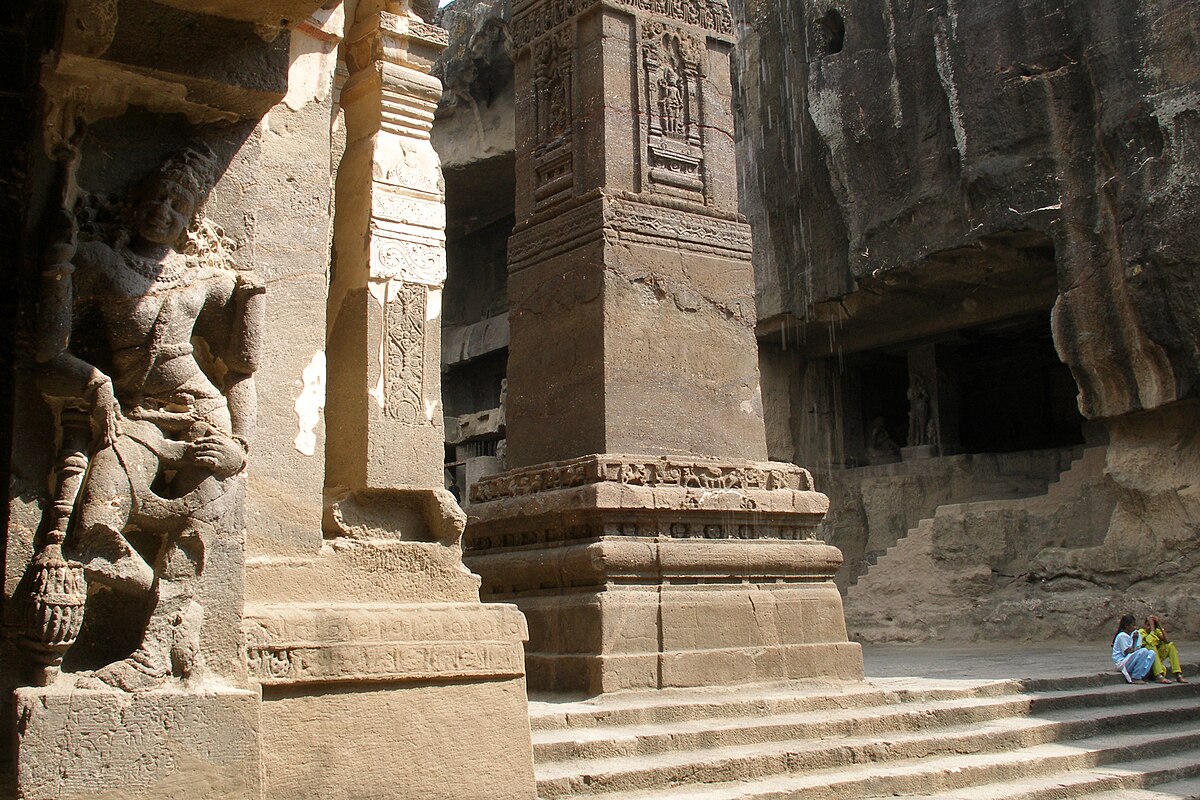
The sacred-profane distinction is the foundational conceptual pair of Mircea Eliade's phenomenology of religion, introduced in The Sacred and the Profane (1957) and operative throughout his scholarly work. The distinction is not between "religious" and "non-religious" in the sociological sense — not between what happens in a church and what happens in a shopping mall. It is a distinction between two qualitatively different modes of being in the world, two different ways in which reality can be experienced.
The sacred, for Eliade, is the mode of experience in which reality presents itself as alive, meaningful, oriented, and organized around a center. Sacred experience is marked by an encounter with what Rudolph Otto called the numinosum: a power or presence that is experienced as qualitatively other than ordinary reality, simultaneously fascinating and terrifying, wholly other and yet intimately engaging. The person in sacred space does not merely find themselves in a different location; they find themselves in a qualitatively different mode of being, in which ordinary boundaries between self and world, human and divine, present and originary become permeable.
The profane is not evil or wrong but simply desacralized — the mode of experience in which space is homogeneous, time is uniform, and phenomena present themselves as neutral objects without inherent significance or orientation. Eliade understood modernity as characterized by the progressive extension of profane experience: through Descartes' conversion of space into res extensa, through the Enlightenment's disenchantment of nature, through capitalism's conversion of land into real estate, the sacred has been squeezed out of the modern West's working experience of the world. Most modern people, Eliade argues, experience the world almost entirely in the profane mode — not because the sacred has ceased to exist but because the perceptual and attentive habits required to recognize it have been systematically suppressed.
The sacred does not disappear from the lives of even the most thoroughly secularized people, but it migrates: Eliade speaks of "camouflaged myths" and "degraded hierophanies" — the sacred pattern appearing in secular form in the aesthetics of cinema, the quasi-religious experience of sports stadiums, the cult of celebrity, and the deep investment in life-trajectory narratives (the hero's journey in popular storytelling). The sacred is too fundamental to human consciousness to be entirely extinguished; it simply goes underground, expressing itself in forms that the secular West does not recognize as sacred.
Tradition by Tradition
Ancient Greek / Eleusinian
The Eleusinian Mysteries are Eliade's paradigm case for the sacred-profane distinction in operation. The procession from Athens to Eleusis moved initiates from the ordinary social world (Athens, the polis, the profane) through a series of ritual operations — purification, fasting, the crossing of the sacred boundary, the nightlong vigil — into the sacred space of the telesterion. The telesterion was not merely a building with religious significance; it was a space constituted as sacred through ritual, in which the divine could manifest and in which the candidate could undergo transformation. The return to Athens afterward was not a return to the same world but to the ordinary world experienced differently — with the knowledge that the sacred exists and that one has participated in it.
Archaic / Indigenous
Eliade's cross-cultural evidence for the sacred-profane distinction is most extensive in his analysis of archaic and indigenous traditions, where the distinction is most explicit and operationally central. In virtually every archaic culture he examines, there is a clear awareness of two kinds of space, two kinds of time, and two modes of experience — and an elaborate technology of ritual for managing the transitions between them. The shaman's drum is a boundary technology: it marks the boundary between ordinary and sacred reality and provides the rhythm for crossing it.
Christian Liturgical
The Christian liturgical tradition — particularly in its more elaborate forms (Eastern Orthodox, Roman Catholic) — maintains the sacred-profane distinction through spatial (nave versus sanctuary, narthex versus nave), temporal (the liturgical calendar of sacred seasons versus ordinary time), and performative (the moment of consecration as a radical ontological change) distinctions. The Orthodox liturgy begins with a catechumenal dismissal: those who are not fully initiated into the sacred community must leave before the most sacred portions of the rite. This is the sacred-profane distinction enacted architecturally and socially.
Modern / Secular
Eliade's most interesting and contested claim is that the sacred-profane distinction persists in thoroughly secularized modern culture in camouflaged forms. He reads the New Year celebration as a vestigial eternal return; the contemporary house as a residual imago mundi (image of the world, with its own implicit center, boundary, and orientation); the hero's journey in Hollywood cinema as a mythological pattern operating below the surface of secular entertainment. Critics have argued that this move dissolves the specificity of the sacred-profane distinction: if everything that is emotionally significant counts as "sacred," the concept loses analytical precision. The project acknowledges this critique while maintaining the phenomenological core of the distinction.
Project Role
The sacred-profane distinction is the project's master framework. Everything else — initiation, katabasis, epopteia, gnosis, hierophany, sacred geography — is a specific elaboration of what it means to move from profane to sacred mode of being, to experience the world as organized around a center, to recognize the numinosum in the phenomena, to be transformed by sustained contact with the sacred.
The project's central diagnostic claim — that modernity has impoverished itself by losing the mystery traditions — is, at the level of the sacred-profane distinction, the claim that modernity has lost the capacity to inhabit the sacred mode of experience, or has reduced it to private, individualistic, therapeutic, or aesthetic substitutes that do not carry the transformative and community-forming power of genuine initiatory sacred experience.
Distinctions
Sacred vs. Religious: The sacred is an experiential mode; religion is a social institution. Religion may be the vehicle through which the sacred is preserved, transmitted, and accessed, but the two are not identical. Eliade's phenomenology is specifically about the experiential mode, not the institutional form.
Profane vs. Evil: The profane is not sinful or morally deficient — it is simply the desacralized, ordinary mode of being. Most of daily life in any culture operates in the profane mode without this constituting a spiritual failure. The problem arises when the profane mode becomes the only available mode — when the capacity to access sacred experience is lost entirely.
Eliade's sacred-profane vs. Durkheim's sacred-profane: Émile Durkheim's earlier distinction (The Elementary Forms of Religious Life, 1912) between sacred and profane is sociological: the sacred is what a community separates and treats collectively as special; the profane is the ordinary. Eliade's distinction is phenomenological: the sacred is a qualitatively different mode of experience, not merely a social designation. The difference matters: Durkheim's sacred can in principle be anything the group agrees to treat as sacred; Eliade's sacred is a specific experiential reality that either manifests or does not.
Primary Sources
- Mircea Eliade, The Sacred and the Profane (1957): The most accessible and systematic statement of the sacred-profane distinction, intended for a general audience.
- Mircea Eliade, Patterns in Comparative Religion (1958): The encyclopedic cross-cultural study that provides the evidence base for the sacred-profane framework.
- Rudolf Otto, The Idea of the Holy (1917): The source of the numinosum concept that Eliade builds on, providing the phenomenological vocabulary for the specific character of sacred experience (the mysterium tremendum et fascinans).
- Émile Durkheim, The Elementary Forms of Religious Life (1912): The sociological forerunner to Eliade's phenomenological distinction — important for understanding what Eliade's approach adds and what it brackets.
- Jonathan Z. Smith, Map Is Not Territory (1978) and To Take Place (1987): The most sustained scholarly critique of Eliade's sacred-profane distinction, important for the project's methodological self-awareness.
Agent Research Notes
[AGENT: perplexity | DATE: 2026-03-22] The Smith critique of Eliade on the sacred-profane distinction focuses on two problems: (1) Eliade's "archaic man" is a homogeneous construct that papers over significant cultural variation; (2) the sacred-profane distinction maps too neatly onto a narrative in which modernity = desacralization, which risks being politically and intellectually conservative. Both are genuine concerns. The project's response: (1) use the sacred-profane as a heuristic, not a claim about universal religious consciousness; (2) the narrative of desacralization is not inherently politically reactionary if it is held with historical precision — the claim is not that the pre-modern was uniformly better but that a specific experiential capacity was lost in the transition to modernity.