Isaac Luria
Dates: 1534–1572 Domain: Kabbalah, Jewish Mysticism, Cosmology
Biography
Isaac Luria was born in Jerusalem in 1534 and died in Safed, in the Galilee, in 1572, at the age of thirty-eight. He is known as the Ari — an acronym of Ha-Ari ha-Kadosh (the Holy Lion) or Adoneinu Rabbeinu Yitzhak (Our Master and Teacher Isaac). Almost everything we know about his teaching comes not from his own writings, he wrote almost nothing, but from the notes and compilations of his chief disciple Hayyim Vital, particularly the Etz Hayyim (Tree of Life), which Vital worked on for decades. The transmission of a teaching through a devoted student who systemizes what the teacher left unsaid is itself a recurring pattern in the initiatory traditions the project tracks.
Safed in the mid-sixteenth century was one of the densest concentrations of mystical talent in Jewish history. The Ottoman conquest of Palestine in 1516 had made the city a center of commerce, and the expulsion of Jews from Spain in 1492 had sent some of Iberian Jewry's most talented scholars eastward. In Safed, Luria encountered Moses Cordovero, the great systematizer of the earlier Zoharic Kabbalah, among others. The Safed circle produced, in a few decades, both the Shulhan Arukh (Joseph Karo's legal code, the standard of normative Jewish practice) and the complete revision of Kabbalistic cosmology that we call Lurianic Kabbalah — an extraordinary combination of legal precision and mystical audacity.
The three central concepts of Lurianic Kabbalah are among the most dramatic in Western religious thought. Tzimtzum (contraction or withdrawal): before creation, the infinite divine light (Ein Sof) fills all possible space. Creation requires that the divine contract from a primordial space, leaving a vacuum (Challal) into which creation can emerge. This is a paradox — the infinite contracting is in some sense an act of self-limitation — but it is also a necessary precondition for anything other than God to exist. The tzimtzum is the foundational act of divine withdrawal that makes room for otherness, which is another way of saying it is the act that makes love possible.
Shevirat ha-kelim (shattering of the vessels): into the vacated space, divine light enters through a sequence of sefirot (divine attributes) arranged as vessels. The vessels of the lower levels cannot contain the light that enters them; they shatter. The divine sparks (nitzotzot) from the shattered vessels fall into the material world, becoming embedded in all things — all of material creation contains within it fragments of divine light that are, in a sense, imprisoned. This is the catastrophe at the heart of Lurianic cosmology: creation is a cosmic accident, a structural failure, and its consequences pervade all of material existence.
Tikkun (repair): the human being is charged with the task of recovering the scattered divine sparks and returning them to their source. This is accomplished through the performance of mitzvot (commandments), through study, through prayer, and through righteous action — each act of genuine sanctification lifts a spark from its imprisonment. The entire course of human history is understood as the process of tikkun — the gradual repair of the cosmic catastrophe. Every human life is the site of a specific fragment of this repair; every soul has its particular set of sparks to recover.
This cosmology transforms the Kabbalah from a contemplative discipline into a soteriological and historical project. The human being is not merely seeking personal liberation or enlightenment; it is performing a cosmic repair that has implications for the entire structure of creation. This is a dramatic elevation of human significance — and a corresponding elevation of the weight of human failure.
Key Works (in library)
| Work | Year | Relevance |
|---|---|---|
| Etz Hayyim (Tree of Life) (Hayyim Vital, after Luria) | compiled 17th century | The systematic account of Lurianic Kabbalah |
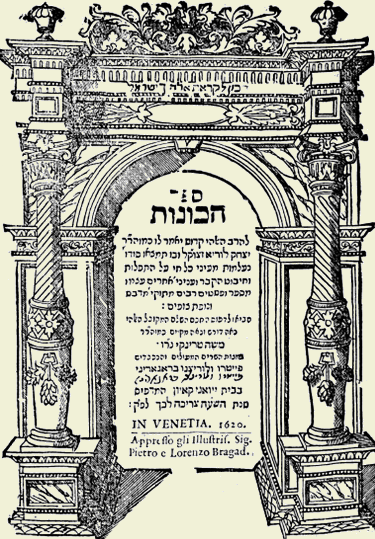
| Eight Gates (Shemonah She'arim) (Hayyim Vital) | compiled 17th century | Eight treatises covering different aspects of Lurianic practice and theology |
| Major Trends in Jewish Mysticism (Scholem) | 1941 | The foundational modern scholarly account; Chapter 7 is the essential introduction to Luria |
Role in the Project
Lurianic Kabbalah gives the project a creation narrative in which initiation is literally cosmic in scope: the human task is participation in the repair of a broken universe. The concept of the divine sparks embedded in all material things — and the corresponding human responsibility to recover them — is the Jewish version of the Hermetic claim that the human being is the mediator between the spiritual and material worlds. The tzimtzum-shevirat-tikkun sequence maps directly onto the solve et coagula of alchemy: the dissolution of the original form, the separation of the elements, and the reconstitution at a higher level of integration. This parallel to argue that the traditions, while historically independent, are tracking the same structural reality.
Key Ideas
- Tzimtzum: The divine self-contraction that creates the space for creation; the act of withdrawal as an act of love — making room for the other by limiting the self.
- Shevirat ha-kelim (Shattering of the Vessels): The catastrophe within creation itself — the vessels that were supposed to hold divine light breaking under its force; the source of evil and suffering in the Lurianic framework.
- Divine Sparks (Nitzotzot): Fragments of divine light embedded in all material creation as a result of the catastrophe; the substance that tikkun must recover.
- Tikkun (Repair): The human task of recovering the scattered divine sparks through sanctified action; each human life as a specific piece of the cosmic repair project.
- Gilgulim (Reincarnation): Souls return in multiple lifetimes to complete their specific portion of tikkun; the soul's history is the history of its particular mission in the repair.
Connections
- Influenced by: The Zohar (primary Kabbalistic source), Moses Cordovero (immediate predecessor in Safed), the broader Kabbalistic tradition
- Influenced: FIG-0025 Pico (earlier Christian Kabbalah; parallel independent development), Sabbatai Zevi (the messianic movement that catastrophically misappropriated Lurianic Kabbalah), Hasidism (which democratized Lurianic concepts), Gershom Scholem (the modern scholarly recovery)
- In tension with: Rationalist Jewish philosophy (Maimonides), which regarded Kabbalistic cosmology as dangerously anthropomorphic
Agent Research Notes
[AGENT: perplexity | DATE: 2026-03-22] Luria's dates are confirmed 1534–1572. He died of plague. Hayyim Vital (1543–1620) spent decades editing and reediting the Lurianic material; his Shemonah She'arim is the most complete and thorough compilation. Gershom Scholem's Major Trends in Jewish Mysticism (1941) remains the essential introduction; his Sabbatai Sevi (1973) shows the catastrophic political consequences of Lurianic messianism. Lawrence Fine's Physician of the Soul, Healer of the Cosmos (2003) is the best modern scholarly biography of Luria.