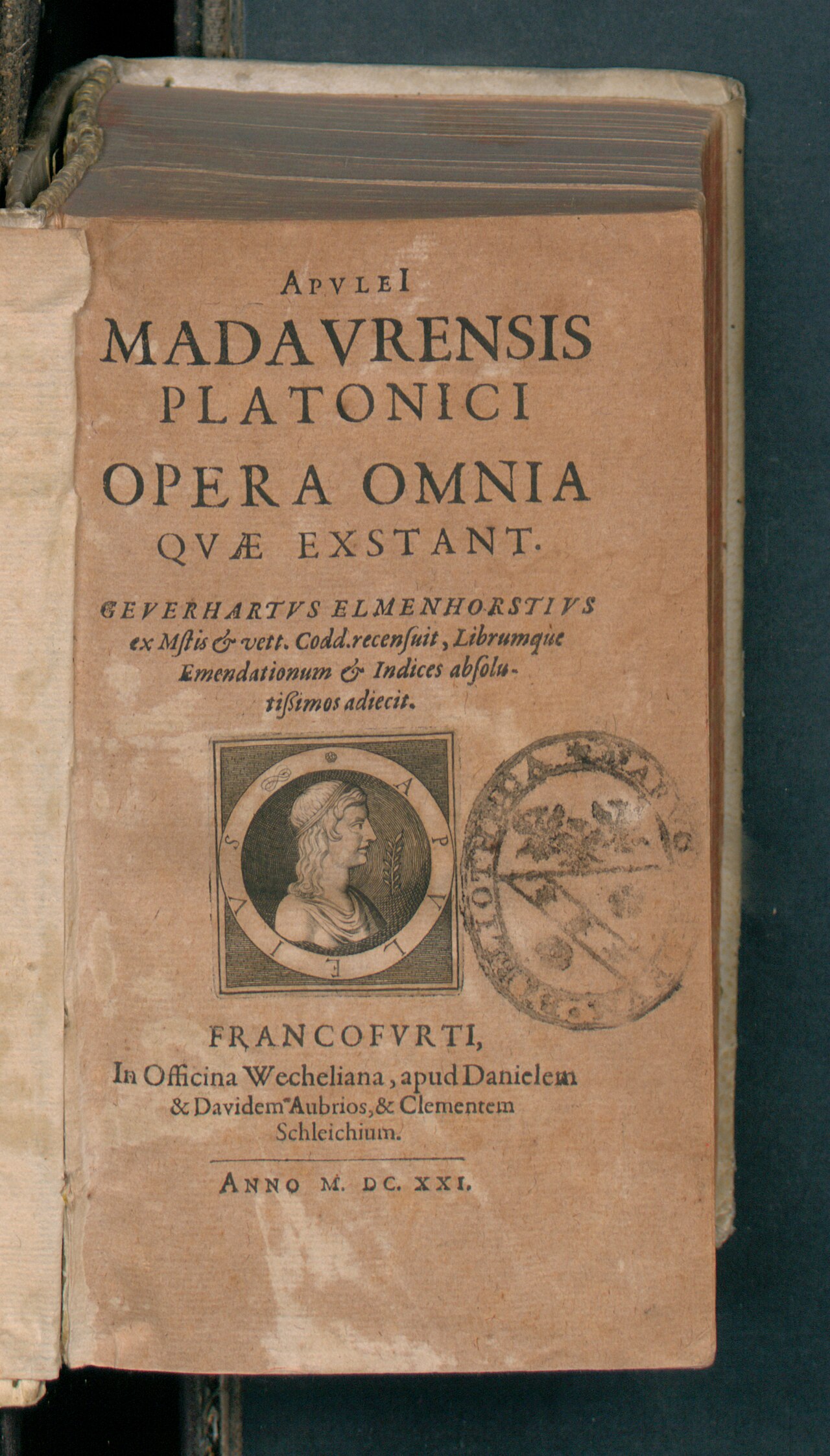
Lucius Apuleius
Dates: c. 124–c. 170 CE Domain: Literature, Philosophy, Rhetoric, Mystery Religion
Biography
Lucius Apuleius was born in Madauros (in present-day Algeria) around 124 CE, into a family of Roman provincial gentry. He received an exceptional education — first in Carthage, then in Athens (where he studied Platonic philosophy and was initiated into numerous mystery cults), then briefly in Rome. He was tried in Oea (present-day Tripoli) around 158–159 CE on charges of using magic to seduce a wealthy widow whom he had married; his defense speech, the Apologia, survives and is both a legal defense and a firsthand document of second-century engagement with magic, philosophy, and religion. He was acquitted. He settled in Carthage, where he became famous as an orator, philosopher, and public lecturer, and where he probably spent the rest of his life.
As a Platonist, Apuleius is a representative figure of Middle Platonism — the period between the Old Academy and the full Neoplatonism of Plotinus — and his philosophical works (De Deo Socratis, De Platone et Eius Dogmate) show a systematic engagement with the Platonic philosophical tradition. But it is the Metamorphoses, popularly known as The Golden Ass, that makes him indispensable for the project. This is the only complete Latin novel to have survived from antiquity, and it is a work of extraordinary complexity: part picaresque comedy, part philosophic allegory, and, in its final book, the nearest thing to a first-person account of Mystery initiation that the ancient world has left us.
The premise of The Golden Ass is comic but immediately allegorical: Lucius, a young man of good family with excessive curiosity about magic, accidentally transforms himself into a donkey while trying to witness a witch's magical operations. He spends most of the novel in donkey form, carried from adventure to misadventure, suffering the brutalities that a working animal endures and observing human behavior from a position of enforced anonymity. The donkey form is straightforwardly a figure for the soul's condition of embodied, appetitive existence — driven by sensation, deprived of speech and reason, unable to communicate its true nature to the humans around it. The embedded story of Cupid and Psyche (Books IV–VI), told by an old woman to a kidnapped girl, is the philosophical heart of the work: the soul (Psyche) wins immortality and divine union through the performance of impossible tasks and the willingness to descend to the underworld.
Book XI is the pivot of the entire work. Lucius, near death from exhaustion and despair, prays to Isis. She appears to him in a vision, identifies herself as the mother of all things, and instructs him to attend the procession of Isis the next day, where a priest bearing roses will approach — and Lucius must eat the roses. He does; he is transformed back into human form. The initiation follows: Lucius describes the experience with deliberate veiling — the ancient oath of silence is still in force — but tells us that "I approached the boundary of death and, having trod the threshold of Proserpina, I was borne through all the elements and returned." This is the classic language of the mystical death-and-return: the initiate undergoes a symbolic death that is real enough to require the Mysteries' legal provision against being sued for debts while in initiation, and is reborn into a new form of existence.
The literary question, is this autobiographical?, is interesting but ultimately secondary for the project. Whether Apuleius is reporting his own initiatory experience or constructing a plausible literary account from indirect knowledge, the text represents what a thoughtful and philosophically trained participant in the second-century religious world believed initiation to be. And what it believed initiation to be is consistent with what Eliade's morphological analysis, Burkert's historical work, and the testimony of the gold tablets suggest: a death, a journey through the elements, and a return that transforms the traveler.
Key Works (in library)
| Work | Year | Relevance |
|---|---|---|
| The Golden Ass (Metamorphoses) | c. 160–170 CE | The only complete surviving account of the experience of mystery initiation |
| Apologia (De Magia) | c. 158–159 CE | The defense against magic charges; reveals the actual practice of ancient magic |
| De Deo Socratis | date uncertain | The Middle Platonic account of daimons as intermediaries between gods and humans |
Role in the Project
The Golden Ass is the most important single literary source for the phenomenology of initiation. Everything else we have about the Mysteries — the material remains, the scholarly analysis, the philosophical accounts — is external to the experience. Apuleius gives us, however veiled, an insider's report on what the initiate went through. The description in Book XI is the primary evidence for what the initiatory experience felt like — its terror, its dissolution, its transformation — and the interpretive tradition surrounding it (from Macrobius to Apuleius's modern scholars) provides the hermeneutic tools for reading it carefully. The embedded Cupid and Psyche tale is simultaneously the most accessible and the most philosophically precise account of the soul's initiatory journey in the entire ancient corpus.
Key Ideas
- The Donkey as Symbol: The soul in its appetitive, embodied condition — driven by sensation, deprived of rational speech, unable to make its true nature known; the condition from which initiation liberates.
- Cupid and Psyche: The embedded fairy tale as the deepest layer of the novel's meaning — the soul's ordeal, descent, and ascent to divine union through the performance of impossible love-tasks.
- "I Approached the Boundary of Death": The initiatic death-and-return formula in its most direct ancient expression; the initiate undergoes something that is not merely symbolic death.
- Isis as All-Mother: The convergence of all goddesses into one universal feminine divine principle — the mystery theology of the Roman imperial period, in which the Mysteries became increasingly universal in their claims.
- Deliberate Veiling: The ancient tradition of not disclosing initiatic content directly — producing texts that tell us what the experience was while maintaining the oath of silence about its specific contents.
Connections
- Influenced by: Middle Platonic philosophy, Egyptian mystery religion (Isis cult), Pythagorean and Orphic traditions, the picaresque narrative tradition
- Influenced: The Christian Platonists (who read Cupid and Psyche as a Christian allegory), Boccaccio (who knew the text), Renaissance Neoplatonism (Ficino's circle read Apuleius)
- In tension with: The historicist reading that denies any genuine initiatic content, the purely literary reading that denies the philosophical seriousness
Agent Research Notes
[AGENT: perplexity | DATE: 2026-03-22] Apuleius's dates are uncertain; c. 124–c. 170 CE is the most common scholarly estimate. The Metamorphoses (The Golden Ass) is the only complete Latin novel to survive from antiquity; Petronius's Satyricon survives only in fragments. The standard modern translation is by P. G. Walsh (Oxford World's Classics, 1994). The key scholarly text for the project is John Gwyn Griffiths's edition of Book XI (Apuleius of Madauros: The Isis-Book, 1975), which provides extensive commentary on the initiatic content. The quotation "I approached the boundary of death" is from Book XI, chapter 23; the translation is approximate and varies among translators.