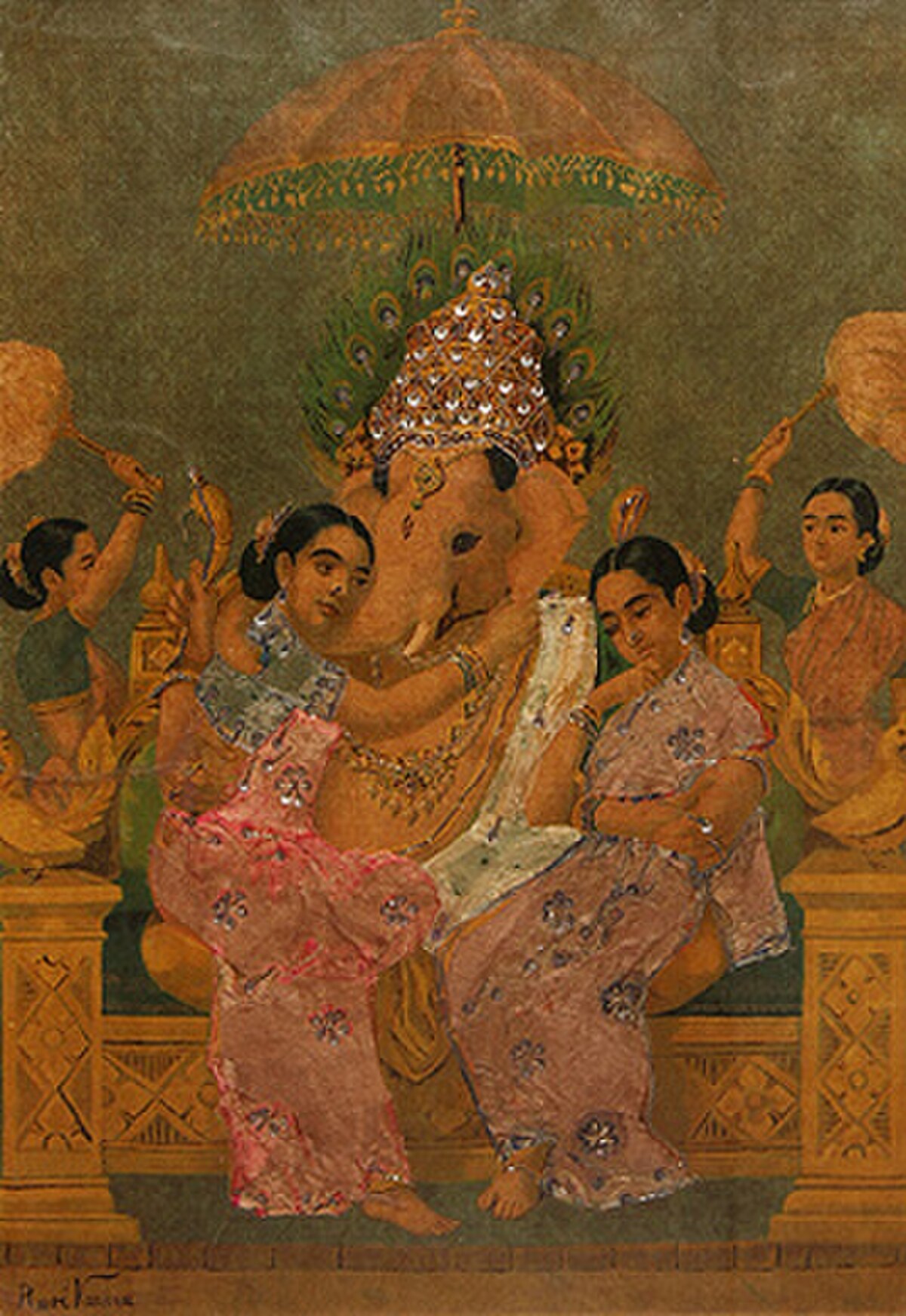
Shankara
Dates: c. 788–c. 820 Domain: Advaita Vedanta, Hindu Philosophy, Sanskrit Exegesis
Biography
Adi Shankaracharya was born in Kaladi, Kerala, around 788 CE, according to the traditional accounts (dates are contested; some scholars propose earlier or later periods). He is said to have mastered the Vedas by age eight, been initiated as a sannyasi (renunciant) at a young age, traveled the Indian subcontinent arguing for the Advaita (non-dualist) interpretation of Vedanta in public debate, established four monastic centers (mathas) at the cardinal points of India, and died at approximately thirty-two years of age. The brevity of his life and the scope of his achievement — systematic commentaries on the principal Upanishads, the Brahmasutras, and the Bhagavad Gita, alongside independent treatises and devotional hymns — have made him the paradigmatic case of the philosopher who lived fast and left a tradition.
His central philosophical argument is that the Brahmasutra's opening declaration — "Then, therefore, the inquiry into Brahman" — establishes the supreme inquiry as the investigation of the ground of all reality (Brahman), and that the Upanishadic mahavakyas (great sayings) — "That thou art" (Tat tvam asi), "I am Brahman" (Aham Brahmasmi) — express the non-duality of the individual self (atman) and the ultimate reality (Brahman). The apparent multiplicity of the world is maya — not simple illusion but the superimposition (adhyasa) of the forms of multiplicity on the reality of Brahman, the way the form of a snake is superimposed on a rope in dim light. Liberation (moksha) is not achieved but recognized: the knowledge that one's true nature is identical with Brahman, which was always already the case.
The Vivekachudamani (Crest Jewel of Discrimination), a pedagogical poem attributed to him, is the most accessible presentation of this teaching for a spiritual practitioner: it systematically distinguishes the real from the unreal, the atman from the body, mind, and ego, and describes the specific recognitions through which liberation arrives.
Key Works (in library)
| Work | Year | Relevance |
|---|---|---|
| Brahmasutra Bhashya | c. 800–820 | Primary systematic commentary; the non-dualist interpretation of Vedanta |
| Vivekachudamani | c. 800–820 | Practical spiritual instruction; discrimination between real and unreal |
| Upanishad Commentaries | c. 800–820 | The mahavakyas interpreted; identity of atman and Brahman |
Role in the Project
The Eastern Traditions track needs Shankara to establish the most systematic non-dualist philosophy in the Hindu tradition — the framework within which the Upanishadic insights are given their most rigorous logical articulation. He is also the figure through whom the project compares Western and Indian non-dualism: Plotinus's henosis, Eckhart's Grunt, Porete's annihilation, and Shankara's moksha are all described as the soul's return to or recognition of its identity with the ground of being — with exact differences that the project maps rather than smooths over.
Key Ideas
- Non-duality (Advaita): Brahman alone is real; the individual self (atman) is not separate from Brahman but identical with it. The apparent separation is maya.
- Maya as Superimposition: Maya is not simple illusion but the cognitive habit of superimposing the forms of multiplicity on the reality of non-dual Brahman. The world is real as appearance; it is not real as ultimate fact.
- Liberation as Recognition: Moksha is not a state to be achieved but the recognition of what was always already the case. The jnani does not become Brahman; they recognize they were never other than Brahman.
- Three Orders of Reality: Absolute (paramarthika), conventional (vyavaharika), and apparent (pratibhasika) — the Advaitic hierarchy that allows Shankara to affirm both the reality of the world for practical purposes and its non-reality at the level of absolute truth.
Connections
- Eastern Traditions companions: FIG-0098 Patanjali (Yoga as the practical path; Advaita as the philosophical ground), FIG-0099 Nagarjuna (Buddhist sunyata vs. Advaita Brahman: the project's Eastern philosophical tension)
- Western parallels: FIG-0076 Schopenhauer (read the Upanishads; maya as his point of contact with Shankara), FIG-0005 Plotinus (the most structurally parallel Western philosopher), FIG-0040 Eckhart (CON-0007 Apophatic, the negative theological tradition as parallel path)
Agent Research Notes
[AGENT: perplexity | DATE: 2026-03-22] The dating of Shankara's life is contested: the traditional date of 788–820 CE is based on the Mathamanaya tradition; some scholars propose 700–750 CE. The four mathas are at Sringeri (south), Dwarka (west), Puri (east), and Joshimath (north). Rudolf Otto's Mysticism East and West (1926) is the project's primary comparative text comparing Shankara and Eckhart. Eliot Deutsch's Advaita Vedanta: A Philosophical Reconstruction (1969) is a useful analytical introduction.