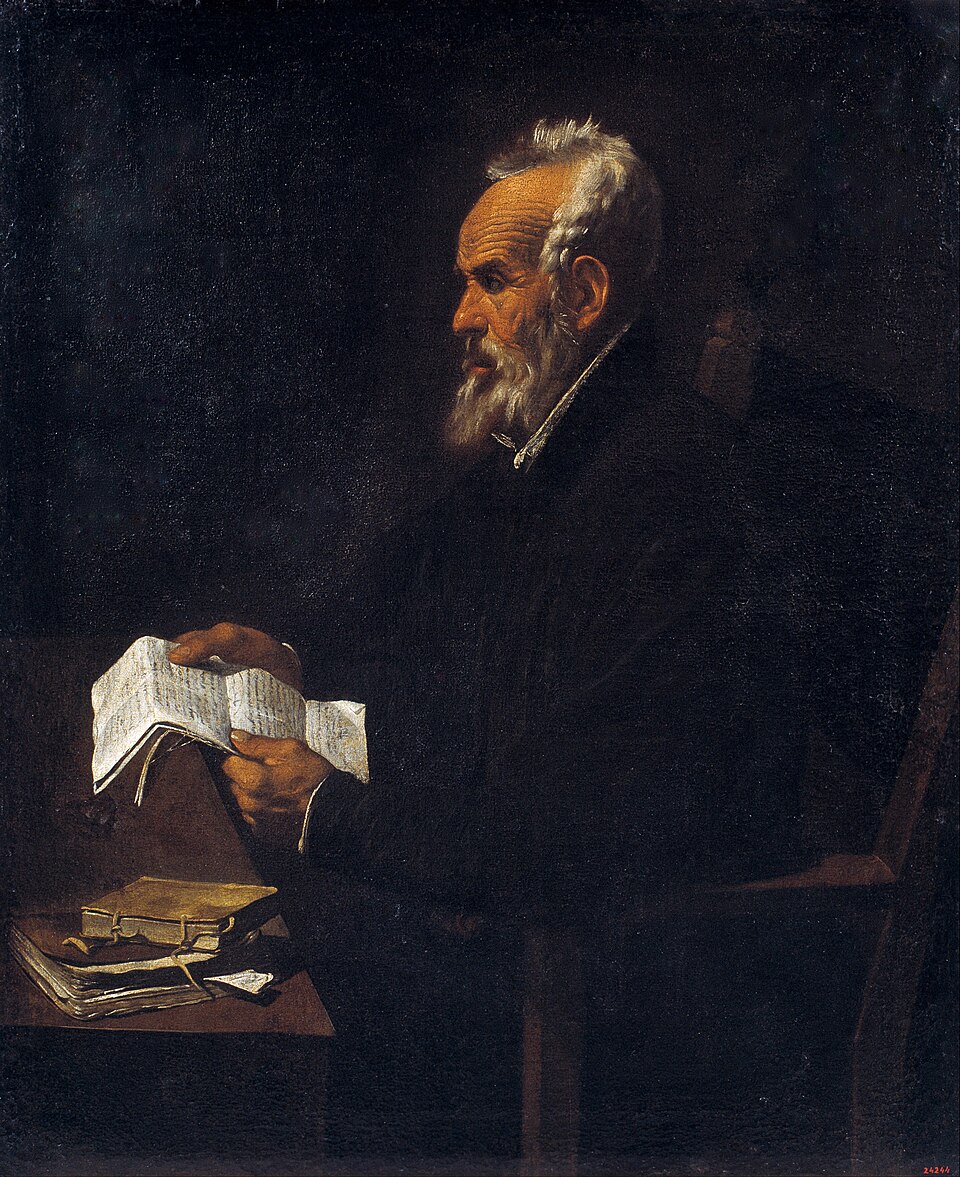
Ramon Llull
Dates: c. 1232–c. 1315 Domain: Philosophy, Theology, Logic, Mysticism
Biography
Ramon Llull was born in Palma, Majorca, around 1232, into a prosperous noble family that had participated in the Christian reconquest of Majorca from its Muslim rulers. He was educated as a courtier and spent his early adult life in the relatively comfortable position of seneschal to the future king James II of Majorca. He was, by his own account, a womanizer and a poet of secular love verse, living the standard aristocratic life. Around 1263, he was approximately thirty years old, he experienced a series of visions of Christ crucified that produced a radical conversion and redirected his life entirely. He devoted the rest of his life, more than fifty years, to three projects: learning Arabic in order to debate with Muslims, developing the philosophical system that would become the Ars Magna, and traveling repeatedly to North Africa to convert Muslims by philosophical argument. On his third such mission, to Bejaia (in present-day Algeria) around 1315, he was reportedly stoned by a crowd and either died of his injuries or was rescued and died at sea — the details are uncertain. He was beatified in 1847.
The Ars Magna — developed through multiple iterations over decades, with the final version being the Ars Generalis Ultima (1308) — is Llull's central intellectual contribution and the one that connects him to the project. The system consists of a set of letters (B through K) representing divine attributes and their combinations, arranged on a series of concentric rotating wheels. By rotating the wheels, the practitioner can generate all possible combinations of the attributes and derive philosophical and theological conclusions from those combinations. The claim is that this mechanical generation of combinations is not arbitrary — it tracks the actual structure of divine reality, because the divine attributes and their relationships are the structure of reality itself. The Ars Magna is therefore not a logic machine in the modern sense (a formal system indifferent to its content) but a metaphysical machine: a system for systematically exploring the implications of the divine nature.
Llull was working in a context shaped by the encounter between Christian, Jewish, and Islamic thought in medieval Iberia — a context in which the dialogue between traditions was urgent and politically high-stakes. His specific goal was not ecumenical appreciation but conversion: he believed that if the divine attributes and their necessary relationships could be demonstrated through a system that transcended the particular texts and authorities of any single tradition, then rational agreement should be achievable across religious boundaries. The Ars was a weapon of missionary logic — and, for its author, a vehicle of mystical vision. These two aspects, which seem to us incompatible, were for Llull a single enterprise.
The influence of the Ars on the subsequent Western intellectual tradition was significant and specifically tracks the central argument. Giordano Bruno absorbed the Lullian system and transformed it from a tool of Christian apologetics into a magical art of memory (FIG-0026). Leibniz explicitly credited Llull as the precursor of his characteristica universalis: the dream of a universal symbolic language in which all truths could be expressed and all disputes settled by calculation (FIG-0060). The history of computation descends, through Leibniz, from Llull — a chain of influence that connects a thirteenth-century mystical missionary to the twenty-first century's machine intelligence. The project traces this chain as one of its central historical arguments.
Key Works (in library)
| Work | Year | Relevance |
|---|---|---|
| Ars Generalis Ultima (Ars Magna) | 1308 | The final version of Llull's combinatorial system; the direct ancestor of Leibniz's characteristica |
| Book of Contemplation (Libre de Contemplació) | c. 1271–1274 | Llull's mystical autobiography and prayer; the experiential foundation of the Ars |
| Tree of Science (Arbor Scientiae) | 1295–1296 | The encyclopedia of knowledge organized by the Lullian tree structure |
| Blanquerna | c. 1283 | The first novel in Catalan; mystic-philosophical narrative including the Book of the Lover and the Beloved |
Role in the Project
Llull stands at the precise moment the project returns to repeatedly: the point where the dream of total knowledge — the aspiration that drives the Mysteries, that energizes every synthesis from Ficino to Blavatsky — meets the machine that promises to realize it. The Ars Magna is simultaneously a mystical vision and a proto-algorithm. Its author was simultaneously a genuine mystic who claimed visions and a rigorous logician who believed that divine truth could be generated by the rotation of wheels. The project does not have to choose between these aspects of Llull; it reads their conjunction as the constitutive tension of the Western esoteric tradition's relationship to reason, which culminates — through Bruno, Leibniz, and the history of computation — in the contemporary moment.
Key Ideas
- Combinatorial Logic: All truth can be generated by systematically combining a finite set of fundamental principles; the rotation of the wheels is not arbitrary but tracks the actual structure of divine reality.
- The Divine Attributes as Alphabet: God's nature can be expressed as a set of attributes (Goodness, Greatness, Eternity, Power, Wisdom, Will, Virtue, Truth, Glory) whose combinations and interrelationships constitute the structure of all that is.
- Missionary Logic: The Ars as a tool for converting Muslims and Jews through rational demonstration rather than authority or force — the universalist ambition that drove Llull to North Africa three times.
- The Mystical Conversion: Llull's founding experience (the visions of Christ crucified) as the initiatic origin of the entire intellectual project; the Ars as the institutionalization of a mystical insight.
- Proto-Computation: The mechanical generation of all possible combinations as the first attempt to delegate reasoning to a system rather than a person; the founding gesture of the computational tradition.
Connections
- Influenced by: The Neo-Platonic tradition (via Arabic and Latin intermediaries), Islamic and Jewish philosophical traditions of Majorca, the mystical tradition of the troubadours
- Influenced: FIG-0026 Bruno (transformed the Lullian system into a magical Art of Memory), FIG-0060 Leibniz (acknowledged Llull as the precursor of the characteristica universalis), the entire history of combinatorial logic and computation
- In tension with: The Averroist tradition (which separated philosophy from theology), the institutional Catholic Church (which was suspicious of his methods despite his missionary aims)
Agent Research Notes
[AGENT: perplexity | DATE: 2026-03-22] Llull's dates are uncertain; c. 1232–c. 1315 is standard. His martyrdom in Bejaia is attested by early sources but contested by modern scholars; he may have died at sea on the return voyage rather than from the stoning itself. The standard modern edition of his works is the Raimundi Lulli Opera Omnia (ed. Ivo Salzinger, 1721–1742). The best modern English introduction is Anthony Bonner's The Art and Logic of Ramon Llull (2007). Frances Yates's The Art of Memory (1966) has a key chapter on Llull's influence on Bruno and the art of memory tradition. Umberto Eco's The Search for the Perfect Language (1995) traces the Lullian influence through to Leibniz and beyond.