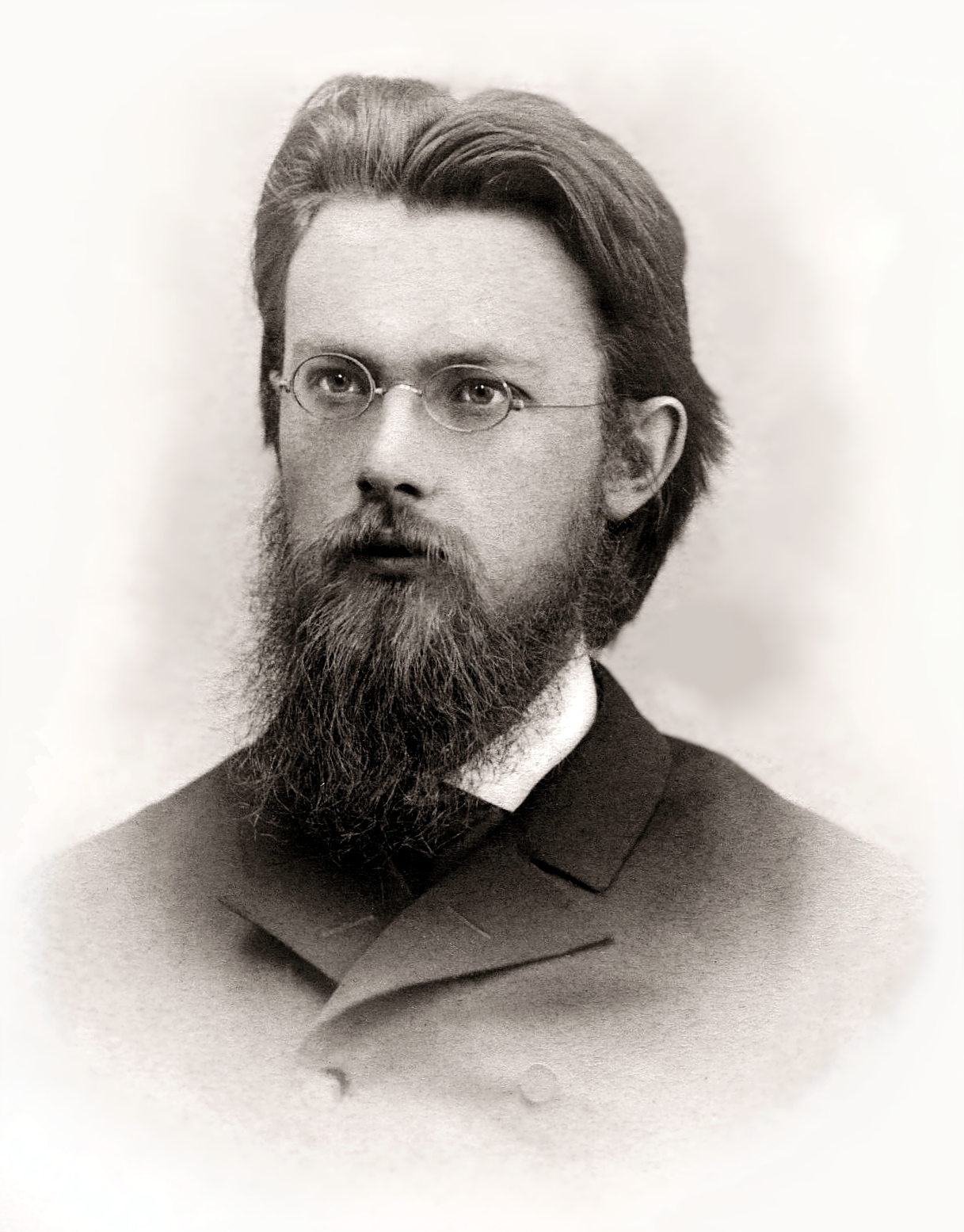
Vladimir Vernadsky
Dates: 1863–1945 Domain: Geochemistry, Mineralogy, Philosophy of Science
Biography
Vladimir Vernadsky was born in 1863 in St. Petersburg to a Ukrainian family of intellectuals. He trained in natural sciences at St. Petersburg University under the mineralogist Vasily Dokuchaev, spent years studying in European laboratories, and returned to Russia to become one of the founding figures of modern geochemistry and biogeochemistry. He organized the Ukrainian Academy of Sciences in 1918, served as its first president, and spent the remainder of his career within the Soviet system while maintaining intellectual independence that bordered on the miraculous given the political environment.
The Biosphere (1926) is the key text. Vernadsky argued that the thin layer of living matter on the earth's surface, the biosphere, is not a minor decoration on a dead rock. It is a geological force. Living organisms transform the atmosphere, the oceans, and the crust. Photosynthesis created the oxygen atmosphere. Coral reefs built limestone formations. Bacteria cycle nitrogen and sulfur through the planet's chemistry. The biosphere, in Vernadsky's account, is not a biological phenomenon living on a geological substrate. It is a biogeological phenomenon in which life and rock are inseparable.
From the biosphere concept, Vernadsky (along with Teilhard de Chardin and the mathematician Édouard Le Roy, who discussed the idea at the Collège de France in the 1920s) developed the concept of the noosphere: the claim that human thought, like life before it, constitutes a new planetary layer, a sphere of mind that transforms the earth as decisively as the biosphere did. Scientific Thought as a Planetary Phenomenon (written 1936–1938, published posthumously) argued that scientific knowledge is itself a geological force, and that the transition from biosphere to noosphere is the next phase of planetary evolution.
Role in the Project
Vernadsky belongs to the Esoteric State track's Russian Cosmism thread. His noosphere concept sits at the junction of three currents: Russian Cosmism's eschatological ambition (Fedorov's resurrection project, Tsiolkovsky's cosmic expansion), Teilhard de Chardin's theological evolutionism (the Omega Point), and the contemporary information-sphere thesis (AI as the noosphere made computational). Dugin's Neo-Eurasianism draws on Vernadsky's geopolitical bioregionalism. The contemporary transhumanist aspiration to technological transcendence is, in one reading, Vernadsky's noosphere thesis stripped of its spiritual content and refilled with silicon.
Primary Sources
- Vladimir Vernadsky, The Biosphere (1926; English translation 1998): The foundational text.
- Vladimir Vernadsky, Scientific Thought as a Planetary Phenomenon (posthumous): The noosphere thesis.