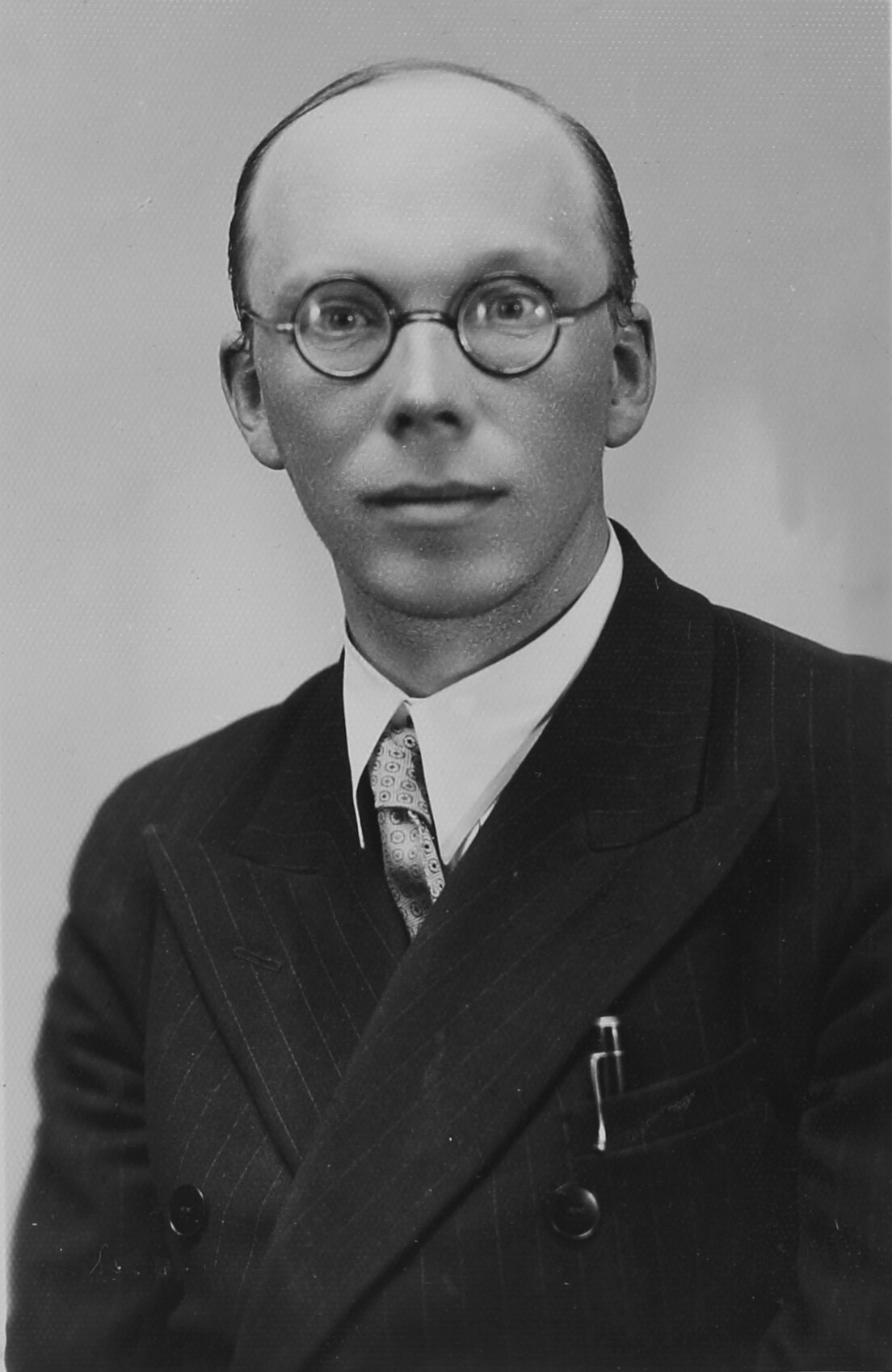
Valentin Tomberg
Dates: 1900–1973 Domain: Christian Hermeticism, Mystical Theology, Anthroposophy
Biography
Valentin Tomberg was born in St. Petersburg in 1900 and spent his early adulthood in Estonia and Holland. He became immersed in the Anthroposophical Society and was, in the 1930s, one of the most gifted and original Anthroposophical thinkers in the Netherlands — a fact that makes his subsequent conversion to Catholicism all the more striking and, for the Anthroposophical community, all the more painful. His lectures on the New Testament from an Anthroposophical perspective (posthumously published) show a mind fully at home in Steiner's methods and moving well beyond them. His conversion to Roman Catholicism in the early 1940s broke his connection with institutional Anthroposophy permanently, though the influence never left.
The break was philosophical. Where Anthroposophy treats Christ as a cosmic event that transformed the spiritual structure of the earth, Tomberg came to believe that the institutional Catholic Church, despite all its failings, was the necessary custodian of the sacramental life through which the fruits of that transformation were transmitted. This is a very different claim from the Anthroposophical understanding, and it alienated both communities: Catholics found his Hermeticism suspect, and Anthroposophists found his Catholicism incomprehensible. He spent his later years working in London for a Catholic publishing organization, writing in his own time.
The Meditations on the Tarot: A Journey into Christian Hermeticism, written in French between approximately 1967 and his death in 1973 and published posthumously in 1980, was the culmination of this solitary work. The book is addressed to an unnamed "Unknown Friend" — an initiatic gesture that places the reader in the position of the student rather than the consumer of information. It takes the twenty-two Major Arcana of the Tarot as a sequence of meditation objects, treating each not as a fortune-telling device but as a symbol system encoding essential spiritual realities. Each letter, each meditation, is an extended, essayistic contemplation that draws on the full range of Tomberg's reading: Hermetic philosophy, Kabbalistic exegesis, Christian mysticism (Eckhart, John of the Cross, Teilhard de Chardin), Jungian psychology (engaged critically), and the esoteric readings of scripture associated with the French Hermetic tradition, particularly Eliphas Lévi and Papus.
The anonymity of the book — which was not revealed to be Tomberg's work until after his death, when his widow disclosed the authorship — was itself an initiatic act. By refusing to put his name on the work, Tomberg was inviting the reader to engage with the ideas rather than with his authority or reputation. The book circulated in manuscript form among a small group of readers, mostly Catholics with esoteric interests, before being published by Éditions Aubier in Paris. Its German translation by Robert Spaemann, a prominent conservative Catholic philosopher, gave it a wider readership; Hans Urs von Balthasar, one of the most significant Catholic theologians of the twentieth century, wrote an approving foreword.
The range and depth of the Meditations is extraordinary. Tomberg engages not only with the Christian mystical tradition but with Hermeticism, Kabbalah, ceremonial magic (seriously, not dismissively), and the psychology of consciousness. His treatment of evil — which he refuses to dismiss as mere privation (following Catholic orthodoxy) but insists on engaging as a genuine spiritual problem requiring genuine spiritual work — is one of the most serious discussions in twentieth-century Christian thought. His reading of the Magician card as an image of the fundamental structure of creative freedom, and the Wheel of Fortune as the law of correspondences in the cosmic order, show the Tarot transformed from a divinatory tool into a system of philosophical contemplation.
Key Works (in library)
| Work | Year | Relevance |
|---|---|---|
| Meditations on the Tarot: A Journey into Christian Hermeticism | 1980 (posthumous) | The culminating synthesis of the Christian Hermetic tradition |
| Christ and Sophia: Anthroposophical Meditations on the Old Testament, New Testament and Apocalypse | 1984 (posthumous) | The Anthroposophical period; Sophiology as the key to scripture |
| Inner Development | 1992 (posthumous) | Lectures on practical spiritual development |
Role in the Project
Meditations on the Tarot is one of the project's touchstone texts. It demonstrates that the synthesis of Hermeticism, mystical theology, and depth psychology is not only possible but can yield something of genuine intellectual and spiritual seriousness — that these traditions are can be held together in a single, organically unified vision. Tomberg's anonymous voice — writing as a friend to a friend, not as a teacher to students — models the transmission mode the project aspires to: neither authoritative pronouncement nor academic neutrality, but the voice of someone thinking out loud about the hardest questions. His conversion from Anthroposophy to Catholicism also raises, without resolving, the question of whether the initiatory content can be transmitted only through institutional sacramental life or whether it can be carried in other forms.
Key Ideas
- Christian Hermeticism: The claim that Hermeticism and Christian mysticism are not merely compatible but mutually illuminating — that the Hermetic tradition provides the philosophical framework that Christian practice requires, and that Christian practice provides the transformative power that Hermetic speculation only gestures toward.
- The Tarot as Sacred Symbol: The twenty-two Major Arcana as a complete system of philosophical contemplation, encoding the structures of consciousness, cosmos, and spiritual life.
- Anonymous Transmission: The deliberate effacement of authorship as an initiatic gesture — placing the weight of the work on the ideas themselves rather than on the authority of the transmitter.
- The Sacramental Principle: The Catholic sacraments as the living form through which the grace of the Incarnation is transmitted — not through mere repetition but through genuine participation.
- Evil as Spiritual Problem: Tomberg's refusal to reduce evil to privation; his insistence that it requires direct confrontation as part of the spiritual path, not merely avoidance.
Connections
- Influenced by: FIG-0011 Steiner (formative influence; later parted from), Eliphas Lévi (French Hermetic tradition), Catholic mystical tradition (Eckhart, John of the Cross), FIG-0021 Jung (engaged critically)
- Influenced: Robert Powell (extended Tomberg's Sophiological work), Hans Urs von Balthasar (approving), the Christian Hermetic stream in contemporary esotericism
- In tension with: FIG-0007 Guénon (Tomberg's synthesis is more Catholic and less systematically Traditionalist), mainstream Anthroposophy (which regarded his conversion as a betrayal)
Agent Research Notes
[AGENT: perplexity | DATE: 2026-03-22] Tomberg's dates are confirmed 1900–1973. Meditations on the Tarot was first published in French as Méditations sur les 22 Arcanes Majeurs du Tarot (Paris: Aubier, 1980). Robert Spaemann's German translation appeared as Betrachtungen zu den 22 großen Arkana des Tarot (1983). Hans Urs von Balthasar's foreword is in the German edition; it is significant that a major Catholic theologian endorsed the work. The book was translated into English by Robert Powell and published by Element Books (1986). Tomberg's widow's disclosure of authorship is documented in Robert Powell's biographical essay included in later editions.